
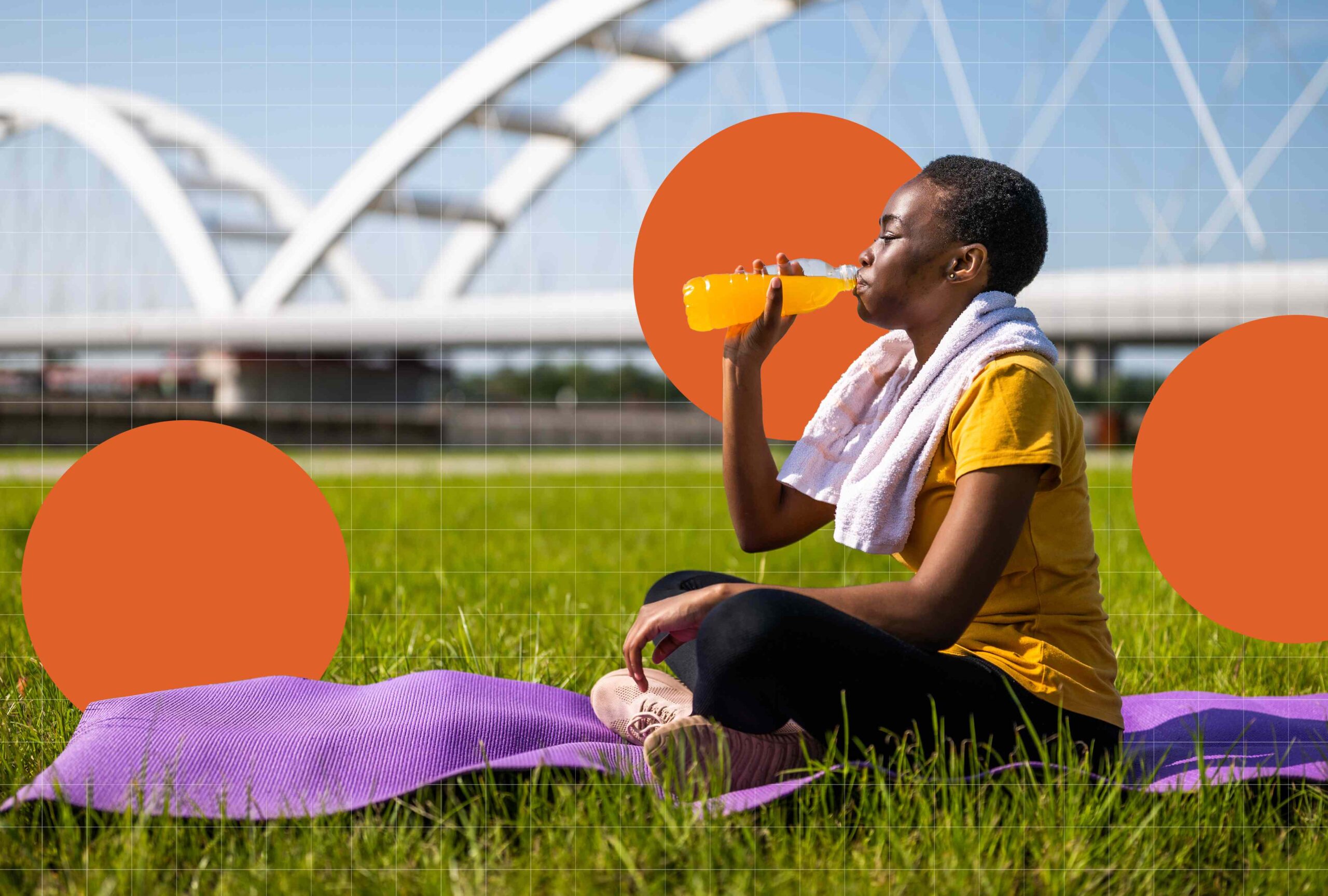

Can you be making yourself more thirsty?
Reviewed by Dietitian Mandy Enright, M.S., RDN, RYT
Key Points
- Not all drinks will quench your thirst and help you stay hydrated.
- Energy drinks and highly caffeinated coffee beverages can act as diuretics.
- Sugars in 100% fruit juice and premade smoothies can increase dehydration.
Staying hydrated sounds simple enough. Drink some water and you’re good to go, right? Well, figuring out what counts as a “hydrating” drink can be more confusing than you’d think. Between sports drinks, juices, coffees and trendy wellness beverages, there’s a lot of mixed messaging online about what helps and hinders your hydration status. And while most people know they should drink more fluids, the type of beverage you choose can have a significant impact on your hydration.
Just because a drink isn’t the most hydrating option doesn’t mean it’s off limits. We believe most beverages deserve a place within a well-balanced routine. That said, some drinks may work against your hydration goals if you consume them too often. Here’s a closer look at drinks to avoid when you need to hydrate and what to sip instead.
1. Energy Drinks
“Because energy drinks are sometimes promoted for consumption during workouts, many people mistakenly assume they are hydrating,” explains Melissa Mitri, M.S., RD. “However, some energy drinks can contain ingredients that act as diuretics, such as the amino acid taurine.”
Taurine is often added as a performance enhancer, but it may lead to fluid loss by increasing urination and sweating. On top of that, many energy drinks contain high levels of caffeine (sometimes more than two cups of coffee worth) further contributing to fluid loss.
2. 100% Fruit Juice
“While more reduced sugar juices are coming on the market, many fruit juices, even those that are [labelled] 100% fruit juice, can pack a lot of added sugar,” says Mitri. “While having it once in a while likely won’t pose an issue, drinking juice regularly can raise blood sugar, which increases urination as the kidneys try to remove excess sugar from the body.”
Spiking your blood glucose with sugary-beverages like 100% fruit juices forces your body to bring levels back down to a normal range, which can lead to increased fluid loss. That’s why juice is often better enjoyed in smaller portions or diluted with water rather than used as your main source of hydration.
3. Store-Bought Smoothies and Green Juices
“Premade smoothies and green juices often pack a lot of fruit or added sweeteners in addition to fruits and veggies, making them more sugar-heavy than they appear,” says Mitri. “Their sugar content can contribute to dehydration if you drink multiple throughout the day or drink them in place of water.”
While homemade smoothies with balanced ingredients can be part of a healthy diet, many store-bought options are high in sugar and low in fiber, which can cause similar blood sugar spikes as fruit juice. But that doesn’t mean you should avoid smoothies and green juices entirely. Having them as an occasional snack still provides a source of energy versus a main source of hydration.
4. High-Caffeine Coffee Drinks
“Too much caffeine can lead to dehydration, as it pulls water out from the body by either increasing sweat or urination,” says Mitri. “Drinking one to two [8-ounce] cups of coffee is unlikely to cause an issue for most people, but consuming [more than four] cups may shift the body toward increased fluid loss.”
It’s worth noting that caffeine tolerance varies widely from person to person. Regardless, if you want to stay hydrated it’s a good idea to balance your caffeinated drinks by drinking plenty of water.
Choosing a Hydrating Beverage
Not sure if your go-to drink is helping or hurting your hydration goals? You’re not alone. Here are a few simple guidelines to help you choose more hydrating beverages.
- Limit added sugars. Drinks high in sugar can raise blood sugar levels and increase urination, which may make it harder to stay hydrated. Choosing beverages with little to no added sugar can help you stay hydrated throughout the day.
- Watch the caffeine content. Moderate caffeine intake is generally fine for most people, but higher amounts can increase fluid loss by increasing urination. If you regularly drink coffee or caffeinated energy drinks, balance them with plenty of water or choose lower-caffeine options.
- Keep ingredients simple. Beverages with shorter ingredient lists are less likely to contain additives that may have diuretic effects. Options like water or lightly flavored drinks are often your best bet.
Best Beverages for Hydration
- Water. Plain water is the gold standard for hydration. “The best option is plain or naturally flavored water such as with [juice from] lime, lemon or mint,” says Mitri.
- Naturally Flavored Water. If plain water is too boring, consider adding slices of fruit, herbs or citrus to plain water to make it more appealing without adding sugar.
- Sparkling Water. Unsweetened seltzer or sparkling water can be a refreshing alternative to still water if you enjoy carbonation.
- Electrolyte Drinks. “Electrolyte drinks are generally not needed for hydration unless you are sweating a lot or exercising longer than an hour on a regular basis,” says Mitri. In those cases, one serving per day may help support hydration. Or consider making your own.
Our Expert Take
Staying hydrated means choosing the right beverages as opposed to simply drinking more liquids. While energy drinks, fruit juices and caffeinated beverages can fit into a well-balanced diet, relying on them for hydration may backfire. Instead, consume simple low-sugar options like water, sparkling water or naturally flavored beverages to help keep you hydrated.

Comments are closed.