
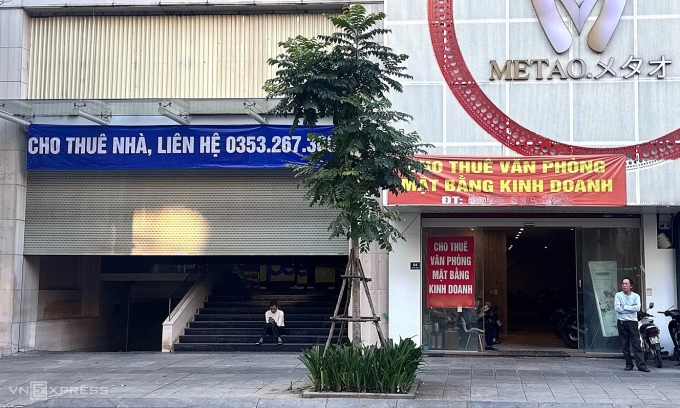

Ngoc My, owner of a women’s fashion store on Hue Street in Hanoi, recently returned a shophouse for which she had been paying a monthly rent of VND50 million (US$1,900).
The landlord offered a 5% discount to convince her to stay, but she refused, as her business has been underperforming.
“Giving up the premises helps me save a significant amount of money, meaning I can focus on stocking goods for online sales during Tet,” she says, referring to Vietnam’s Lunar New Year in early February next year.
Vacant shophouses in Hue Street, Hanoi, in November 2025. Photo by VnExpress/Ngoc Diem |
Tuan Phuong, a broker specializing in shophouses in downtown Hanoi, says: “It has never been this hard to find tenants.”
Many large stores on main roads, with frontages of four to six meters, have been on the market since the beginning of the year with no takers, he says.
A fashion chain even closed down 10 stores, keeping only a warehouse for online sales, he adds.
The shophouse market is “in crisis” and many landlords are offering to slash rents by 20%.
Downtown streets with many retail shops traditionally have seen shophouses remain vacant since last year even after rents were lowered by up to 15%.
In HCMC, an increasing number of vacant properties is seen these days on usually busy streets such as Hai Ba Trung, Ly Tu Trong, Dong Du, and Nguyen Trai.
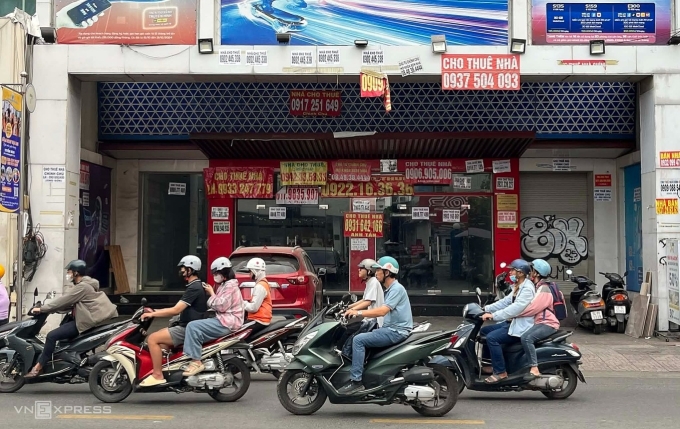 |
Vacant shophouses on To Hien Thanh Road, HCMC, in November 2025. Photo by VnExpress/Phuong Uyen |
Quoc Huy, owner of a Thai restaurant on Dien Bien Phu Street, recently ended the lease after being unable to cope with continuing losses.
He was paying VND40 million a month in rent, and has now moved to a new and smaller place which costs half.
Lan Anh, owner of a coffee shop on Nguyen Dinh Chieu Street, also moved to a cheaper location in an alley as rents were “eating up most of the profits.”
“To let” signs can be seen on major retail streets in HCMC. On Cach Mang Thang Tam Street, as many as six properties sit vacant along a stretch of less than one kilometer.
Similarly, within a stretch of less than 500 meters on Nguyen Thai Binh Street, three food and beverage stores closed in recent months and returned their premises.
Analysts say the shophouse rental market is going through a dramatic change due to fierce competition from e-commerce.
Nguyen Chi Thanh, standing vice chairman of the Vietnam Association of Realtors, says popular fashion and accessories businesses are “fleeing” shophouses.
Instead of spending heavily on prime locations, businesses are opting to rent smaller spaces in alleys, expand warehousing and focus on online sales, he says.
The lower rents leave them with more cash to spend on advertising on e-commerce platforms and social media to offset the lack of visibility in their alley locations.
E-commerce platforms are reaping the fruits of their investment. The combined gross merchandise value of the four largest, Shopee, TikTok Shop, Lazada, and Tiki rose by 34% year-on-year in the first nine months of this year to VND305.9 trillion.
Cao Thi Thu Huong, senior manager at property consultancy Savills Vietnam, says high rentals and low returns are reshaping how small businesses operate.
In the past many firms accepted losses to secure premium downtown locations to boost brand visibility, but now, with the rise of multimedia advertising, promoting brands through shophouse storefronts is no longer essential, she points out.
Many food and beverage brands are reducing their number of outlets to focus on a few flagship stores, especially at malls and other prime locations, to achieve strong brand presence while focusing on smooth delivery services and online business.
For businesses such as fast-food chains, companies now seek affordable locations suitable for takeaway and delivery operations rather than pay high rents to attract walk-in customers.
Huong says landlords should adapt to the changing market by lowering their rent expectations and being flexible.
“The shophouse market is undergoing ‘natural selection’ in which premises that fail to meet operational needs, amenities and reasonable costs will be phased out of the commercial supply chain.”

Comments are closed.