
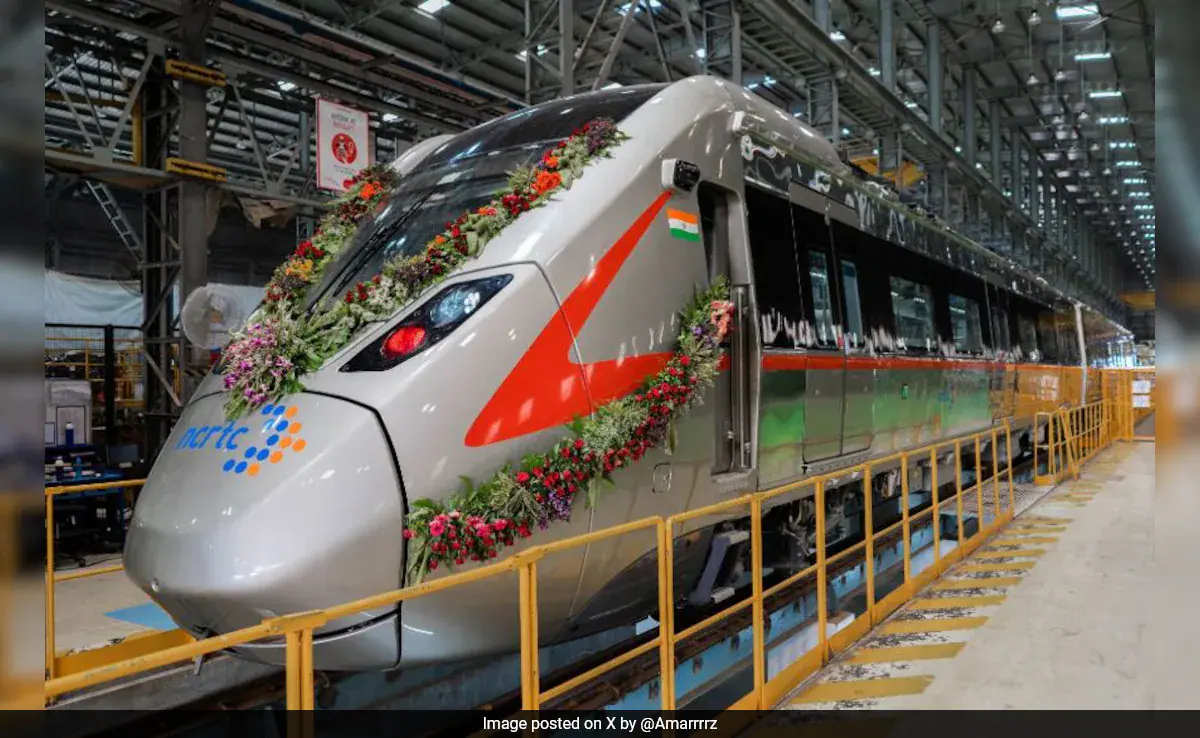

Uttar Pradesh may soon witness another major transportation transformation as authorities prepare a master plan for a new high-speed Namo Bharat corridor connecting six districts in central UP.
According to reports, the proposed rapid rail corridor will connect:
- Lucknow
- Kanpur
- Unnao
- Barabanki
- Raebareli
- Hardoi
The project is expected to function similarly to the Delhi-Meerut Namo Bharat Regional Rapid Transit System (RRTS), which has already become one of India’s fastest modern regional rail networks.
Officials believe the corridor could dramatically improve inter-city mobility, reduce highway congestion, and strengthen economic integration across some of UP’s most important urban zones.
Why The Corridor Is So Important
The Lucknow-Kanpur belt is among Uttar Pradesh’s busiest economic and population corridors.
Lakhs of people travel daily between these cities for:
- Jobs
- Education
- Government work
- Healthcare
- Business operations
- Industrial activity
Despite being geographically close, road congestion and inconsistent rail travel often increase commute times significantly.
Authorities now want to create a high-speed regional mobility system capable of handling future population growth and economic expansion more efficiently.
The project also aligns with UP’s broader infrastructure-driven development strategy.
Proposed District Connectivity
| District | Importance In Corridor |
|---|---|
| Lucknow | State capital and administrative hub |
| Kanpur | Industrial and manufacturing center |
| Unnao | Emerging logistics and residential growth zone |
| Barabanki | Regional connectivity expansion |
| Raebareli | Industrial and political significance |
| Hardoi | Improved regional accessibility |
The corridor could potentially reshape transportation patterns across central Uttar Pradesh.
Travel Time Could Reduce Sharply
One of the biggest expected benefits of the Namo Bharat corridor is drastic reduction in travel time.
The Lucknow-Kanpur route currently experiences heavy traffic congestion, especially during peak office hours.
Experts believe high-speed rapid rail connectivity could:
- Reduce dependency on road transport
- Improve daily commuting efficiency
- Lower traffic congestion
- Boost economic productivity
- Increase regional workforce mobility
The system is expected to operate at significantly higher speeds compared to traditional suburban rail services.
UP Rapidly Expanding Infrastructure Network
The proposed corridor reflects Uttar Pradesh’s aggressive infrastructure expansion strategy under the Yogi Adityanath government.
The state is already witnessing massive investments in:
- Expressways
- Metro systems
- Airports
- Logistics hubs
- Industrial corridors
- Data centers
- Freight infrastructure
- Rapid rail connectivity
Projects like the Ganga Expressway, Purvanchal Expressway, Jewar International Airport, and Delhi-Meerut RRTS are already reshaping UP’s economic geography.
The new Namo Bharat corridor could become another major milestone in that transformation.
Economic Benefits Could Be Huge
Infrastructure experts believe rapid regional connectivity often creates long-term economic growth around transit corridors.
The proposed project could potentially boost:
- Real estate development
- Industrial investments
- Commercial activity
- Job creation
- Regional tourism
- Educational accessibility
Areas surrounding future stations may particularly witness rising land demand and urban expansion.
The Lucknow-Kanpur urban region is already evolving into one of North India’s largest economic clusters.
Improved transit could accelerate that process further.
Similar To Delhi-Meerut Namo Bharat Model
The project is reportedly inspired by the Delhi-Meerut Namo Bharat system, which introduced modern semi-high-speed regional trains with metro-style frequency and airport-like stations.
Key features expected in the UP corridor may include:
- Faster trains
- Modern stations
- Multi-modal integration
- Dedicated rail infrastructure
- Smart ticketing systems
- High-frequency operations
Experts say India is gradually moving toward regional rapid transit systems to handle growing urbanization and inter-city commuting pressure.
Master Plan Stage Currently
At present, the project is still in the planning and master plan preparation stage.
Detailed feasibility studies, route alignment decisions, funding models, and technical assessments are expected before final approvals.
Large-scale rapid rail projects typically require extensive coordination between state governments, central agencies, and infrastructure authorities.
However, the proposal itself signals UP’s intention to aggressively modernize transportation infrastructure beyond traditional highways and metro systems.
If implemented successfully, the corridor could fundamentally transform travel across central Uttar Pradesh in the coming years.
Comments are closed.