
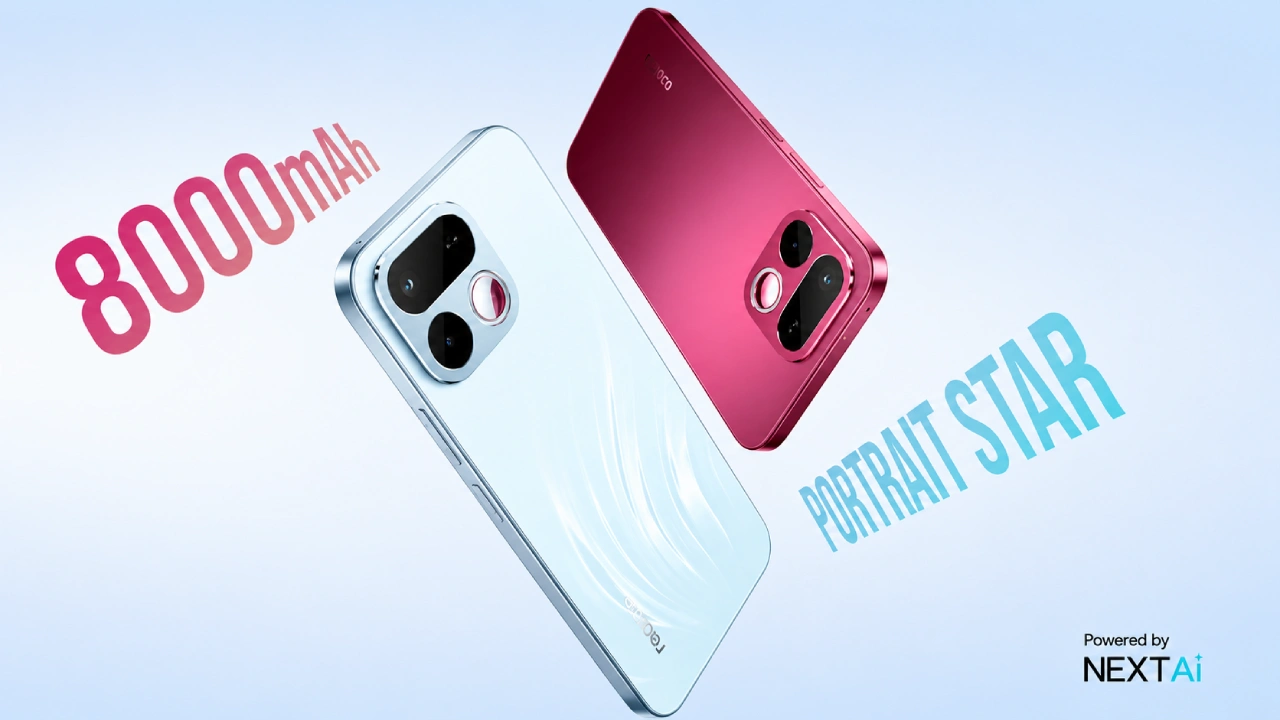

The highly anticipated Realme 16T 5G launch has officially taken place in India, with the brand clearly targeting users who want flagship-style hardware parameters without absorbing ultra-premium prices. From a high-refresh 144Hz display panel to complex AI-powered camera features and deep battery-focused hardware optimisations, the phone arrives with technical choices explicitly designed for mobile gamers, digital content consumers, and heavy multitasking power users alike.
Realme 16T 5G Launch: Display Performance Parameters
The headline feature introduced with this iteration is undoubtedly its 144Hz refresh rate LCD panel. This marks a bold competitive move within the mid-range smartphone tier, where the majority of competing brands still rely heavily on legacy 120Hz panels.
The increased operational refresh rate promises significantly smoother screen scrolling, cleaner UI transitions, and faster touch response layers during high-velocity gaming loops. Competitive mobile titles especially benefit from this elevated frame consistency, giving players a noticeably more fluid experience during extended gameplay blocks.
The product development team appears to be positioning the handset directly toward younger demographics who spend long, continuous hours streaming high-definition media, running simultaneous apps, and gaming. The brand notes that the 6.78-inch panel is fully tuned for immediate touch responsiveness while retaining system-level power efficiency algorithms to prevent unnecessary background battery drain.
Realme 16T 5G Core Specifications Framework:
| Specification Channel | Hardware and Software Implementation |
|---|---|
| Display Architecture | 6.78-inch LCD, 144Hz Refresh Rate, 1200 Nits Brightness |
| Processor Platform | 6nm Octa-Core MediaTek Dimensity 6300 SoC |
| Memory Configurations | 6GB / 8GB LPDDR4X RAM Options |
| Storage Allocations | 128GB / 256GB UFS 2.2 Storage Matrices |
| Primary Camera Array | 50MP Sony IMX852 (f/1.8) + 2MP Monochrome Lens |
| Front Camera System | 16MP Selfie Sensor with Rear Selfie Mirror Integration |
| Battery & Charging | 8,000mAh Titan Cell, 45W Fast Charging, 15W Reverse Power |
| Operating Engine | Realme UI 7.0 Platform Running on Android 16 Base |
The global design language remains highly modern, utilizing crisp, flat edges and an 8.8mm slim side profile. This structural configuration provides the device with a clean, premium visual aesthetic despite its budget-conscious positioning.
Sony Camera Sensors and AI Tools Drive the Imaging Experience
The brand is focusing heavily on algorithmic processing intelligence this model year, and the new hardware line reflects that targeted ecosystem strategy clearly. The smartphone features a high-grade 50MP Sony IMX852 primary camera sensor, which is built to significantly improve low-light exposure thresholds, natural color reproduction accuracy, and active dynamic range capture.
Sony camera modules continue to hold strong authority among mobile imaging enthusiasts, particularly within the mid-range consumer block, where photo output quality frequently acts as the primary deciding factor for buyers.
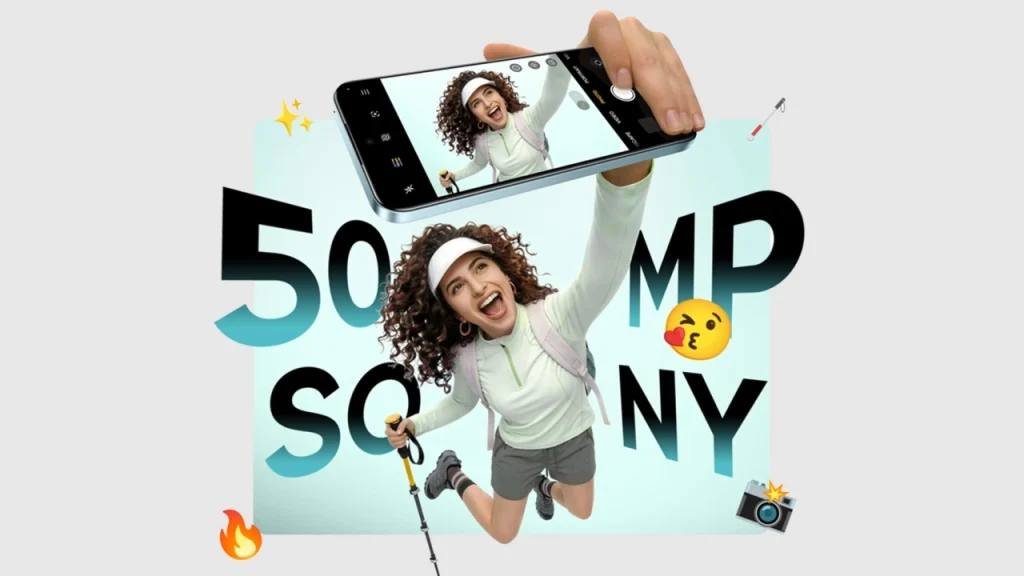
Alongside the updated physical optics, the software introduces several specialized AI-backed imaging utilities designed to improve both original capture pipelines and post-editing workflows:
- AI Photo Enhancement & RAW HDR Support: Automatically optimizes skin tones, texturing, and lighting balance without manual parameter adjustments.
- Smart Scene Recognition: Utilizes the LumaColor IMAGE Engine to balance high-contrast highlights and deeper background shadows.
- AI Portrait Glow and Instant Clip: Simplifies short-form video creation while adding custom lighting presets like Rim Light and Studio Light.
- System-Wide AI Boost 3.0: Manages local hardware allocation to preserve rendering processing power during continuous camera operation.
This targeted AI push matters because mobile brands are no longer treating artificial intelligence as a hidden software background process. Instead, companies are actively leveraging machine learning models as core consumer features built to elevate daily usability.
Battery Life and Charging Capabilities
High-refresh-rate display modules traditionally raise immediate consumer concerns regarding rapid battery drain. However, the engineering pipeline appears fully prepared for that technical challenge.
The phone packs a massive 8000mAh Titan Battery, the largest capacity ever introduced within a numbered series device from the brand, alongside 45W wired fast charging and 15W reverse charging configurations. This hardware target answers the needs of users who maintain long hours browsing social streams, streaming media layouts, or attending online classes throughout the day.
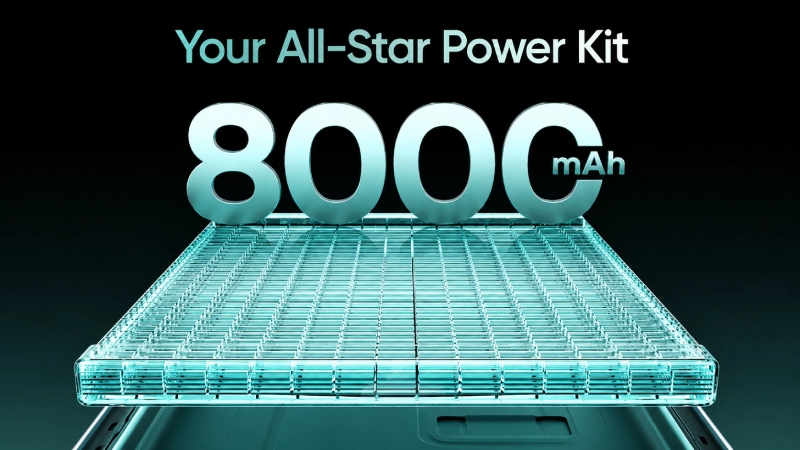
The inclusion of a segment-first 7-year battery health solution combines intelligent charging optimization with advanced physical protection to preserve cell longevity over long-term usage cycles,” according to official product testing lab briefs
To protect system longevity, the chassis integrates a 5300mm AirFlow VC vapour chamber cooling network. This internal thermal layout helps the device maintain stable frame delivery and smooth multitasking performance during demanding processing tasks, preventing thermal throttling or system slowdowns under heavy, continuous workloads. For consumers upgrading from older 60Hz or 90Hz setups, the combination of screen fluidity and multi-day battery life will feel immediately noticeable.
Taking Aim at India’s Saturating Mid-Range Category
The debut arrives at a time when India’s mid-range consumer tier has become intensely competitive. Alternative brands like Redmi, POCO, Motorola, and iQOO are fighting on a weekly basis, aggressively pushing hardware boundaries across screen metrics, battery cell sizing, charging wattage curves, and raw processing speeds.
The brand’s market strategy remains straightforward: deliver a feature-heavy, multi-purpose smartphone that balances mobile gaming capacity, reliable camera output, structural AI utilities, and multi-day battery endurance inside a single, balanced price block. The integration of a true 144Hz panel allows the phone to stand out from the crowd on retail shelves, while the Sony-backed camera system strengthens its appeal among mobile photography enthusiasts.
The Takeaway: Realising Premium Value per Rupee
The newly introduced device establishes clear ambitions within the domestic market. Between the ultra-smooth 144Hz panel performance, specialized Sony imaging hardware, realme UI 7.0 Flux Engine animation systems, and a massive battery core, the manufacturer is delivering maximum value for every rupee spent. If you are preparing to transition your primary device this cycle, the combination of long-term software fluency protection and sheer hardware endurance makes this a highly compelling mid-range option to anchor your workflow.

Comments are closed.