
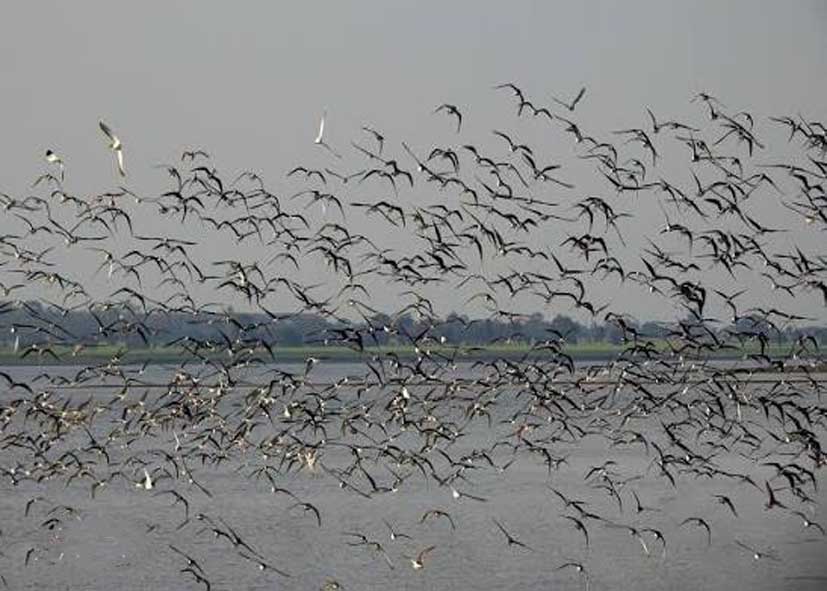
Delhi First Bird Atlas: Delhi’s first ‘Bird Atlas’ ready, 221 bird species identified in the first year

Delhi First Bird Atlas: The country’s capital Delhi is not only the center of political and administrative activities but is also considered an important place for the extraordinary diversity of birds. Delhi is ranked second in bird species richness among the capitals of the world. Despite this, till now there was no clear information available about which bird species are found in which part of the city. To overcome this shortcoming, the first ‘Bird Atlas’ of Delhi has been prepared, a total of 221 bird species have been identified and recorded in the initial year’s survey. This study is being considered an important scientific achievement to understand the biodiversity of the city.
Delhi’s first ‘bird map’ prepared in two years
This project has been prepared with the joint effort of Forest Department of Delhi Government and Bird Count India. Its main objective is to compile information related to the distribution of birds in the capital, their numbers and their habitats in a systematic and scientific manner. According to the information, this bird map includes a detailed record of bird species found in different areas of Delhi. This will help in understanding which species are found more in which areas and how their natural habitats are changing. This atlas was formally launched by Union Minister of State for External Affairs Kirti Vardhan Singh on the occasion of World Environment Day.
Survey conducted scientifically
To make the Bird Atlas more accurate and scientific, the entire city was divided into a special grid system. Under this, a detailed study was done by dividing the Delhi area into a grid of 6.6 square kilometers. Each grid was further divided into smaller sub-areas and intensive surveys were conducted at selected locations. Under this process, bird diversity was studied in a total of 145 sub-regions, representing about 11% of the capital’s land area.
195 participants took up the responsibility
Teams consisting of 2 to 5 members conducted field observations in different seasons. During this period, detailed surveys were conducted in a total of 4 phases in winter and summer, so that the presence of both local and migratory bird species could be recorded. According to officials, a total of 195 participants contributed to the entire process. These participants visited different areas of Delhi and collected data related to the identification of birds, their activities and their habitat.
221 species recorded
A total of 221 bird species have been identified and recorded in the initial year of the atlas’ survey. This study is being considered an important scientific achievement to understand the biodiversity of the city. According to the survey, the highest number of insectivorous birds was found, with 108 species recorded. This shows that Delhi’s ecosystem still supports a large number of insect-based food chains. Additionally, 37 species were found to be primarily dependent on seeds and vegetation, while 34 species were found to be omnivorous, relying on a variety of food sources. The survey also found that 33 bird species that depend on small animals and dead animals are also present in the capital. At the same time, the number of birds dependent on the nectar of fruits and flowers was the lowest, and only 9 such species were recorded.
Presence of endangered and rare birds increases concern and hope
Apart from the endangered species like Black-bellied Tern, the survey has also recorded the presence of many Near Threatened birds. These include species like the Oriental darter, Asian woolly-necked stork, black-headed ibis and painted stork. Experts say the presence of these rare and sensitive species in the capital indicates that Delhi’s ecosystem is not just an urban area but also an important biodiversity site. According to environmentalists, the presence of these species is proof that Delhi still has some natural habitats that provide favorable conditions for both migratory and local birds.
Flood areas of Yamuna and Aravalli become major centers of bird diversity
Experts say that natural factors like the Aravalli region, Yamuna flood plains, areas around the Sahibi river and the Central Asian Flyway provide Delhi with an extremely favorable environment for birds. Due to these circumstances, a large number of local and migratory birds are seen in the capital throughout the year. The banks and wetland areas of the Yamuna are seasonally visited by many migratory species, while the Aravalli region and urban green areas provide safe habitat for local birds.
From policy making to conservation, Atlas will be used in many areas
Delhi Environment Minister Manjinder Singh Sirsa has described the first Bird Atlas prepared in the capital as not just a collection of data, but an important tool for the future policy-making process. He said that this atlas provides a scientific basis for understanding the biodiversity of Delhi and through this, a detailed study of the distribution of birds and their seasonal activities has become possible. This information will help guide plans for habitat restoration, environmental protection and sustainable urban development. According to the Environment Minister, such scientific documents help policy-makers understand which areas need to strengthen green cover and preserve natural habitats. This will help maintain a balance between city development and environmental protection.
There is a need for such studies on other animals also.
In this sequence, the need for comprehensive study of other animals and plants is also being emphasized. Pankaj Gupta said that such detailed data of distribution of birds at the state level has been prepared for the first time by the Delhi government. According to him, this step is an important start towards understanding urban biodiversity. He suggested that similar comprehensive and scientific surveys should be conducted for other wildlife, plants and insects also. With this, a comprehensive scientific database of the entire biodiversity of the capital can be prepared, which will prove to be very useful for future environmental policies.
Follow the LALLURAM.COM MP channel on WhatsApp

Comments are closed.