
Janhvi Kapoor controversy: History of objectification of actresses in Bollywood and South cinema

Cinema is said to be the mirror of the society, but sometimes this mirror starts glamorizing the biggest shortcomings of the society. Recently, ‘Peddi’ director Buchi Babu Sana was accused of ‘objectifying’ Bollywood actress Janhvi Kapoor. This controversy has revived an old and bitter debate from social media to cinema corridors. The question being raised is whether it is today’s culture to make an actress just a ‘showpiece’ or an object of attraction in the name of entertainment?
The answer is absolutely no…this is not a new trend, but a page in the history of Indian cinema which is decades old. Be it glittering Bollywood or South cinema, this era of presenting women as ‘objects’ on screen is not of today, but had already strengthened its roots in the 70s and 80s. After all, when, how and around which actresses was this ‘glamorous web’ of cinema woven?
70s and 80s
If we look back at the history of Indian cinema, the decade of 1950 and 60 was of simplicity, emotions and strong characters. Actresses like Nutan, Meena Kumari, and Waheeda Rehman ruled the hearts of the audience with their acting. But as soon as the calendar entered the 1970s, the commercial formula of cinema changed completely. During this period, ‘male gaze’ (male-dominated viewpoint) started dominating cinema. The directors realized that to attract crowds at the box office, ‘visual appeal’ and ‘glamour’ were needed more than the story. This was the beginning of using actresses only as a commercial tool.
What is ‘Male Gaze’?
That viewpoint of the film industry where the camera is rotated in such a way that the audience, especially the male audience, sees the actress on screen not as a human being or a character, but as a ‘sexual object’.
Bollywood actresses who became victims of this ‘male gaze’
In the 70s and 80s, many such actresses came to Bollywood who proved their excellent acting skills, but the industry capitalized on their screen presence and glamor more than their talent.
1. Zeenat Aman
In the 70s, Zeenat Aman created a stir in Hindi cinema with her western look and boldness. But Raj Kapoor’s film ‘Satyam Shivam Sundaram’ (1978) became the biggest example of this. More than Zeenat’s acting in the film, her clothes and the camera angles showing her body were discussed more. The way the camera was focused on them in the name of art, it laid the foundation of today’s ‘objectification’.
2. Parveen Babi
Parveen Babi was known for her tremendous acting skills, but directors always kept her in a ‘modern, bold and sizzling’ image. In the songs of films, she was presented in such a way that the audience’s attention shifted from her acting to only her beauty and clothes.
3. Mandakini and Dimple Kapadia
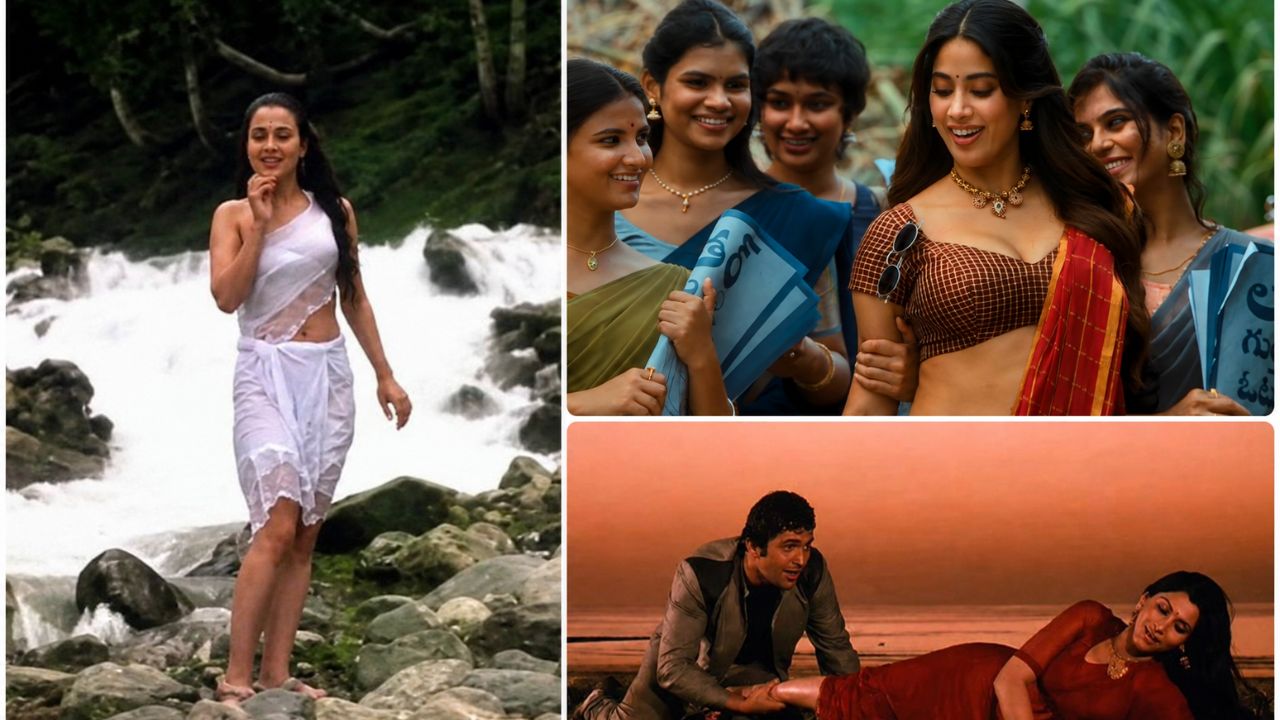
As the 80s approached, this trend became even more aggressive. The scenes below the waterfall shot on Mandakini in the film ‘Ram Teri Ganga Maili’ (1985) are still discussed. Director Raj Kapoor had presented it as a metaphor of a sacred river, but for the distributors and the audience it remained just a ‘hot scene’. Similarly, in Dimple Kapadia’s film ‘Sagar’, her bold scenes were sold as the USP of the film.
‘Commercial Formula’ of South Cinema
If you think that all this was limited to Bollywood only, then it is very important for you to know the history of that period of South Cinema. In the 80s and 90s, the way actresses were presented in South, especially Telugu and Tamil cinema, was even more objectifying than Bollywood. Veteran director of Telugu cinema K. Raghavendra Rao’s films are still remembered in this matter. He started a strange trend of dropping fruits, flowers or water drops on the navels of actresses in his films. From Sridevi, Jayaprada to Nagma and Tabu in later times, almost every big actress of South had to go through such scenes. Before becoming Bollywood’s ‘Chandni’, Sridevi spent a long time in South cinema. The directors there used her innocent face and excellent dancing skills, but also made her a part of very loud and objectifying songs. It is not possible to talk about South cinema of the 80s and not mention Silk Smitha. The industry had completely molded Silk Smita into the mold of a ‘vamp’ and a ‘sex symbol’. It was mandatory to have an item number or bold scene in each of his films so that the film could become a superhit. His talent remained buried somewhere under this objectification.
These actresses spoke openly
Many big stars have openly raised their voice against objectification of actresses in South cinema and promotion of ‘male gaze’ on screen. Taapsee had said something laughing but serious in an interview, ‘I could not understand why the makers in South are so fond of the midriff i.e. the mid part of the body of women. The director of my first film was known to throw fruits or flowers on the navel. When my turn came, they threw a coconut on my navel. I didn’t understand what shot it was or what art it was, but I had to remain silent. His statement had sparked a huge debate on this strange trend of South cinema. Ileana told that when she was very young and was doing her first Telugu film, the director planned a shot of dropping a big conch on her navel. Ileana said, ‘I could not understand why this was being done. When I asked, I was told that this is to make your waist and navel look beautiful. When I saw that shot on the screen, I felt very strange and I started crying because it was sheer objectification. Recently, in an interview to Variety India, Nithya Menen defended the South film industry and said, ‘I don’t think we can isolate it and say that it happens only in South cinema. This is not true, I think this is a trend everywhere. ‘
Has anything really changed?
After understanding this background of the 70s and 80s, when we see the controversies happening today over Janhvi Kapoor or other rising actresses like her, then we understand that the mentality of cinema still stands the same. Of course, today women are directing, strong scripts are being written and this is the era of ‘women-oriented’ films. But when it comes to a big commercial and big budget film, even today the old ‘masala formula’ of directors comes out. Zoom-in shots in songs, forced dance moves in short dresses and limiting the role of the actress in the story to just the ‘love interest’ of the hero. This shows that we may be living in 2026 in technology, but in terms of thinking we still have not come out of the 80s.

Comments are closed.