
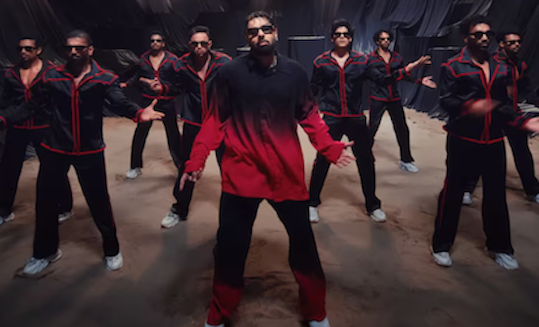

Hitmaker Badshah, who turned 40 this year, will step onto the stage at London’s O2 Arena in March 2026, becoming the first Indian rapper to headline one of the world’s best-known venues. “Headlining The O2 is more than a milestone — it’s a dream I’ve carried for years. Desi hip hop belongs on the global stage, and this show is our declaration. London, we’re about to make history together — louder, prouder and bigger than ever. 22nd March 2026 will be a night we remember forever,” the superstar rapper said in a release.
It is the sort of achievement that invites you to go back and examine how a Delhi-born civil-engineering student, originally from Chandigarh, ended up giving the soundtrack to India’s weekends, weddings, parties, heartbreaks and late-night self-reflection. Before we get to Badshah, though, we need to acknowledge that Indian rap had a head start long before he and YoY o Honey Singh turned into what it has become today.
The road to stardom
The first man through the door was Baba Sehgal, who burst on the scene in the early 1990s rapping about Thanda Thanda Pani and Aloo the paragraph at a time when the country was just discovering MTV Asia and cable television. Dilruba (1990) and Alibaba (1991) put him on the map, but Sehgal’s 1992 album Thanda Thanda Pani — which reportedly sold five million cassettes — made him India’s first successful rapper. To call his work “hip-hop” in the modern sense is a stretch, but he introduced audiences to rhythm-driven Hindi delivery, a kind of precursor to the bilingual swagger that would return with a very different energy two decades later.
The man who turned that concept into a behemoth, a full-fledged marketplace was Yo Yo Honey Singh. By the late 2000s and early 2010s, Singh had fused Punjabi pop, rap, and Bollywood-friendly numbers into a commercial juggernaut that swallowed dance floors and dominated radio rotations. The list of hits he produced during this period — Blue Eyes, Brown Rang, Dope Shope, Desi Kalakar, Love Dose, Sunny Sunny, Party All Night, Chaar Bottle Vodka, Lungi Dance, English Beat, Dheere Dheereand most recently Laal Pari — reads like a retrospective of every Indian party between 2011 and 2016. Singh not just nudged rap forward, he also repositioned it as the primary fuel for Bollywood’s new sonic appetite. It was in this glow — and its competitive shadows — that Badshah arrived.
Also read: Why I don’t need to see Coldplay perform live to validate my bond with their music
Long before the feud headlines, the allegations, the counter-statements, and the strategic silences, Badshah and Honey Singh were part of the same embryonic collective: Mafia Mundeer, alongside Raftaar, Ikka and Lil Golu. In those pre-Spotify days, the group produced tracks like open bottle, Begani Naar Buriand Delhi’s fans. Eventually, by 2012, the group split up. Both singers claim authorship over early hits: Badshah has repeatedly asserted he wrote Brown Rang and contributed to the rap portions of english beat, claims Singh denies.
For a moment in 2024, it seemed the long-standing dispute between the two artists had ended. At a concert in Dehradun, Badshah announced that he wanted to let go of the grudge, calling the fallout a “misunderstanding” and wishing Honey Singh well. It was the kind of reconciliation statement that could have closed a decade-long chapter until, in July this year, an X user posted Honey Singh’s physical transformation photos with the caption “What did he eat?” and Badshah replied with a pointed, one-word quip: “Credits.”
The breakthrough year
However, long before any of this, New Delhi-born Badshah was simply Aditya Prateek Singh Sisodia, a civil-engineering student in Chandigarh, who discovered he was better at playing with language than with numbers. He borrowed from Bollywood, Punjabi pop, global rap, reggaeton, folk refrains — anything that caught his ear — and stitched it into a style that sounded very much like Singh’s.
The breakup from Yo Yo Honey Singh and that world in which he had started out as Cool Equal, however, did mark the beginning of Badshah’s solo design and the years that followed, he produced songs like Saturday Saturday, DJ Waley Babu, etc. Suddenly, there was rap in wedding baraats. There were Punjabi trap beats in Bollywood nightclubs. Teenagers who once thought rap was only Eminem and 50 Cent were shouting Badshah lyrics on school buses.
In the last one decade, Badshah has become India’s most recognisable face of desi hip-hop.
Critics frowned, purists rolled their eyes, but India was vibing and grooving to his heavy bass, addictive hooks, self-aware humour and wordplay drenched in Delhi-Punjab energy. Badshah raps in Hindi, Punjabi, English, and sometimes Haryanvi, which he codeswitches in the true style of a generation raised on MTV. And somewhere between the viral songs, the endorsement deals, the judging stints on reality shows like Hustle, Heart is Hindustaniand India’s Got TalentBadshah became a pop star.
His breakthrough came when Saturday Saturdayoriginally released as a Punjabi single with Indeep Bakshi, was remade for Humpty Sharma Ki Dulhania in 2014. It bridged his Punjabi-rap beginnings with Hindi cinema’s hunger for high-tempo, dance-friendly numbers. What followed was a run that made him unavoidable: Abhi toh party has started, Kar Gayi Chull, Proper Patola, Garmi, and Jugnu. These tracks, sung with other artists, became parties’ staple fare, their tempo engineered for clubs.
Heartless and Paagal
Badshah’s single Heartless from his 2018 album ONEmarked one of the first moments when he stepped away from his usual vocabulary of parties, flirtation and punchlines and surprised listeners with a track built around the idea that the world, not he, is “heartless.” The song itself is simple and melodic, but the video reframed it entirely: a story about a terminally ill girl whose last wish is to meet Badshah, with media vans crowding outside the hospital in a frenzy that contrasts sharply with the sincerity of the encounter.
The song caught audiences off-guard in the best way; the video sparked conversation about how celebrities are judged, how genuine kindness is often misread, and whether the song borrowed from the emotional generosity of Drake’s God’s Plan. The track quickly crossed 50 million views (346 millions till date), with Sony Music India calling it “instantly likeable,” fans treating it as a rare glimpse into Badshah’s softer register, and actors like Parineeti Chopra publicly praising its emotional charge.
Also read: Zubeen Garg obit: The voice that carried Assam’s love, longing and loss in its timbre
At the time, Badshah acknowledged the irony that while he was releasing one of his most tender songs, he was also receiving the usual flood of hate messages and criticism — something he said he had grown used to — only strengthening the point the song makes: that behind the noise, behind the caricature of the “Badshah sound,” is an artist capable of examining the world’s harshness with disarming clarity.
Paagal (2019) arrived with its own controversy — hitting 74.8 million YouTube views in 24 hours (406 millions so far), which surpassed global heavyweights like BTS and Taylor Swift. Sony Music India celebrated it as an unprecedented moment for Indian pop. The spectacular numbers also triggered immediate scepticism: social media users accused the team of inflating views through ads and other promotional tools, and YouTube ultimately declined to certify the 24-hour record, arguing that the traffic patterns weren’t comparable to organic viewership spikes.
The debate intensified when a later Mumbai Police investigation into unrelated influencer fraud revealed that Badshah had paid for boosted views on other past projects, a disclosure that further clouded public perception around Paagal’s meteoric rise. Even so, the song was a hit song about wild passion and unapologetic living, delivered in Badshah’s trademark peppy punchlines and cultural mashups like calling himself “international” while insisting his music stays delightfully local. The idea reportedly came from a moment when actor Maniesh Paul joked about a girl obsessing over him and calling her partner (crazy).
The poet of the street
Albums are where Badshah reveals his real ambitions. In O.N.E. (Original Never Ends)he tried to pull his universe into a cohesive framework for the first time. It didn’t abandon his usual style, but showed glimpses of someone itching to explore more varied emotional and sonic textures. He took another with The Power of Dreams of a Kid (2020), featuring Alternative hip-hop influences, younger collaborators (Lisa Mishra, Sikander Kahlon, Fotty Seven, Bali), and a production palette that sounded like a man letting air into the room. It’s one of his most underrated works: intimate, slightly melancholic, still playful but more thoughtful.
The EP Retropanda – Part 1 (2022) was another pivot. With Jugnu, featuring Nikhita Gandhi and Akanksha Sharma, which invited us “to enter a realm where all of time and space will conspire you to fall in love, everywhere and anywhere,” he proved he could create groove without relying on maximalism and bombast. The track’s 200 million Spotify streams were an acknowledgment of his ability to reinvent. These detours culminated in 3:00 AM Sessions (2023), which he described as his “unfiltered and vulnerable side.” The opener with Karan Aujla feels like a 2 a.m. confession set to a beat.
There was one king (2024), a sprawling cross-scene collaboration featuring Divine, Raftaar, Ikka, Dino James, Arijit Singh, MC Stan, KR$NA, Seedhe Maut, and more, is arguably his most ambitious project yet. For years, Badshah’s detractors have accused him of writing shallow, party-focused lyrics. But the rapper remains somewhat unfazed,unperturbed and continues to make music he believes in, revels in. His independent EP Fitoor, which was released this year, is the clearest example of a man speaking in his own voice, giving little damn to the chorus of criticism.
Galyon Ke Ghalib from Fitoor, has become the breakout track for his fans for its almost literary phrasing, and marked the debut of Badshah as a dancer, a deliberate breaking of typecast. Its title performs its own sleight of hand, placing Ghalib — the 19th-century poet of longing and wit — in the “can,” the everyday street. It’s an admission that the pop star occupies a space closer to the street than to an elevated poetic tradition. If the O2 Arena is a crown, then the music is the kingdom Badshah has built in the last decade.

Comments are closed.