
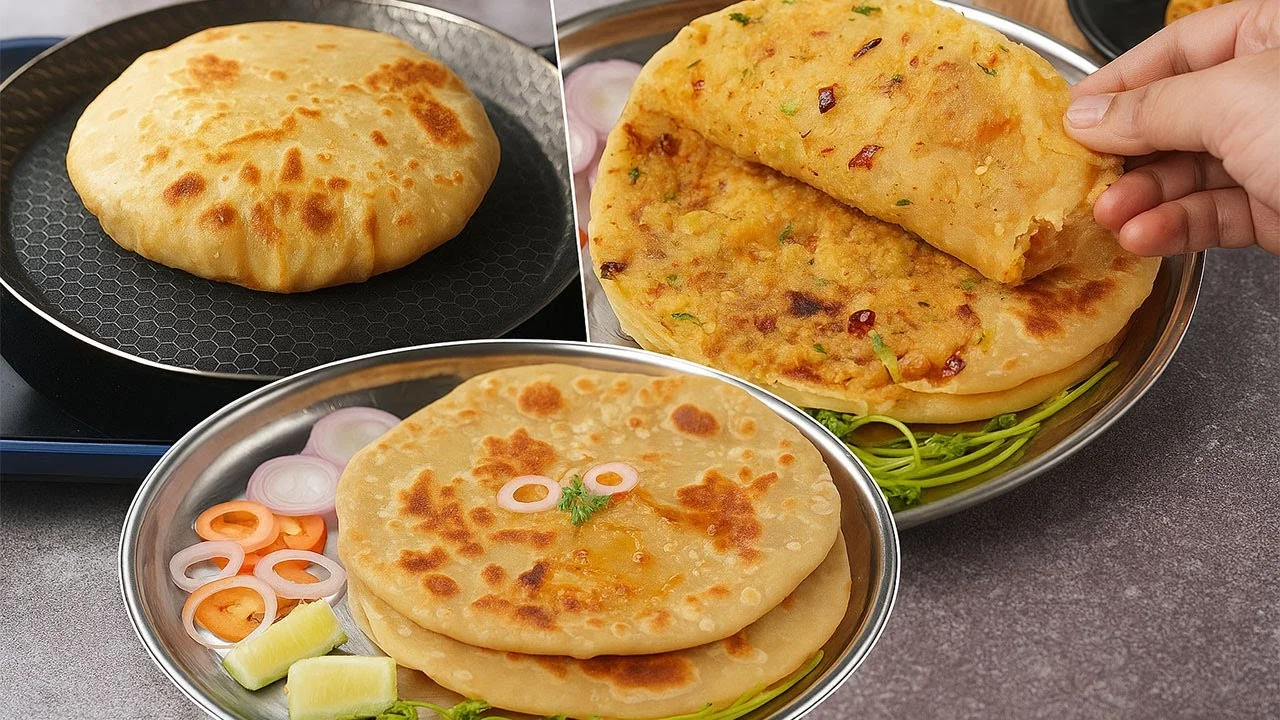
Be it closed cabbage, potato or radish… the parantha will never burst, it will taste like mother’s hands, follow these tips

Aloo Paratha: When mom makes parathas, they puff up and don’t tear, but whenever I make them, the filling oozes out. If you have this complaint, you should keep a few simple things in mind. Whether it’s radishes or potatoes and cabbage, if you (…)
Aloo Paratha: When mom makes parathas, they puff up and don’t tear, but whenever I make them, the filling oozes out. If you have this complaint, you should keep a few simple things in mind. Whether it’s radish or potato and cabbage, if you follow a few tips, you can make perfect parathas with any vegetable, from kneading the dough to rolling the parathas and stuffing them. Cooking is a skill that improves with practice, but if you’re new to cooking, these little hacks can make your job easier.
Hot parathas are a joy to eat in winters, but if mom isn’t home or you’re away, the tips here can help you make the perfect parathas, whether you opt for aloo bharai or cabbage and radish. Let’s take a look at what you need to keep in mind to make the perfect paratha.
Method of kneading the dough
The dough for roti, puri and paratha is kneaded differently. The dough for paratha should be much softer than roti and puri, because it has a soft filling, and if the dough is hard, the filling will ooze out. After kneading, let the dough rest for a while, cover it with a cloth to make it elastic and prevent the paratha from cracking.
Correct way to fill
When making dough balls for stuffing, do not roll them with a rolling pin; Instead, spread the dough with your fingers and thumb, then fill them with the stuffing. Make sure that when you close the dough balls after filling, there is not too much stretching and it closes tightly.
The right way to roll
Compared to roti and puri, parathas are rolled much more slowly. If you roll the paratha too quickly, the stuffing will come out. Always roll the paratha gently, using a rolling pin to roll evenly on all sides. If you roll the paratha too quickly on the edges or in the center, the paratha will crack.
After boiling the potatoes, mash them well to ensure that no lumps remain. Similarly, when making radish parathas, grind them, add salt, and put them in a strainer to drain all the water. Later, place them in a fine cotton or muslin cloth and squeeze well. Similarly, after grating the cauliflower, place them in a cloth, squeeze, then add the spices, and cook lightly. This will prevent your paratha from cracking at all.

Comments are closed.