
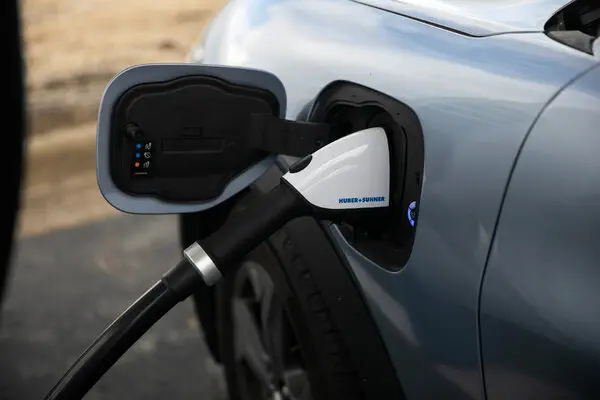

The cost of gasoline has surpassed $4.50 per gallon in much of the United States. It is a blessing in disguise for EV owners since their gas expenses will not be that high. However, there is a bill being introduced by the law-makers in Washington where EV owners are expected to pay more for the upkeep of America’s roads through federal fees.
The BUILD America 250 Act is being proposed by the bipartisan group within Congress. The act would implement a federal fee on EVs and plug-in hybrids annually. According to its supporters, it is going to ensure that the country can continue to keep its roads in great shape. Opponents state that the bill is targeting EV owners who drive greener cars.
The core issue behind the bill is that of the Highway Trust Fund. This trust fund provides a substantial amount of money for repairing the roads. The fund depends greatly on the Federal fuel tax, which means that EV owners are not paying anything towards it.
Chairman of the Transportation and Infrastructure Committee, Sam Graves.
“The BUILD America 250 Act ensures that electric vehicle owners begin paying their fair share for the use of our roads,” Graves said.
Proposed EV Fees Spark Backlash
According to the bill, owners of electric cars will have to pay an annual fee of $130 starting from 2029, which will be increased by $5 every two years until reaching $150. On the other hand, plug-in hybrids will need to pay $35 per year initially and will increase up to $50 annually.
The proponents of the bill claim that there is a major challenge related to road funding. In particular, cars have grown more efficient through the years and continue becoming increasingly popular. Simultaneously, the federal gas tax remains constant at 18.3 cents per gallon since 1993. Inflation and the change in driving habits significantly decrease the impact of the current tax rate.
However, many EV enthusiasts believe that the suggested fees are unreasonable.
For example, Sierra Club expressed its opposition to the bill and considered it a penalty towards clean transportation. Katherine García, the director of the Sierra Club’s Clean Transportation for All Campaign, believes that Congress should support greener cars rather than imposing extra fees on their owners.
The same stance was expressed by Zero Emission Transportation Association, whose executive director Albert Gore admitted the necessity to discuss the Highway Trust Fund but rejected the proposed solution.
These facts have been used by critics as evidence to support their claims.
Why the Proposed Electronic Vehicle Road Usage Fee Is Drawing Criticism
According to research published by Consumer Reports, on average, an American citizen pays between $70 to $90 every year in federal gas taxes. This implies that the proposed EV road usage charge will be higher compared to the contribution made by many motorists who use gasoline.
Another drawback brought about by these fees is that they do not take into account how much a driver uses his vehicle. A retired individual, using an electric vehicle locally, would have to pay the same amount as another motorist who drives many miles monthly.
Analysts from Consumer Reports noted that fixed annual charges also tend to reduce the burden of road usage on businesses. For instance, delivery vans, ride-sharing services, and robotaxis tend to spend more hours on the roads compared to other cars but would fail to pay more through the new proposal.
In addition to the federal EV taxes, states have their own fees on electric vehicles.
New Fees Spark Tension Over Infrastructure Funding
In Michigan, EV owners would be subject to a $267 fee on registration in 2026, whereas owners of plug-in hybrids will have to pay $113. In New Jersey, EV owners will incur an EV registration fee of $270, which will also have to be paid four years in advance.
These additional expenses are worrying some EV owners since they are forced to deal with higher initial costs of their cars as opposed to the conventional gas-guzzlers.
On the other hand, there is increasing pressure on legislators to come up with alternative solutions for financing infrastructure projects since, in the future, less money will be generated from fuel taxes as a result of increased adoption of electric cars by Americans.
According to some policy experts, road-use mileage-based charges might become an alternative to the flat fees.
For the time being, the suggested federal charge is still very far from becoming an actual law. It requires passage through both houses of the Congress and the signature of Donald Trump. Hopefully, the project will be completed before its expiration date set for September 30th.
In essence, the discussion reveals one of the bigger problems that both the automobile industry and the legislature face. It appears that the US wants to have a clean environment as well as up-to-date infrastructure. However, it seems unlikely that both objectives can be reached without causing discontent among motorists.

Comments are closed.