
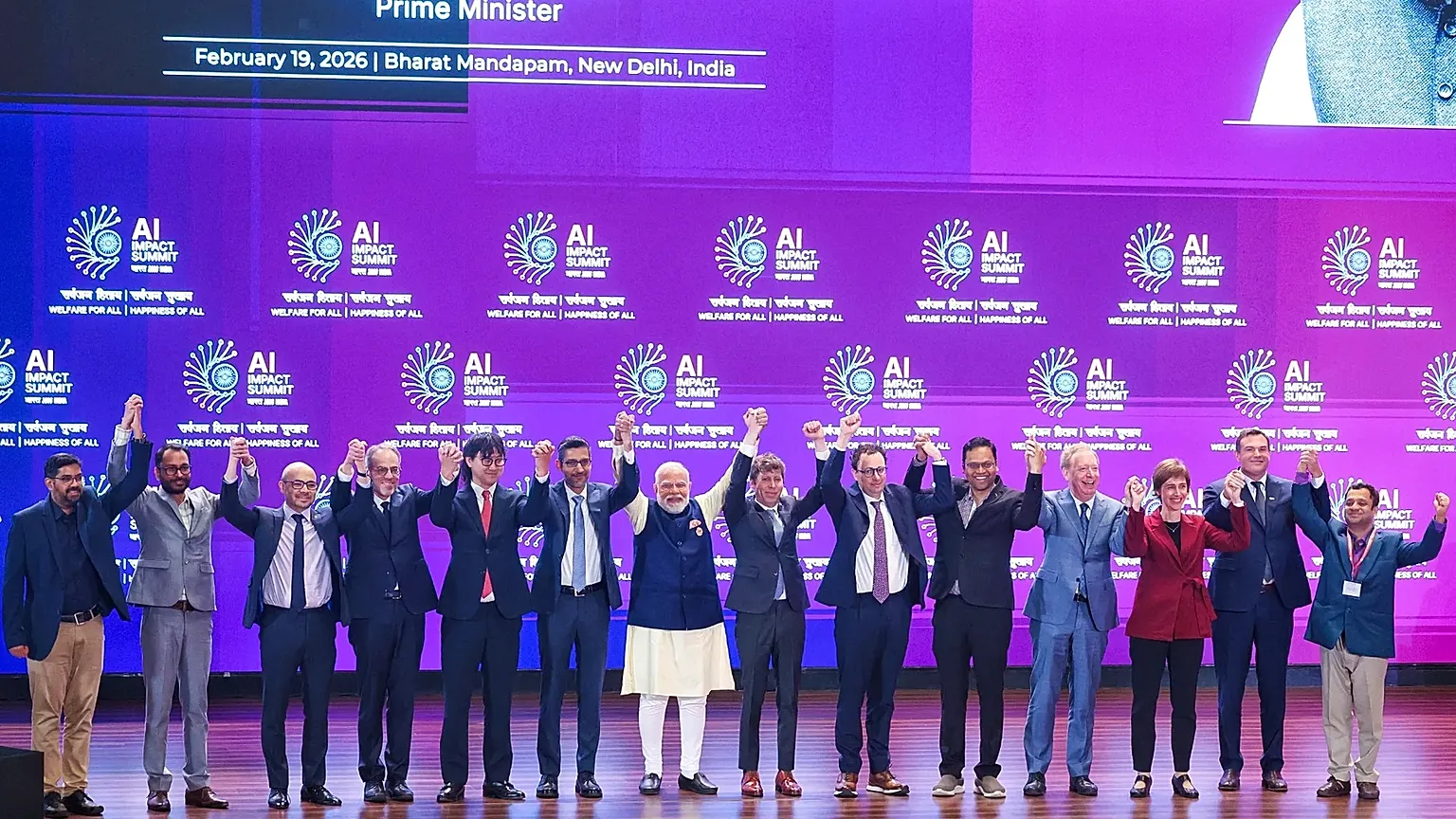

The India AI Impact Summit 2026 in New Delhi was meant to celebrate the country’s rapid strides in artificial intelligence and deep-tech innovation. But amid the excitement around cutting-edge robotics, the spotlight split into two dramatically different narratives — one showcasing authentic indigenous innovation, and the other sparking controversy over misrepresentation.
The summit became a powerful reminder that while India’s AI ambitions are soaring, credibility and transparency remain just as critical as technological prowess.
Credits: AP News
A Bengaluru Startup’s Proud Moment: Meet “Param”
At the heart of the summit’s robotics showcase was General Autonomy, a Bengaluru-based deep-tech startup that introduced its quadruped robot dog, Param. Billed as “India’s most powerful indigenous robot dog,” Param was designed, engineered, and built entirely by Indian talent — without dependence on imported assembly components.
What made Param stand out wasn’t just its patriotic positioning, but its impressive technical capabilities. The robodog demonstrated autonomous navigation, obstacle detection, stair-climbing ability, and automated fall recovery. In a live demo and through viral videos circulating on social media, Param was seen confidently navigating Bengaluru’s streets, adjusting its gait to uneven terrain, and maintaining stability even after being pushed.
The robot’s capabilities drew attention beyond the tech community. Param was showcased to Prime Minister Narendra Modi during a Startup India deep-tech exhibition, symbolising India’s growing push toward self-reliance in advanced robotics. For many observers, it represented a tangible step toward India’s ambition to become a global AI and robotics powerhouse.
In a field long dominated by global giants, particularly companies from the US and China, the emergence of a truly Made-in-India quadruped robot marked a significant milestone.
The Orion Controversy: A Case of Mistaken Identity
However, the celebratory atmosphere at the summit was disrupted by a parallel incident involving Galgotias University. A video clip that quickly went viral showed a university representative presenting a robotic dog named “Orion” as a product of the institution’s research centre.
But sharp-eyed observers were quick to identify the robot as the Unitree Go2 — a commercially available Chinese-made quadruped robodog widely sold online. The misidentification triggered swift criticism across social media platforms and within policy circles. Questions emerged about transparency, accountability, and the integrity of representations made at national technology events.
The Ministry of Electronics and Information Technology reportedly issued warnings against misinformation in summit exhibits, emphasising the importance of authenticity in showcasing technological achievements.
In response, Galgotias University clarified that the robot had been procured for educational and learning purposes and was not developed in-house. The university apologised for the confusion, stating that the staff member who spoke to the media was “ill-informed” and not authorised to represent the project. Despite the clarification, organisers asked the university to clear its pavilion amid the backlash, turning the incident into one of the summit’s most talked-about controversies.
A Broader Lesson for India’s AI Ecosystem
The contrast between Param and the Orion episode could not have been sharper. On one hand, a startup demonstrated genuine indigenous capability, earning praise and national attention. On the other, a miscommunication — or misrepresentation — cast a shadow over the credibility of academic participation at the same event.
The episode underscores a critical point: in an era where AI and robotics are central to national competitiveness, authenticity matters as much as innovation. High-profile platforms like the India AI Impact Summit are not merely exhibition spaces; they shape public perception, investor confidence, and policy momentum.
India’s AI ambitions are undeniably bold. The government’s push for deep-tech startups, semiconductor manufacturing, and advanced robotics reflects a strategic vision to reduce technological dependence and build global leadership. Success stories like Param show that this vision is beginning to translate into tangible outcomes.
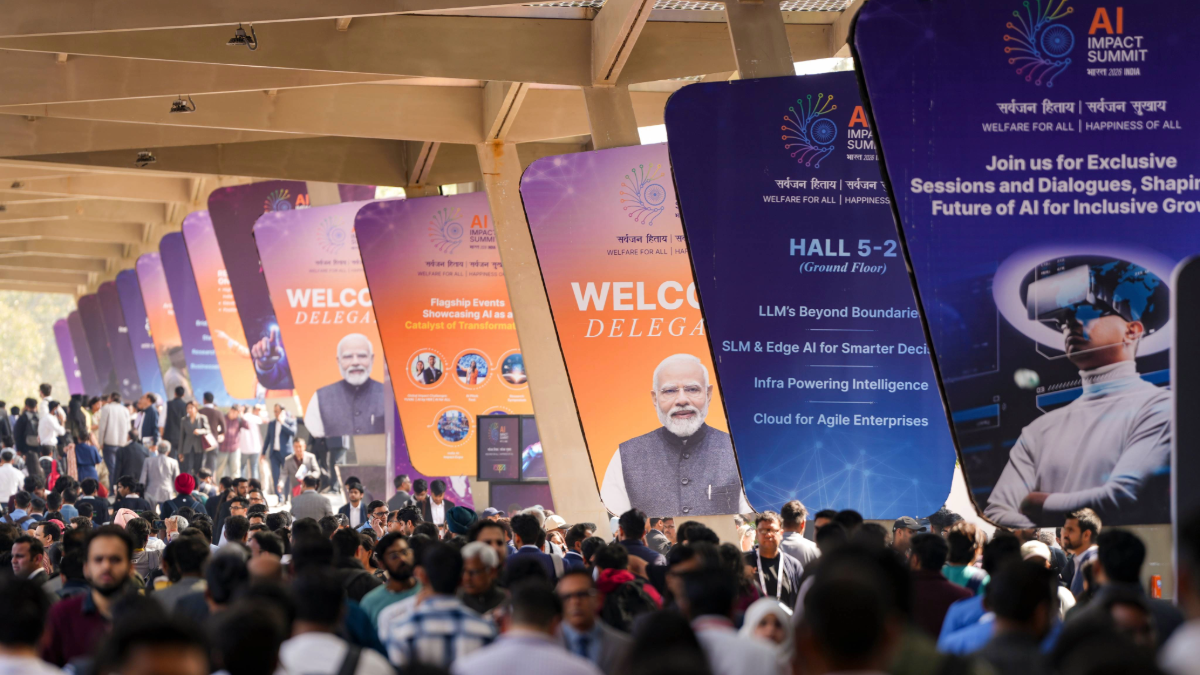
Credits: Tech Policy Press
But the Galgotias controversy highlights the importance of clear communication and ethical representation. As India positions itself on the global AI stage, every showcase carries reputational weight.
In the end, the summit served as both celebration and caution. It demonstrated that India has the talent and capability to build world-class robotics — but also that credibility, transparency, and accountability must move in lockstep with technological progress.

Comments are closed.