
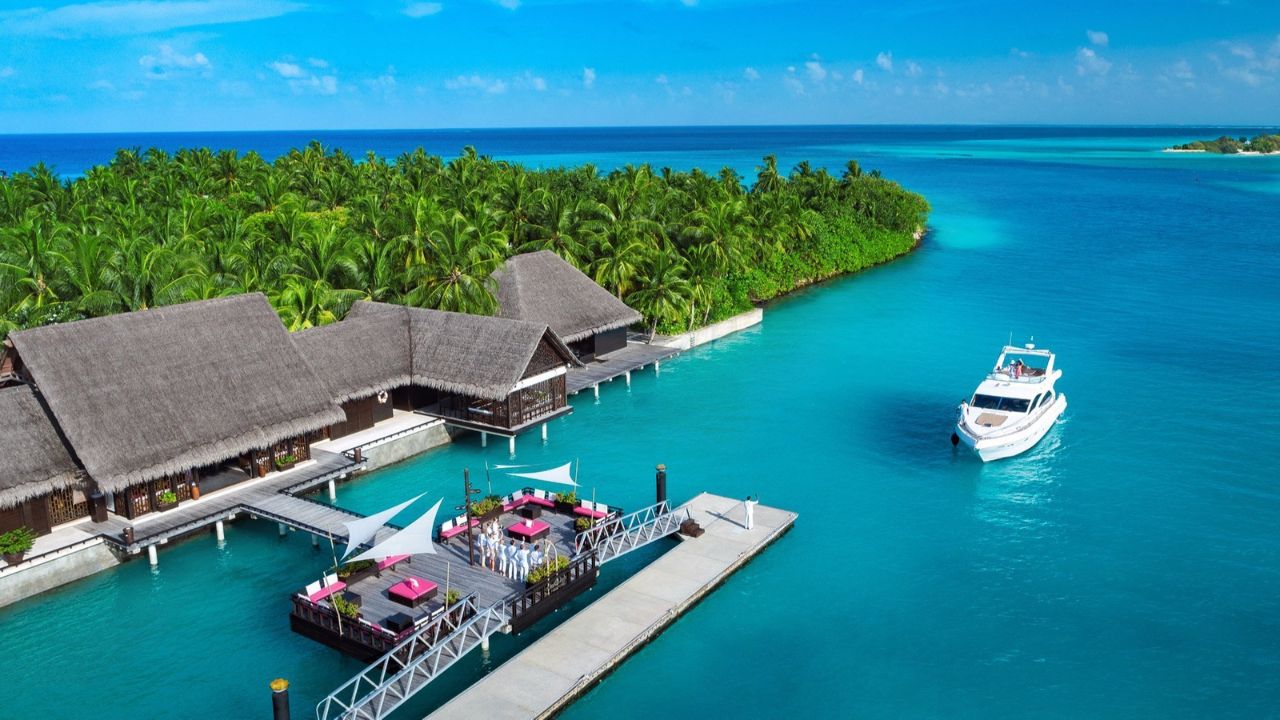
Liquor prohibition ends in Lakshadweep after 47 years, preparations to increase tourism on Maldives model

Whenever pictures of the magical world of Lakshadweep appear on social media, people yearn to go there. But do you know that this beautiful corner of India, which rivals Maldives, had complete ‘no-entry’ on one thing for the last 47 years? We are talking about alcohol. But now such a news is coming from this beautiful island group of Arabian Sea, which has created panic not only among travelers but also in the business world.
Taking a historic and big decision, the Central Government has ended the prohibition that had been going on for almost five decades in Lakshadweep. The government has completely repealed the ‘Lakshadweep Prohibition Regulation, 1979’. This means that now legal and regulated sale of liquor can be done through licensed shops in this beautiful tourist destination. Why was this decision taken, what is the story behind it and how is it going to change the fate of this island?
What was the law of 1979?
In the year 1979, considering the social and cultural condition of Lakshadweep, the Central Government had imposed strict prohibition there. After the implementation of this law, the entire archipelago had almost become a ‘dry zone’. However, it was not that there was not even a drop of alcohol present there. It was kept very limited for the convenience of tourists and government officials. Liquor was allowed to be served with a permit in government bars and select luxury resorts on Kavaratti and Bangaram islands, but its sale to the general public or in the open market was completely banned.
Religion, culture and local opposition
The biggest reason behind this ban was very simple and social. A large part of the population of Lakshadweep, about 97 percent, belongs to the Muslim community. This is the largest proportion of Muslims compared to any state or union territory in India. At the same time, according to the 2011 census, out of the total population of 64,473 here, about 95% people fall in the Scheduled Tribe (ST) category. Since consumption of alcohol is completely banned in the religion of Islam, the then administration had imposed this ban while respecting the religious sentiments, cultural values and social fabric of the local people. For decades, local parties and social organizations have advocated that this ban is extremely important to maintain peace and law and order on the island. This was the reason why Lakshadweep was included in the list of states like Gujarat and Bihar, where selling and drinking liquor was considered a major crime.
Why was the 47 year old rule changed?
Now the question arises that when everything was going on peacefully for years, why suddenly there was a need to change this rule? The answer lies in the race for ‘Global Tourism’. For the last few years, the Central Government wants to establish Lakshadweep as a premier tourist destination on the world map. Officials believe that when international tourists go to the Indian Ocean for holidays, their first choice is countries like Maldives or Mauritius. A major reason for this was that a Muslim-majority country like Maldives has also made the availability of alcohol legal in its resorts and specified tourist zones. In such a situation, Lakshadweep was lagging behind in the global competition due to the strict rules of prohibition.
Those pictures of PM Modi changed the fate of Lakshadweep
The biggest twist in this story came in January 2024. Prime Minister Narendra Modi visited Lakshadweep. As soon as the pictures of him snorkeling, spending leisure time on the beach and meeting the local people came on the internet, ‘Lakshadweep’ started trending in the country and the world. This was not just an official visit, but an effort to tell the world that we have a more beautiful option than Maldives.
The impact of this ‘Modi effect’ was clearly visible in the figures:
Year 2020: The number of tourists coming to Lakshadweep was only 3,875
Year 2024: This figure reaches 68,328 with a huge jump of 47%
This huge influx of tourists prompted the administration to make major changes in the infrastructure and rules.
What are the new rules and restrictions?
The lifting of prohibition does not at all mean that now anyone will be able to drink alcohol anywhere in Lakshadweep. For this, the government has implemented ‘Lakshadweep New Excise Regulations, 2026’. Under this, manufacturing, import-export, transport, purchase and sale of liquor will be kept under very strict control. The administration has made it clear that it will not allow any ‘unlimited or uncontrolled market’ to be established on the island.
What are the rules?
The island’s administrator has veto power, reserving the right to set limits on the purchase and possession of alcohol at any time. If they wish, they can also impose liquor prohibition again in a particular part of Lakshadweep. Also, selling liquor to youth below 21 years of age will be completely illegal. Now government corporations and authorized agencies will also be able to get licenses for import and retail sale of alcoholic beverages.
How heavy will the tax be on the pocket?
If anyone is thinking that liquor is going to be cheap in Lakshadweep, then they are wrong. The administration has raised tax rates to the sky to quell local opposition and prevent excessive consumption. While in metropolitan cities like Delhi, around 25% VAT is levied on liquor and beer, the tax structure of Lakshadweep is mind-blowing. Type of Liquor If we look at the Excise Duty under the new rules:
Indian Made Foreign Liquor (IMFL) 400%
Imported Liquor 400%
Beer 200%
Wine 80%
This means that to enjoy their favorite drink in Lakshadweep, tourists will have to shell out a lot of money.
Will the journey to Lakshadweep become easy for tourists?
There are a total of 36 islands in Lakshadweep, out of which only 10 islands are inhabited namely Agatti, Amini, Andrott, Kalpeni, Kavaratti and Minicoy. According to the current rules, both Indian and foreign tourists require a special permit to come here. For foreign tourists, only Agati, Bangaram and Kadmat islands are still limited. In such a situation, after the arrival of new rules, it is expected that in the coming time, the permit procedures can also be made a little easier so that luxury cruises and international resorts can be attracted.

Comments are closed.