
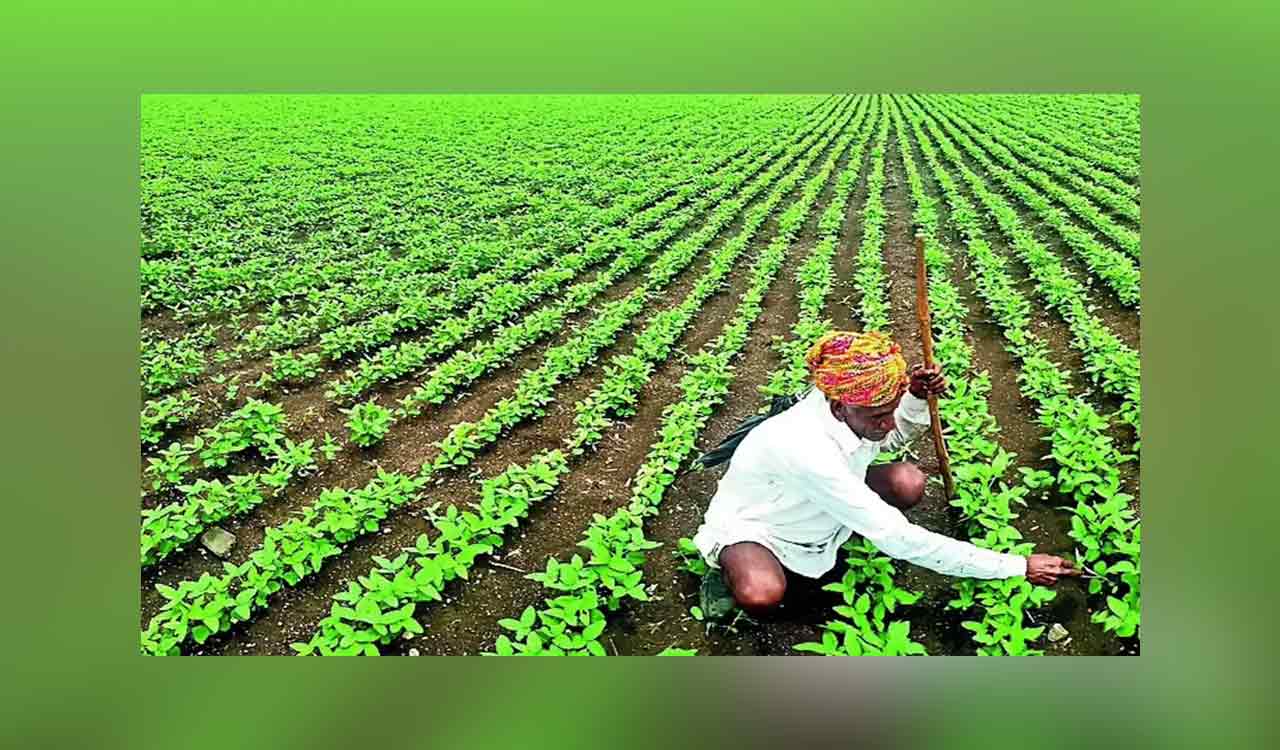
Ranchi’s ICAR-Research Complex says farmers benefitting from its two soybean, snow pea varieties

Ranchi’s ICAR-Research Complex reported that farmers are benefiting from its newly developed soybean and snow pea varieties, which offer higher yields and improved resilience, promoting better income and agricultural sustainability in the region
Published Date – 7 December 2025, 12:05 PM
Ranchi: Two soybean and snow pea varieties developed by the ICAR-Research Complex here are rapidly gaining acceptance among farmers and earning recognition at national and international levels for their taste and high nutritional value, a scientist said.
These improved varieties are the result of continuous research conducted over nearly three decades at the centre located in Ranchi’s Plandu, Horticulture and Vegetable Science’s principal scientist RS Pan said.
“Soybean variety ‘Swarna Vasundhara’ and snow pea variety ‘Swarna Tripti’ have gained nationwide recognition. Their popularity among farmers is steadily rising,” he said.
The soybean variety was introduced in Jharkhand and other States to provide nutritional and livelihood security among the farmers.
“Based on the recommendation of the Central Sub-Committee on Crop Standards, Notification and Release of Varieties for Horticultural Crops, the variety is now being supplied to farmers in 14 States,” Pan said.
Farmers gave a positive response to the soybean variety in Jharkhand, Andhra Pradesh, Bihar, Karnataka, West Bengal, Madhya Pradesh, Odisha, Himachal Pradesh and Chhattisgarh, he said.
‘Swarna Vasundhara’ has now become a widely recognised identity of Jharkhand, the scientist said, adding that its promotion aligns with Prime Minister Narendra Modi’s appeal for India to achieve self-sufficiency in pulses.
The main objective behind developing this soybean variety was to address nutritional deficiencies across all age groups, he said.
“The original germplasm of the soybean was imported from the World Vegetable Centre, Taiwan, and later improved through selection and experimental cultivation in Ranchi. And it is a source of proteins, carbohydrates, lipids, essential fatty acids and minerals,” Pan said.
Additionally, it also contains isoflavones, which are anti-cancer compounds, and is beneficial for people suffering from osteoporosis (knee pain) and heart-related ailments, he said. It could also be preserved in the form of frozen soybeans for a year at -20 degrees Celsius, the scientist said.
Processing units have been set up in Pune and West Bengal to produce soya milk, curd, paneer, rasgulla and other value-added products from the soybean.
“Local farmers are directly benefiting from this. A farmer from Nagri in Ranchi district is cultivating ‘Swarna Vasundhara’ on a large scale and supplying the agro produce to Pune and other locations. Another cultivator, Emleen Kandulna, is also producing various value-added products from the crop,” Pan said.
Dr Raushan Kumar, who is working as the agriculture advisor to cricketer M S Dhoni, said, “He has cultivated Swarna Vasundhara, a high-yielding improved soybean variety. One kg of seed was brought to the farm from ICAR, Plandu, for trial during this Kharif season. The crop matured in about 3-4 months and gave a very good yield. From next year, we will definitely cultivate it on a large scale. The taste of this soybean is better than the earlier varieties.” He also added that 1 kg of Swarna Tripti seed was also cultivated on the farm.
Anil Mahto, a farmer from Nagri, also cultivated Swarna Vasundhara on 50 decimals of land. He said, “I purchased 10 kg of seed for Rs 1,500 and my expenses were Rs 5,000 on ploughing, Rs 5,000 on bed preparation, Rs 6,500 on mulching, Rs 2,500 on manure and fertilisers, and Rs 20,000 on labour (80 people). In all, I invested around Rs 60,000. After selling the produce in the market, I earned Rs 1,50,000 and made a net profit of Rs 90,000.”
A farmer, Rupesh Pahan, from Ranchi district said, “This year, in May, I cultivated Swarna Vasundhara on 63 decimals (0.63 acre) of land. The seed quality is very good. I have been growing this variety for the last two years and earned a net profit of Rs 80,000. My total produce was around 15 quintals, and the current market price is approximately Rs 110 per kg.”
Another farmer, Bhola Oraon, of Thakurgaon in Ranchi district, said he is cultivating Swarna Vasundhara for the first time this year. “The seed quality is excellent and the yield is much higher than previous varieties. I cultivated it on about 70 decimals of land. My total investment was around Rs 50,000, and I earned a net profit of Rs 1,50,000. Along with me, five other farmers in the village are also growing Swarna Vasundhara this year,” he said.
The main objective behind developing this soybean variety was to address nutritional deficiencies across all age groups, Dr Pan said.
‘Swarna Tripti’ is a relatively new variety, and its tender pods can be eaten whole in salads, used in sandwiches or cooked with vegetables. It is rich in protein and minerals, he said.
“Both varieties have been tested and evaluated for their nutrient content. We are popularising them among farmers, and they are being accepted gradually as farmers realise their nutritional benefits and economic potential as cash crops,” Dr Pan said.
The improved varieties are currently being supplied to Odisha’s Sambalpur Krishi Vigyan Kendra and in northeastern states such as Arunachal Pradesh and Mizoram.

Comments are closed.