
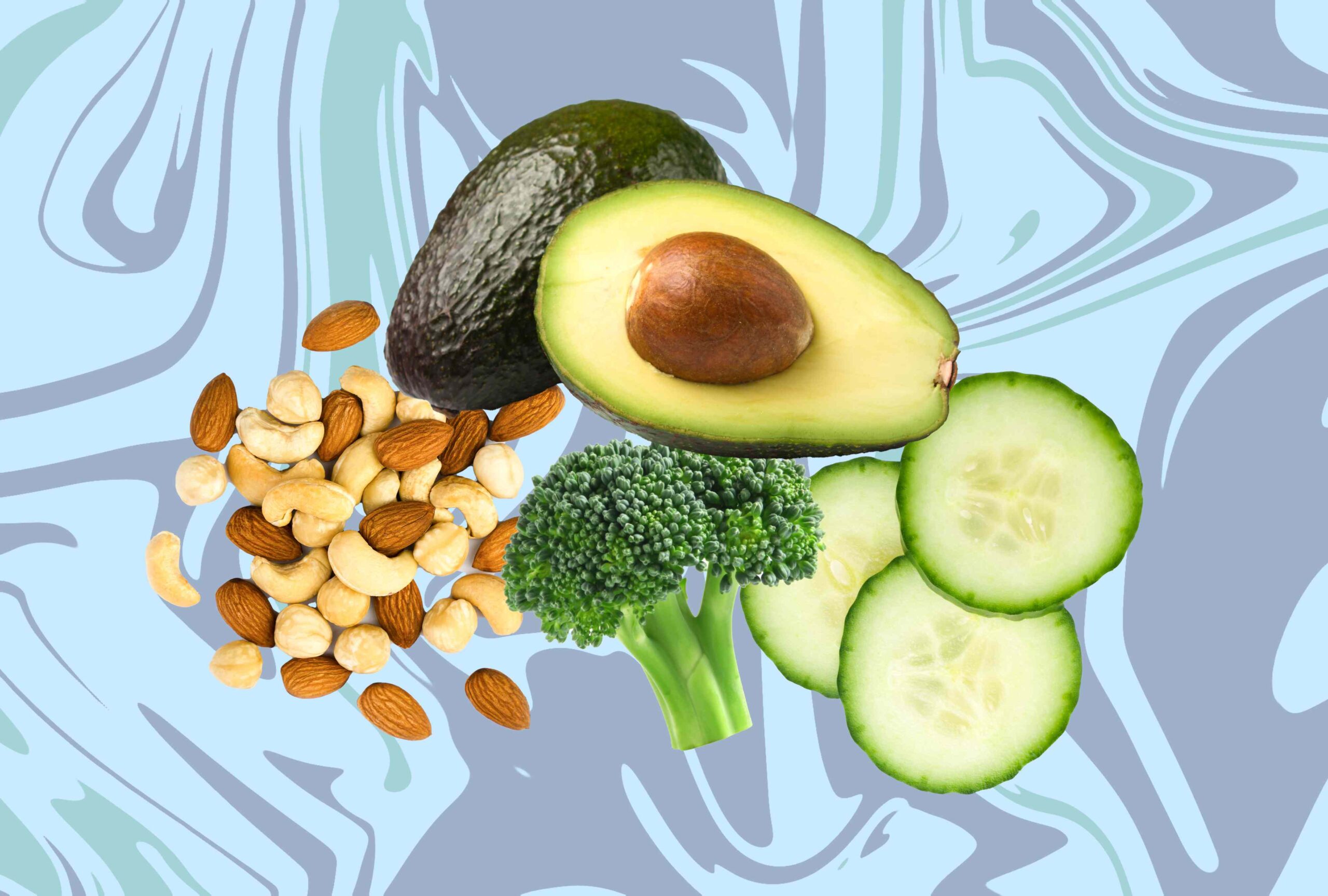

Lean on these go-to ingredients to keep blood sugar steady.
Reviewed by Dietitian Madeline Peck, RDN, CDN
Key Points
- Non-starchy vegetables, fatty fish, avocado, nuts and olive oil can support steady blood sugar levels.
- Nutrients like fiber, protein and healthy fats can help slow carbohydrate absorption.
- Try choosing whole grains, making half your plate vegetables and taking a short walk after dinner.
When it comes to evening meals, not all foods will have the same impact on blood sugar. Filling your plate with foods that are rich in fiber, protein and healthy fats is more likely to help keep blood sugar levels stable than loading up on carb-heavy options. But choosing a dinner that keeps your blood sugar stable and hunger satisfied is tastier (and easier) than you think. We spoke with two registered dietitians who endorse non-starchy veggies, fatty fish, avocado, nuts and extra-virgin olive oil as evening allies for supporting blood sugar levels after 5 p.m. Read on to learn why and how.
Non-starchy veggies
Experts agree that filling at least half your dinner plate with non-starchy vegetables, such as leafy greens or asparagus, is a foundational habit for promoting evening blood sugar balance. That’s because non-starchy veggies are high in fiber and low in carbohydrates, shares Sheri Gaw, RDN, CDCES. This combination of being low in carbs and calories but high in fiber helps slow down sugar digestion and absorption, promoting steady blood sugar levels, Lauren Manaker, MS, RDN, LD, CLEC adds.
Gaw recommends pairing non-starchy veggies of your choice with a protein and grain or starch at dinner. Additionally, incorporating vegetables into a snack like carrots and hummus can help curb blood sugar spikes overnight. “When you snack on veggies and hummus, you get a blend of protein, healthy fat and fiber which helps to slow the release of glucose into the bloodstream,” Gaw adds.
Fatty Fish
Try incorporating fatty fish into your dinner recipe rotation. “Fatty fish like salmon, tuna, and trout are rich in healthy omega-3 fats and protein, nutrients that help to slow [carbohydrate] digestion and promote blood sugar balance,” says Gaw. Here’s how it works: the protein in fish helps buffer the rate at which the sugars and starches from your meal break down and get absorbed into your body. When you opt for fatty fish like salmon, both the protein and the fat combine to slow the rate of carbohydrate digestion, which promotes even blood sugar levels.
Unlike other food sources of protein, such as chicken, turkey, meat, pork and white fish, fatty fish is exceptionally high in omega-3 fatty acids, which have been shown to help reduce inflammation and improve insulin sensitivity– a key component of blood sugar balance, Manaker adds.
Try grilling, baking or broiling fatty fish with some fresh lemon and dill, making salmon patties for a fresh take on burgers or going with a tried-and-true classic: tuna salad.
Avocado
“Avocados are rich in antioxidants, fiber and healthy fats, a blend of nutrients that help to fight inflammation and slow digestion for a steadier release of sugar into the bloodstream,” Gaw shares. This was demonstrated in a 2022 study, which found that eating a serving of avocado daily for just 12 weeks significantly improved blood sugar management. Another recent study found that avocado consumption is associated with a reduced risk of diabetes, particularly in women.
Doctor up your favorite bowls with guacamole, add sliced avocado to salads or sandwiches or blend it into a creamy dip. If breakfast-for-dinner is your jam, try smashing avocado on whole-grain toast and pairing it with an egg-veggie scramble.
Nuts
The healthy fats, fiber and protein in nuts work similarly to the nutrients in non-starchy veggies, fish and avocado– they slow down the rate at which the carbs from your meal raise blood sugar levels. “Nuts contain healthy fats, protein and fiber, a trifecta of nutrients that help to slow [carb] digestion, delay blood sugar absorption, and prevent blood sugar spikes,” Gaw says.
Many types of nuts are also a good source of magnesium, a mineral that Manaker points out has been shown to help support blood sugar metabolism and insulin sensitivity. Nuts can be an especially helpful ingredient in a blood-sugar-friendly late-night snack. “Fruit and a handful of nuts is a great pairing that provides healthy fat, fiber and protein, nutrients that slow digestion and prevent blood sugar spikes,” Gaw adds. Try incorporating nuts into a trail mix with dried fruit and chocolate chips for a sweet and salty bite before bed.
Extra-virgin olive oil
Extra-virgin olive oil (EVOO), a staple of the Mediterranean diet, may play a role in preventing and managing type 2 diabetes. “Olive oil is rich in antioxidant polyphenols and heart-healthy monounsaturated fat, which helps to slow the digestion of carbohydrates in the evening meal,” explains Gaw. Healthy fats aside, EVOO contains vitamin E and antioxidant polyphenols hydroxytyrosol and oleuropein, which have been shown to support insulin sensitivity, a key mechanism of carbohydrate metabolism and blood sugar balance.
Try making your own salad dressing with EVOO or drizzle some EVOO over your roasted veggies.
Other Tips for Managing Blood Sugar
- Whole Grains: Whole grains like quinoa and whole-wheat pasta tend to contain more magnesium, prebiotics and antioxidants than their refined counterparts. These attributes make whole grains ideal carbs to include with dinner for blood sugar balance, even if they contain a similar amount of total carbs and calories as refined options.
- Carbohydrate-Conscious Meals: Carbohydrates do not need to be avoided, but if you struggle with blood sugar management, knowing appropriate portion sizes can be helpful. When you are making your dinner plate, try to make your carbohydrates about ¼ to ⅓ of your plate.
- An After-Dinner Walk: A recent study found that it only takes 10 minutes of daily walking after a meal to make a positive difference in blood sugar management over time. Weather permitting, if it’s safe, make it a regular habit to walk around the block or your neighborhood after dinner– on your own or with an accountability buddy.
Our Expert Take
When it comes to blood sugar balance, some of the best foods to incorporate into meals and snacks after 5 p.m. include non-starchy veggies, fatty fish, nuts, avocado and extra-virgin olive oil. The fiber, protein, healthy fats, magnesium and antioxidant polyphenols in these foods promote slower carbohydrate digestion. This reduces your likelihood of blood sugar spikes while simultaneously helping to improve insulin sensitivity. Balance, conscious portions and nutrient-dense food combinations are more important to consider than single foods. When in doubt, consult a registered dietitian who can provide customized meal-planning recommendations for blood sugar balance based on your individual needs and preferences.

Comments are closed.