
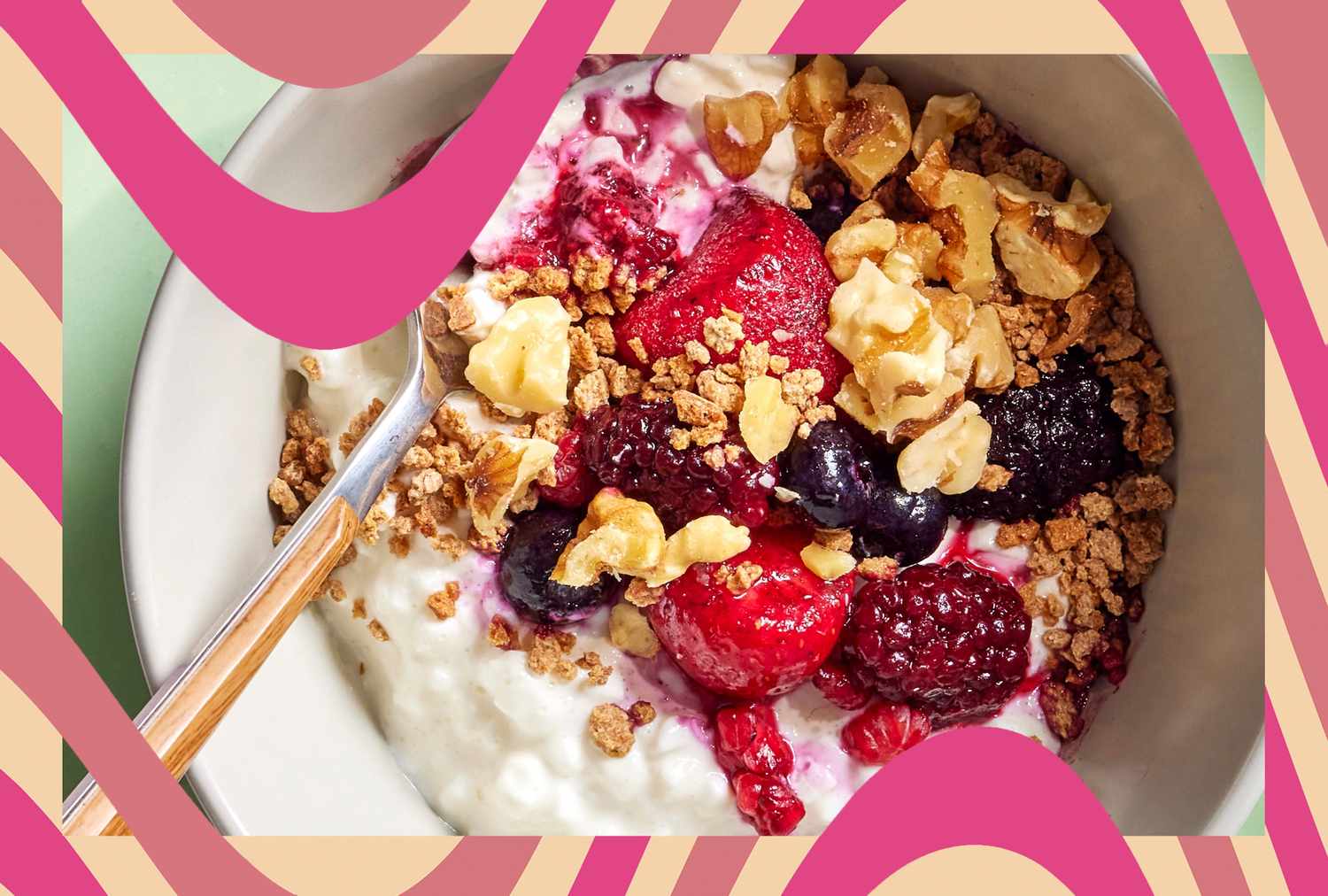

- Dietitians say the Cottage Cheese-Berry Bowl is the best high-protein snack for better sleep.
- This high-protein snack contains tryptophan, no added sugars and is the perfect size.
- Limit screens, establish a bedtime routine and exercise regularly for better sleep.
When it comes to choosing an evening or late-night snack, it’s ideal to reach for something that can support a good night’s sleep. Food and sleep are connected in so many ways, with some foods keeping us up and some foods helping us snooze. EatingWell’s Cottage Cheese-Berry Bowl is pretty close to the perfect sleepytime snack. It’s high in protein and contains other ingredients to help you rest up. Learn more about why we love it and other science-backed tips for better sleep.
Promotes Relaxation
While you may have heard that eating turkey makes you sleepy, the same is true for cottage cheese. “Protein contains tryptophan, an amino acid that helps produce serotonin and melatonin. Serotonin helps regulate mood and can promote relaxation, while melatonin signals to the body that it’s nighttime and time to sleep,” notes Lainey Younkin, M.S., RD.,
People reported feeling higher sleep quality, better sleep performance and less waking time at night after eating tryptophan-rich foods. You can find this amino acid in poultry, dairy, eggs and seeds. If you’re one of the people who hasn’t jumped aboard the cottage cheese train, plain strained (Greek-style) yogurt makes a delicious substitute.
Supports Better Blood Sugar
Our Cottage Cheese-Berry Bowl is balanced with a mix of protein and carbohydrates, plus some healthy fats coming from the walnuts. Simple carbs alone can raise your blood sugars, but pairing them with protein helps slow down digestion. “Choose foods that contain a mix of protein, fiber and fat to support steady blood sugar. Research suggests a connection between high blood sugar and poor quality of sleep,” says Sarah Anzlovar, M.S., RDN, LDN.
Contains No Added Sugar
We sometimes crave sweets close to bedtime. It’s dessert o’clock, after all. And while a sweet treat here or there can be a part of an overall healthy diet, too much sugar isn’t great for sleep or your overall health. Studies have found that sugar and refined carbohydrates—think white rice and bread—have been linked with more wake-ups during sleep. Fiber, found in fruits, along with vegetables, whole grains and beans, was linked to more slow-wave sleep, or restorative sleep.
Younkin adds, “Berries are high in fiber and low in sugar, making them a good bedtime snack choice if you’re craving fruit or something sweet.” This recipe is naturally sweet from the frozen mixed berries, but you can use whatever fruit you like. If you go for tart cherries (or a berry mix that includes them), you’ll also get a bit of natural melatonin, which may help with sleep.
It’s Perfectly Sized
When choosing a snack, it should be snack-size, and that’s especially true close to bedtime. “Avoid eating too much food close to bed. Eating a lot right before sleep may increase reflux, which can disturb sleep,” says Anzlovar. One in five American adults have reflux symptoms weekly, and eating large meals or snacks at bedtime can aggravate symptoms and cause wake-ups.
Even if that’s not a concern for you, it’s still important to not eat too much before bed. Your digestive system increases your body temperature when it’s working, and you want to be cool to sleep better. Try to stop eating about one to two hours before bed for improved quality of sleep.
Tips for Better Sleep
In addition to choosing this high-protein snack, here are some other tips to help you get a good night of rest.
- Choose drinks wisely. “Limit caffeine in the second half of the day, and drink alcohol in moderation or not at all. Both can interfere with sleep,” notes Younkin. Try a calming glass of herbal tea instead.
- Limit screens. Screens not only emit blue light, which can disrupt sleep, they also can be stressful to look at. Do you really need to see that rage-bait TikTok right before bed? Anzlovar says, “Turn off screens at least one hour before bed.”,
- Establish a bedtime routine. In addition to limiting screens, try to keep a set bedtime schedule and include some cozy habits. “Some people benefit from having a wind-down routine to prepare your mind and body for bed. That might include reading a book, drinking a cup of herbal tea or taking a warm bath or shower,” notes Anzlovar.
- Eat a balanced diet and exercise. An overall healthy diet and movement are crucial for getting a solid night of sleep. Aim for 150 minutes per week of activity and eat plenty of fruits, vegetables, whole grains, proteins and healthy fats.
Meal Plan to Try
30-Day No-Sugar-Added, High-Fiber Meal Plan for More Energy, Created by a Dietitian
Our Expert Take
Having a high-protein snack before bed can help you hit your protein goals for the day and may improve your sleep. Eating too much before bed isn’t helpful, but “going to bed hungry is a recipe for waking up in the middle of the night,” says Anzlovar. Pairing protein from cottage cheese with some naturally sweet berries helps deliver a balanced snack that isn’t too heavy for the evening. Keep in mind that a good night of sleep depends on more than a healthy snack. Limit screens, alcohol and caffeine and establish a consistent bedtime routine. Here’s to a night of good sleep and healthy snacking.

Comments are closed.