
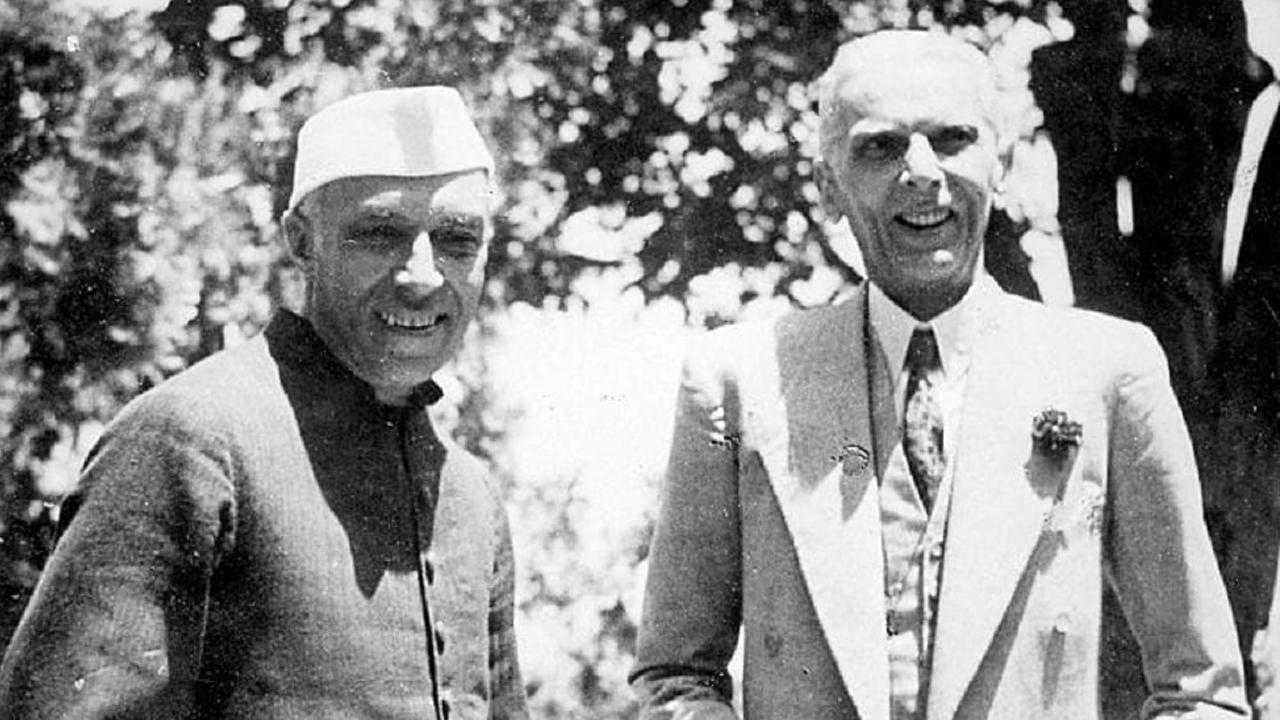
…So Vande Mataram would have been the national anthem, Nehru reversed the decision to please Jinnah! Know the whole story

Vande Matram Row: During the debate in Parliament on the 150th anniversary of Vande Mataram, Prime Minister Narendra Modi on Monday spoke on one of the most controversial chapters of pre-independence politics. He explained why Mohammad Ali Jinnah and the Muslim League had opposed the national anthem in the 1930s. He also explained the reasons behind the change in the Congress song.
Prime Minister Modi referred to a 1937 letter written by Jawaharlal Nehru to Netaji Subhash Chandra Bose. He said that Nehru believed that Bankim Chandra Chatterjee’s novel “Anandamath” The setting of the song “may upset Muslims.”
Kneel before Muslim League: Modi
PM Modi argued that the timing created political objections, which ultimately led to the change in the national anthem. The Prime Minister alleged that Congress had surrendered to the Muslim League in the name of communal harmony. He called it a political agreement which later extended to the decisions taken at the time of partition.
…and ‘Jana Gana Mana’ Became the ‘national anthem’
This song, written in 1875 by Bankim Chandra Chattopadhyay, was first shown in ‘Bangadarshan’ Was published in. Vande Mataram quickly spread from literature to the political thinking of the National Movement. Later Rabindranath Tagore gave it music. This song became a powerful slogan for freedom fighters in Bengal and beyond. In 1937, Congress adopted a changed version of the song as the national anthem. It received official recognition in 1951 in the Constituent Assembly headed by Rajendra Prasad. Jana Gana Mana as ‘National Anthem’ Adopted as.
Jinnah had condemned Vande Mataram
By the late 1930s the Muslim League had raised the slogan of ‘Vande Mataram’ A vigorous campaign was started against. Mohammad Ali Jinnah condemned this song in a meeting in Lucknow on October 15, 1937. He said that it mentions Hindu goddesses like Durga and Lakshmi, hence it is not in accordance with Muslim sentiments.

Vande Mataram controversy-symbolic picture (Source- Social media)
According to Indian Express archives, the objection was based on two main points. The first is that Vande Mataram was idolatrous. Secondly, it is not in accordance with the secular and inclusive ideals emerging in national politics.
What else did Prime Minister Modi say?
According to Prime Minister Modi, despite opposing the League’s claims, Congress had started rethinking the use of the song. On 26 October 1937, the party, citing harmony between communities, decided to use only certain parts of the song.
Constitution has been strangled: PM
The Prime Minister extended this argument to the time of Emergency. He said that when the national anthem completed 100 years, the Constitution itself was strangled. He described the 150th anniversary as an opportunity to bring back the pride and honor that once united the freedom fighters.
‘Not suitable for Vande Mataram music’
Another important turning point comes from the cabinet note written by Pandit Jawaharlal Nehru in May 1948. Nehru argued that the music for a national anthem should be recognizable throughout the world. It should be so simple that the orchestra can play it and it can be appreciated abroad.
Also read: Vande Mataram can instigate Muslims, PM Modi reminded Nehru, political chaos is certain!
He wrote that Vande Mataram has deep historical and emotional value. However, its tune was sad, repetitive, and difficult for the orchestra. On the contrary, ‘Jana Gana Mana’ More suitable musically for orchestra and military band. With the cooperation of Mahatma Gandhi and Congress leaders, only the first two verses of Vande Mataram were kept as the national anthem.

Comments are closed.