
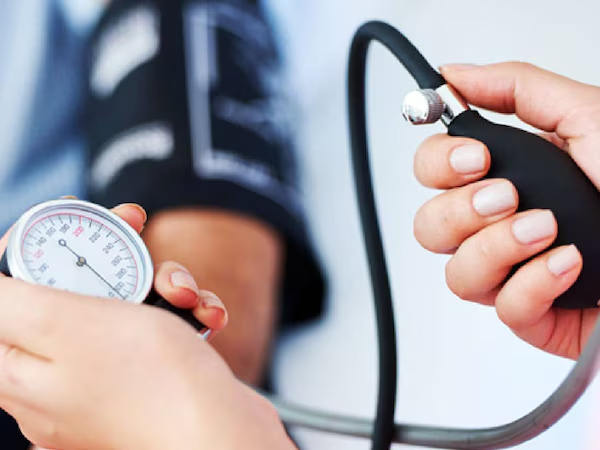
World Hypertension Day: ‘Silent killer’ is hollowing the youth, why is high BP increasing in the age group of 25 to 35?

Amidst today’s hectic and extremely busy lifestyle, a serious disease is affecting the youth, which is considered extremely dangerous in medical science. Every year on 17 May, ‘World Hypertension Day’ is celebrated across the world. The main objective of celebrating this special day is to spread awareness among the general public about the severe symptoms of high blood pressure and the life-threatening problems associated with it. In medical language, the condition of hypertension arises when the blood flow and pressure in the arteries of the human body becomes much higher than normal. The most serious and worrying thing is that high BP is no longer a disease of only the elderly or people of old age. Hard medical data of the last few years shows that the cases of this disease have increased incredibly among young adults aged 25 to 35 years. Increasing danger among youth: Why is it called ‘silent killer’? The cases of hypertension are increasing rapidly among the youth all over the world including India. Strong warning from experts: According to cardiologists, the biggest crisis is that most of the youth do not realize for a long time that they have become victims of a serious problem like high BP. Its severe symptoms are not clearly visible in the beginning, that is why this disease is called ‘silent killer’ i.e. a disease that kills silently. According to Zee News, busy lifestyle of today’s youth, unhealthy eating habits, intense work pressure in corporate culture, habit of staying awake till late night, long screen time of laptop and mobile, excessive consumption of junk foods and addiction to smoking and alcohol are directly affecting blood pressure. Severe mental stress and direct attack on brain health. Cycle of stress: Today’s youth work hard by sitting in front of the computer screen for many hours continuously, due to which their sleep cycle is completely disturbed. Mental stress increases due to not getting enough sleep, due to which the level of ‘stress hormone’ in the body starts increasing rapidly. This strong hormone directly increases blood pressure. Risk of bursting of brain veins: The most fatal and severe effect of high BP is on the brain health of a person. Prolonged increased blood pressure causes serious damage to the very fine and sensitive nerves of the brain. Due to this, the risk of fatal conditions like blood clot in the brain, brain stroke and brain hemorrhage increases manifold. Apart from this, it also gradually weakens the memory completely. Never ignore these 6 main symptoms of high BP. If you or someone you know feels the severe symptoms given below repeatedly, then do not make the mistake of leaving it as a normal weakness: Frequent severe headache in the back of the head. Sudden blurred vision in front of the eyes. Sudden dizziness or a feeling of lightheadedness. Sudden increase in heartbeats (palpitations) even without doing any strenuous activity. Sudden feeling of extreme weakness and extreme fatigue in the body. Excessive tension, nervousness and restlessness in the mind without any apparent reason. Strict and practical measures to prevent hypertension: To keep yourself completely safe from high BP, more than medicines, you need to make strict and disciplined changes in your daily habits: Active Lifestyle: Do brisk walk or light exercise for at least 30 minutes every morning or evening. Strict control on salt: Immediately reduce the amount of sodium (salt) in your daily diet. Completely stay away from canned chips, sauces, pickles and processed foods. Complete sleep and meditation: To reduce mental stress, take 7 to 8 hours of sound and deep sleep daily. Make yoga and meditation a part of your daily routine for stress management. Abstain from addiction: Excessive consumption of cigarettes, bidis and alcohol makes the arteries hard and narrowed, hence stay away from them completely. Regular checkups: After crossing the age of 25 years, get your blood pressure checked regularly at least once every 6 months so that any serious danger can be avoided in time.

Comments are closed.