

The International Film Festival of Kerala (IFFK), which kicked off on Friday (December 12), has built its reputation on a discerning and politically attuned programming, and this year’s line-up brings together some of the most striking contemporary voices in world cinema. From veteran auteurs returning with rigorously crafted works to younger filmmakers reshaping the language of storytelling, the festival’s 2025 edition highlights formal innovation and a deep engagement with the social and political fractures of the present moment. The selection spans continents and sensibilities, moving between searing personal narratives, atmospheric studies of place, and films that directly confront the structures of power that govern modern life.
Across the spectrum are projects already generating international attention — Agnieszka Holland’s morally unflinching FranzFatih Akin’s stark and textured Amrum, Jafar Panahi’s Palme d’Or-winning It Was Just an Accident, and Park Chan-wook’s meticulously controlled No Other Choice. Alongside these are bold reinventions and intimate investigations: Yorgos Lanthimos’s audacious BugoniaJulia Ducournau’s visceral Alpha, Kelly Reichardt’s quietly incisive The Mastermind, Carla Simpón’s Roeted and Lyrical Pilgrimagethe Nasser brothers’ Once Upon a Time in Gaza, and Oliver Hermanus’s finely wrought The History of Sound. Together, these 10 films reflect the breadth of contemporary global cinema while offering a concentrated glimpse of the artistic stakes that are part of this year’s talking points:
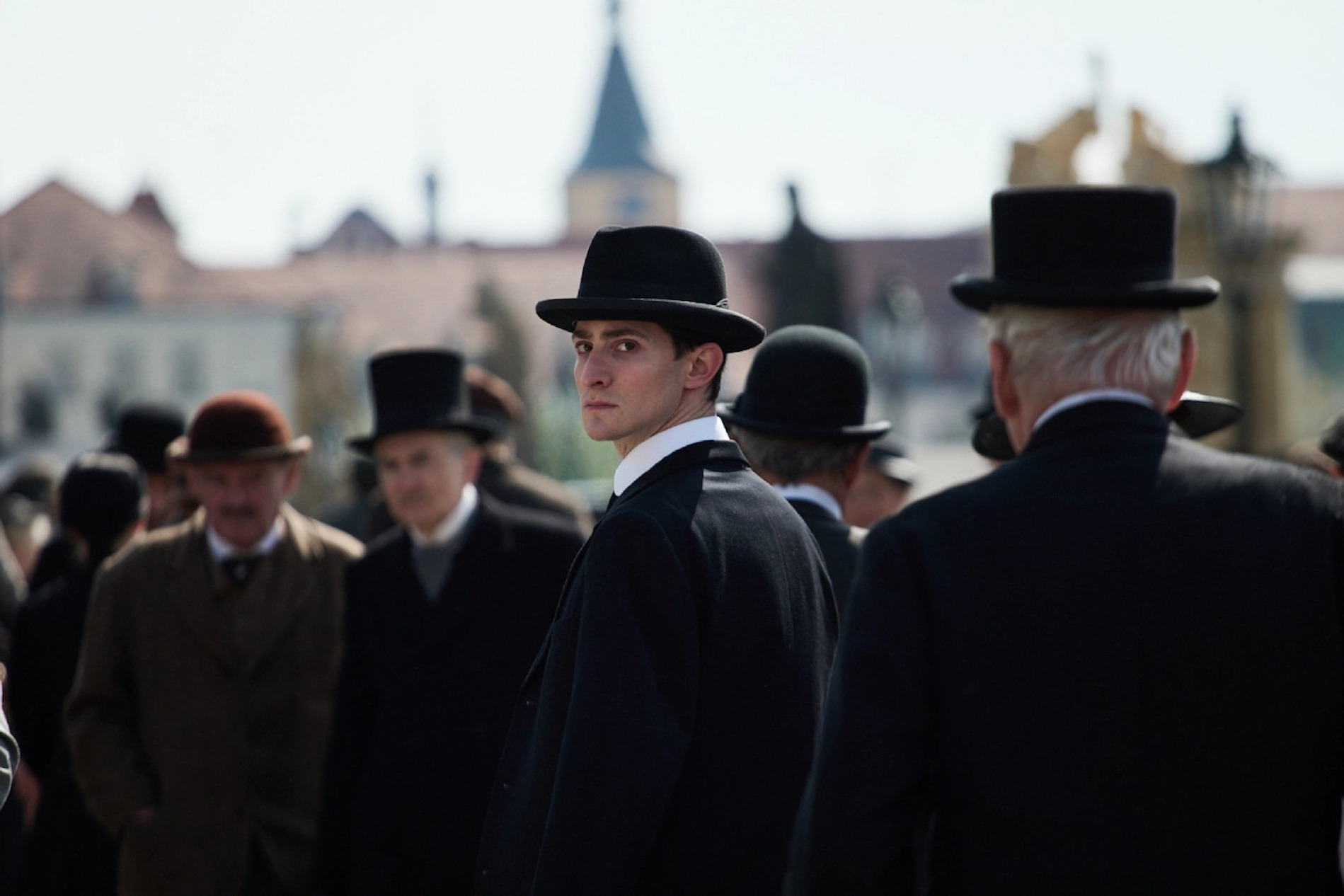
1. Franz (Poland/France/Germany), directed by Agnieszka Holland: Agnieszka Holland, three-time Oscar nominee and winner of multiple Berlinale awards, returns with Franzthe biopic of Franz Kafka, which has already generated strong critical interest for its political urgency and narrative rigour. Holland’s recent films (Green Border, Charlatan) were critically lauded for their sharp humanitarian gaze. Franz is being praised at festivals for its haunting moral complexity and masterful visual treatment. Critics note how Holland blends intimate human drama with sweeping socio-political commentary, a style that has defined her global reputation. With its international cast and refined craftsmanship, Franz stands out as one of the most intellectually ambitious films at this year’s festival. “Kafka has been interpreted in so many ways, as is shown in the film, but when you compare what he wrote with what was written about him they are poles apart. So, we didn’t want to reinterpret Kafka; we wanted to make him alive,” Holland said in an interview to Variety.
2. Amrum (Germany), directed by Fatih Akin: Fatih Akin’s Amrum marks the return of one of Germany’s most consistently influential filmmakers. Known for Head-On, The Edge of Heaven and In the FadeAkin brings his characteristic intensity to a story set on a remote North Sea island. It follow 12-year-old Nanning, a member of Hitler Youth, as he tries to care for his mother in the final days of World War II. As Nanning sets out across Amrum to gather the food his grieving, malnourished mother demands, the film turns into a study of how he slowly recognises the limits of that worldview.
Also read: IFFK turns 30 with a politically charged opening, ‘Palestine 36’ to inaugurate festival
He trades stories with his friend Hermann, learns small lessons from neighbours trying to survive the collapse of Nazi Germany, and begins to see that loyalty and obedience don’t explain the world as cleanly as he once believed. Karl Walter Lindenlaub’s unfussy camerawork reinforce the sense that Nanning is encountering reality for the first time through daily encounters that challenge everything he has absorbed. It is a clear, unsentimental portrait of a child testing his own moral instincts at a moment when the society that shaped him is falling apart.
3. It Was Just An Accident (Iran, France, and Luxembourg),, directed by Jafar Panahi: It Was Just an Accident by Jafar Panahi has emerged as one of the most discussed films of the year, winning the Palme d’Or at Cannes 2025 and earning widespread critical praise for its tightly controlled storytelling, black humour and political resonance. The film begins with a minor mishap that spirals into a tense quest for justice, forcing its characters to confront trauma, memory and revenge. Critics have noted Panahi’s ability to mix moral complexity with engaging momentum creating a work that is both emotionally affecting and sharply attuned to the consequences of violence and authoritarianism detail. Panahi’s ongoing commitment to filmmaking under pressure keeps his work central to discussions of contemporary Iranian cinema.
4. No Other Choice (South Korea), directed by Park Chan-wook: Park Chan-wook’s No Other Choice arrives as one of the most anticipated films of the year. Park, known for Oldboy, The Handmaiden and Decision to Leave, applies his precise visual style to a story centred on coercion, vulnerability and shifting moral ground. Early reviews describe the film as controlled, rigorous and carefully constructed, supported by strong central performances. Many have called it Park’s most mature work since The Handmaiden. With Park’s long-standing critical reputation and his consistent presence at major festivals, No Other Choice is expected to remain a core title of the 2025 season.
5. BUGONIA (USA/GREECE/UK), Directed by Yorgos Lanthimos: Bugonia is Yorgos Lanthimos’s interpretation of the Korean cult film Save the Green Planet. Lanthimos, whose recent work includes Poor Things and The Favouritebrings his familiar mix of tonal experimentation and controlled performances to the project. Early audiences describe the film as bold, unpredictable and sharply executed. Its mix of genre elements and psychological tension is consistent with Lanthimos’s established style, though adapted here to a more expansive international production. With a strong ensemble and the director’s high profile, Bugonia is expected to be one of the most discussed films of the year.
6. Alpha (France), directed by Julia Ducournau: Julia Ducournau follows the Palme d’Or-winning Titane with Alpha, a film that continues her interest in the intersection of the body, identity and transformation. Critics describe the work as visually strong, emotionally direct and thematically focused. The film’s intensity, combined with Ducournau’s command of physical performance and atmosphere, has attracted early praise. Alpha is being noted for its confidence of style and its refusal to soften difficult material. As with her earlier films, Ducournau demonstrates a distinctive approach that places her among the most closely watched filmmakers in contemporary European cinema.
7. The Mastermind (USA), directed by Kelly Reichardt: Kelly Reichardt’s The Mastermind marks a shift from the quiet observational tone of First Cow and Showing Up into a more explicitly political field. Early viewers describe the film as controlled, patient and quietly forceful. Reichardt’s attention to gesture, framing and behavioural detail remains central, but here it is applied to questions of influence, power and responsibility. The ensemble cast has been widely praised for its measured performances. The Mastermind reinforces Reichardt’s position as a director whose work rewards close attention and whose films continue to grow in critical esteem.
8. Romería (Spain), directed by Carla Simón: Carla Simón, following her Golden Bear win for Alcarrasreturns with Pilgrimagea film grounded in rural life and communal memory. Critics have responded to its naturalistic performances, its careful pacing and its sensitivity to landscape and tradition.
Also read: How Iranian filmmaker Jafar Panahi keeps reinventing against the state’s repression
Simón’s approach to character and environment creates a quiet emotional weight that builds across the film. Reviewers note its clarity, restraint and craftsmanship. Romería strengthens Simón’s reputation as a filmmaker capable of shaping intimate, rooted stories with international resonance.
9. Once Upon a Time in Gaza (Palestine/France), directed by Tarzan Nasser and Arab Nasser: Once Upon a Time in Gazawritten and directed by Tarzan and Arab Nasser, features Issaq Elias, Nader Abd Alhay, Ramzi Maqdisi and Majd Eid in key roles. Set in the tightly controlled and politically fraught landscape of Gaza under Hamas rule, the film centres on Yahya, a young man whose life is upended by the killing of his close friend Ossama at the hands of a corrupt police officer. Driven by grief and anger, Yahya’s pursuit of justice turns into a personal mission for retribution, allowing the film to explore the intersecting pressures of violence, authority and survival within a besieged society.
10. The History of Sound (USA/UK), directed by Oliver Hermanus: Oliver Hermanus continues his exploration of intimacy, loss and identity in The History of Sound. With performances by Josh O’Connor and Paul Mescal, the film has already drawn attention for its emotional clarity and detailed sound design. Critics have highlighted Hermanus’s ability to create restrained but affecting drama, a quality seen previously in Living and Moffie. The film’s period setting and its attention to sensory detail give it a distinctive texture. The History of Sound has been described as precise, thoughtful and quietly powerful, making it a prominent contender in the current festival landscape.

Comments are closed.