
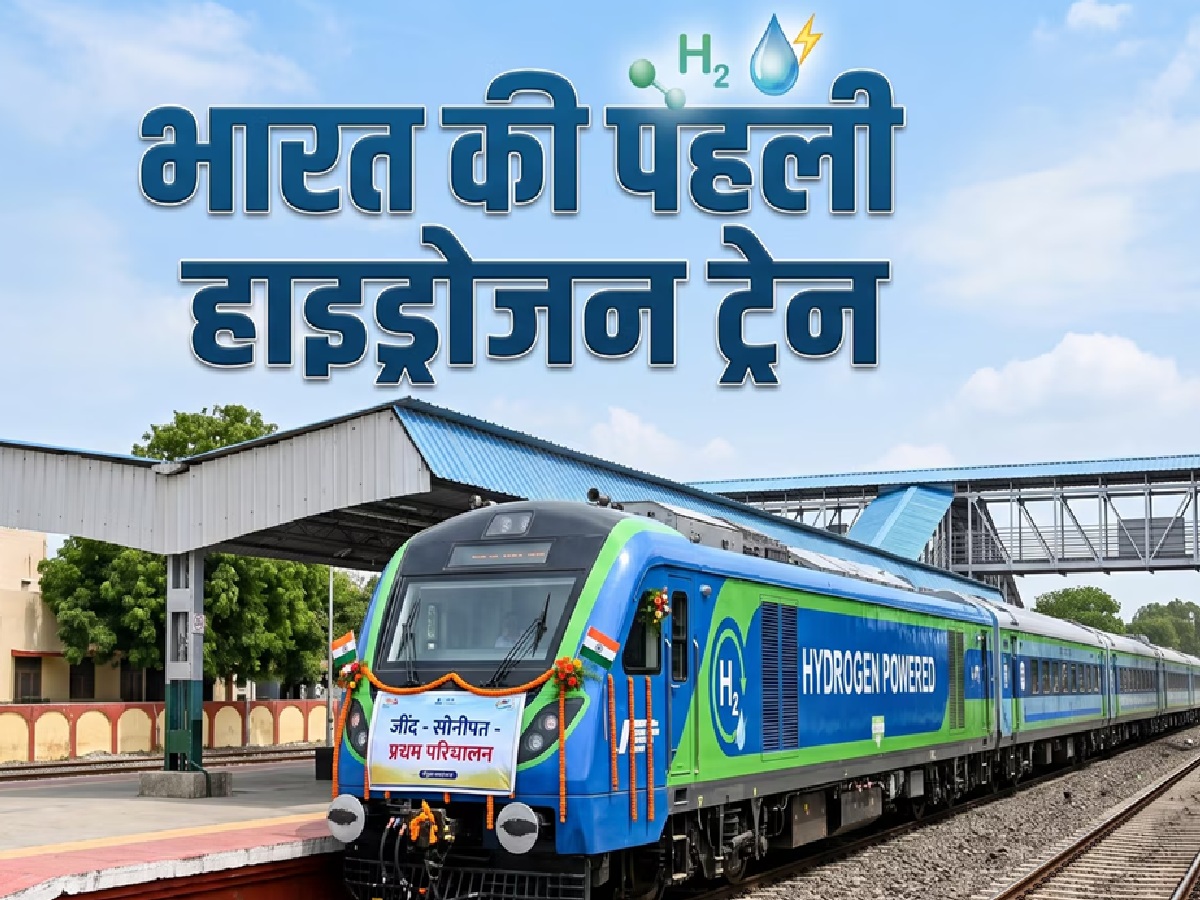
100% pollution-free ‘water train’ will run in India; PM Modi will flag off the country’s first indigenous hydrogen train in Haryana 100% pollution-free ‘water train’ to run in India; PM Modi to flag off country’s first indigenous hydrogen train in Haryana – ..

The day of 17th July 2026 is going to be the beginning of a big and revolutionary era in the glorious history of Indian Railways. The country’s first hydrogen-powered train built with 100 percent indigenous technology is all set to run on the tracks between Jind and Sonipat in Haryana. Prime Minister Narendra Modi will dedicate this much-awaited and historic train to the nation by virtually flagging it off. This unprecedented step will not only transform Indian Railways, but will also put India at the forefront of Net-Zero Carbon Emission globally.
Highlights and unmatched efficiency of the train: Another unique feat from ICF Chennai
This green train, completely designed under the ‘Make in India’ mission, has been developed by the engineers of Chennai-based Integral Coach Factory (ICF). It is the world’s longest and most powerful hydrogen train operating on a broad gauge platform. The technical capabilities of this modern train are as follows:
-
Huge Passenger Capacity: It is a DEMU style train with 10 coaches, in which about 2,600 passengers can easily travel at a time with 682 seating seats.
-
Powerful Engine Grid: This train is fitted with two Driving Power Cars (DPC) of 1200 kW each, which combined give it an unmatched power of 2400 kW.
-
Speed limit: Although the train had recorded a maximum speed of 120 kmph during highly complex and successful safety trials, during regular commercial operations it will be run on the track at a controlled speed of 75 kmph for the safety of passengers.
Jind-Sonipat Route and Time Table: The country’s most hi-tech journey will start in just Rs 5.
The 89 km long Jind-Sonipat railway section under the Delhi division of Northern Railway has been selected for this historic pilot project. Keeping in mind the local passengers, its fares and timetable have been kept very attractive:
| trip details | Official information and schedule |
| Train Number (Up/Down) | 74010 (Jind to Sonipat) / 74009 (Sonipat to Jind) |
| departure time | Daily at 07:40 am (from Jind Railway Station) |
| time of arrival | Daily at 09:40 AM (Sonipat Railway Station) |
| major stoppage | Halts at 12-13 small stations including Pandu Pindara and Gohana on the way. |
| Ticket Rates (Fares) | At par with normal passenger trains (minimum ₹5 to maximum ₹25) |
How does hydrogen train work? Instead of pollution, pure water and steam will come out of the silencer.
While traditional diesel engines release large amounts of poisonous particles like carbon dioxide, sulfur and PM 2.5 into the atmosphere, this new train works on a state-of-the-art technology called ‘Hydrogen Fuel Cell Technology’. A controlled chemical reaction is carried out between the stored hydrogen gas and oxygen of the atmosphere inside a special fuel cell installed on the roof of the train. This process directly generates high-voltage electricity, which powers the train’s heavy-duty electric motors. The most magical and wonderful aspect of this entire scientific process is that it does not emit smoke in the name of pollution, but only pure water vapor and mild heat comes out, which is being called in common language as ‘water running train’. To ensure uninterrupted supply of fuel, an indigenous hydrogen storage and high-pressure refueling plant has been installed at Jind station, which has received safety clearance and operational approval from the Petroleum and Explosives Safety Organization (PESO), Government of India.
India’s entry into global elite club: Germany, Japan and China will face direct competition
By successfully putting this very complex, expensive and sensitive technology on track, India has achieved a major achievement on the global stage. Now India has joined the most elite club of the very few countries in the world that have their own active hydrogen rail technology:
-
Germany: It has the distinction of launching the world’s first commercial and commercial hydrogen passenger train.
-
China: Asia claims to have developed the continent’s first urban hydrogen train.
-
India: India has proved its technological superiority by building the world’s most powerful indigenous train of 2400 kW capacity for broad gauge railway lines.
Future mega plan: Old diesel engines to be removed from all non-electrified routes by 2030
Indian Railways has taken a major national pledge to make itself a completely ‘Net-Zero Carbon Emitter’ by the year 2030. This operation starting on Jind-Sonipat route is an initial test bed. According to senior Railway Board officials, once this pilot project is successful, the old diesel engines running on all the historic, hilly and remote non-electrified railway routes of the country (such as Darjeeling Himalayan Railway, Kalka-Shimla Toy Train, Nilgiri Mountain Railway) will be removed from service forever. This master plan will not only reduce India’s dependence on expensive crude oil imports from abroad, but will also completely save the expense of laying heavy electric wires (OHE lines) costing lakhs of crores over the tracks on inaccessible hilly roads.

Comments are closed.