
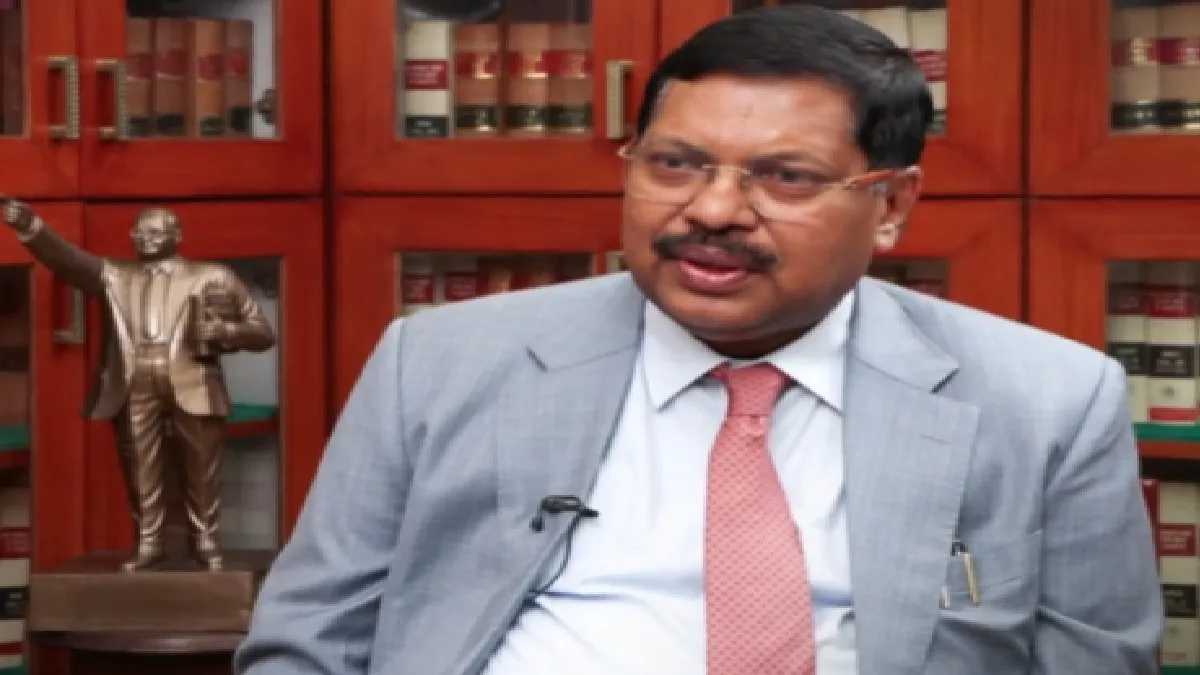
Former CJI BR Gavai said that he was criticized by his own community for supporting the creamy layer principle in reservations.

Mumbai Former CJI BR Gavai has said that an atmosphere is being created against him in the matter of reservation. Speaking at an event at Mumbai University on Saturday, former CJI Gavai said that he was criticized by his own community for supporting the implementation of the creamy layer principle in the Scheduled Caste i.e. SC category. Justice BR Gavai, taking the name of Constitution maker Babasaheb Dr. Bhimrao Ambedkar, said in the program that he believed that a positive step is to give a bicycle to the person left behind to win the race. Former CJI Gavai said that he does not think that Ambedkar would have wanted that such a person should never leave the bicycle.
Former CJI Gavai said that suppose someone is at tenth kilometer and someone is at zero kilometer. So the person at zero kilometer should be given a bicycle, so that he can reach the tenth kilometer faster. After reaching there, he can become equal to the person already present and walk along with him. Wouldn’t Ambedkar have thought that now both of them should leave the bicycle and move ahead? So that other people present at kilometer zero can also come forward. Justice BR Gavai said that according to him, Babasaheb Ambedkar wanted to bring social and economic justice into reality rather than formally.
The former CJI said that the principle of creamy layer was explained in the Indira Sawhney vs Central Government case. He said that in another case also I myself said that the creamy layer principle should be applied to the Scheduled Castes also. Gavai said that he faced a lot of criticism from people of his own community when he gave the idea about the creamy layer. He himself was accused of taking advantage of reservation to become a judge of the Supreme Court and then trying to exclude those who came in the creamy layer. Justice Gavai said that the critics do not know that there is no reservation for the post of High Court or Supreme Court judge. He said that can the criterion of equality be fulfilled by applying the same criteria to the son of a Chief Justice or Chief Secretary and the son of a laborer who studied in a village school?

Comments are closed.