
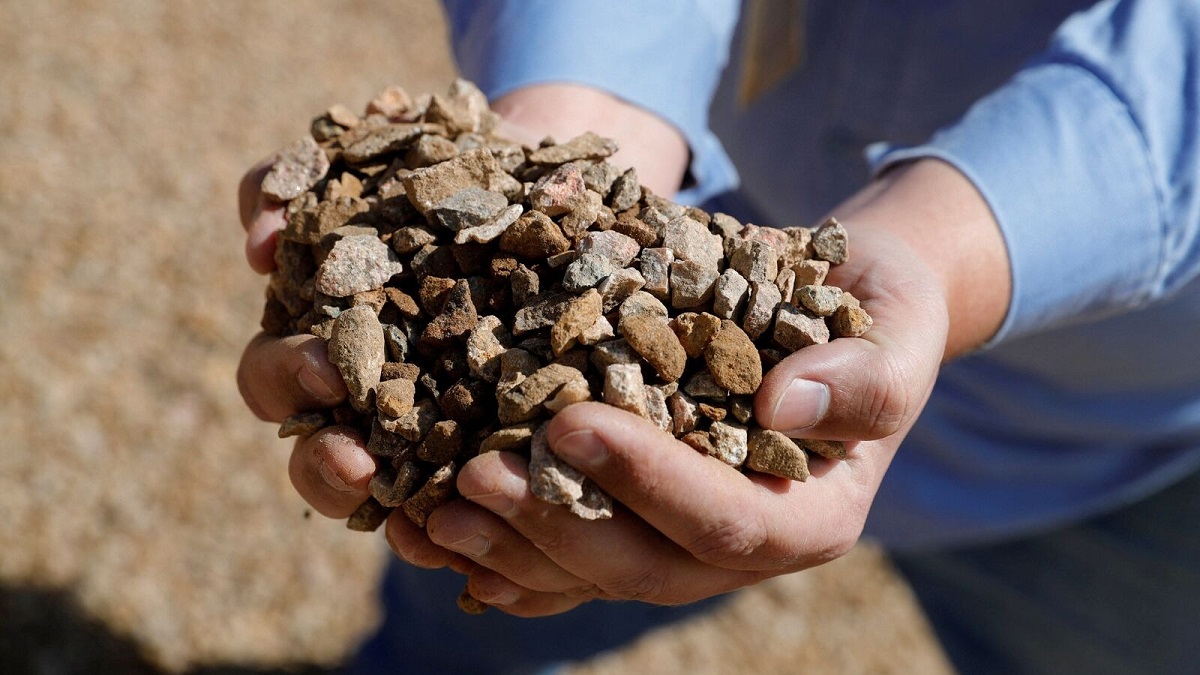

India ranks third in the world in terms of reserves of rare earth elements (REEs), but its share in global production remains less than 1 percent. The Amicus Growth report highlights the deep gap between resource availability and actual production, posing a serious challenge to strategic minerals, clean energy and national security.
The 17 critical minerals are used in electric vehicles and wind turbines, mobile phones and electronic devices, defense systems and missiles, permanent magnets and batteries. Such 17 minerals are called rare minerals, as per the name these minerals are not actually rare, but their mining and technology is technically complex and expensive.
According to the report, India has about 69 lakh tonnes of rare earth oxide (REO) reserves, which are the third largest in the world. In comparison, China has reserves of about 44 million tonnes and Brazil has reserves of about 21 million tonnes. Australia, Russia, Vietnam and America are also major countries in this list. Overall India has about 6–7 percent of global rare earth reserves.
Despite huge reserves, India’s production is extremely limited. According to 2024 data, India produced about 2,900 tonnes of rare minerals, ranking it seventh globally. China, as usual, is on top with a production of 2.7 lakh tonnes. America (45,000 tonnes) and Myanmar (31,000 tonnes) are also far ahead of India. These figures show that India’s share in global production is less than 1 percent.
Most of India’s rare minerals are found in monazite coastal sands, which are mainly located on the eastern and southern coasts. Monazite also contains thorium, which is a radioactive element. For this reason, its mining and processing is technically complex and strict controls are also imposed.
The amicus report points out several major obstacles. Rare earth mining in India remained under strict regulations for a long time and was operated primarily by Indian Rare Earths Limited (IREL). For a long time REEs were viewed as a by-product rather than a strategic resource. Moreover, the biggest challenge has been the lack of technology and refining capacity. China has about 90 percent of the refining capacity globally, giving China control over the value chain. Such infrastructure is extremely limited in India.
A joint venture with Japan in Visakhapatnam has signaled India’s return to the region, but the scale is still small and not enough to make an impact on the global market. The report concludes that India’s real challenge is not of resources, but of their effective and timely implementation. If focused on regulatory reforms, investment in technology capacity and value-chain integration, India can strengthen its strategic position in the rare earth elements sector.
Also read:
Bhandup BEST Bus Accident: Pedestrian crushed by bus while reversing on Station Road; 4 killed, 9 injured
Ukrainian drone attack on Putin’s residence, Trump angry
Krishna-Godavari gas dispute: Indian government claims more than $30 billion compensation from Reliance Industries and BP

Comments are closed.