
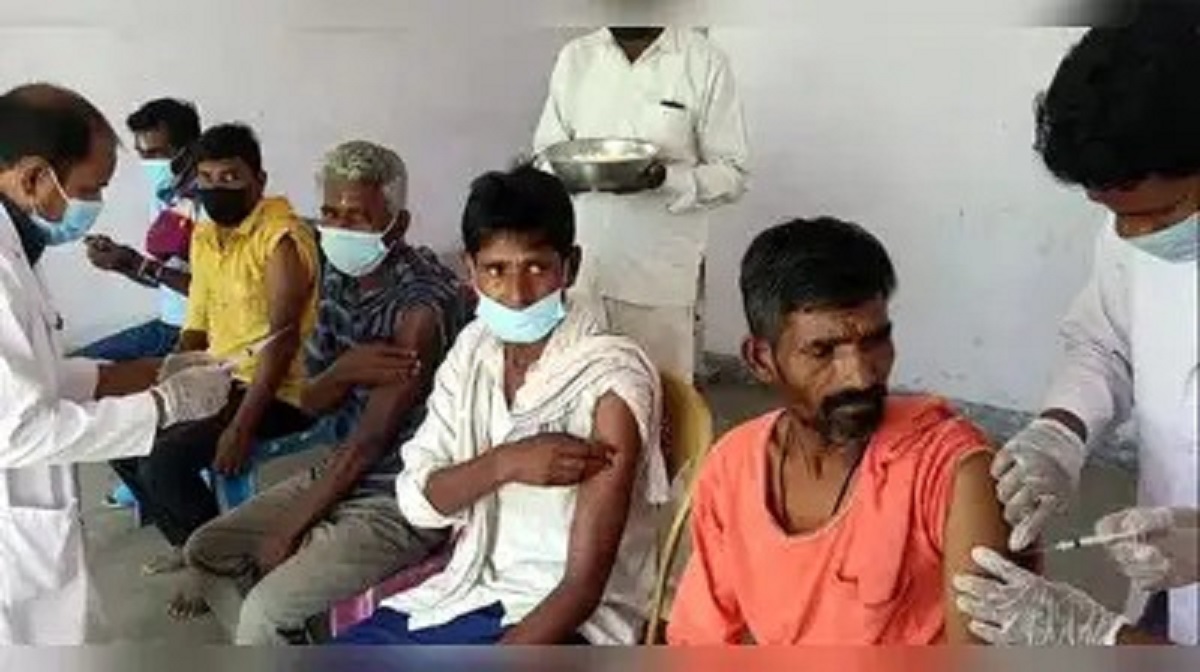

There was sudden panic in Pipraul village of Badaun district of Uttar Pradesh after the news of death of a buffalo due to suspected rabies. After information emerged that raita served at a funeral (Tehrai) event was made from the milk of the same buffalo, around 200 villagers got anti-rabies vaccine as a precautionary measure. However, doctors say there is no scientific basis for the spread of rabies through milk or milk-based foods and that people’s fears were largely unfounded.
According to villagers, a Tehraai ceremony was held on December 23, in which raita was served. After a few days, the health of the same buffalo deteriorated and it died. The villagers say that the buffalo was first bitten by a stray dog. As soon as this information spread, people feared that they might have come in contact with rabies. After this, a large number of people reached Ujjani Community Health Centre, where they were given anti-rabies vaccine as a precaution.
According to medical experts, rabies is not spread through milk. The virus is almost always spread through the saliva of an infected animal when it enters the body through a bite, scratch or open wound.
Dr. Tushar Tayal, Associate Director, Internal Medicine, CK Birla Hospital, Gurugram, explains, “The rabies virus is mainly found in the brain and salivary glands. It is very unlikely to be present in the milk-producing mammary glands.”
According to Dr. Tayal, “Even if in the unlikely event that traces of the virus are present in milk, it gets completely inactivated by boiling or pasteurization. If someone has consumed milk or a product made from an animal suspected to have rabies, there is no need to worry.” He also clarified, “There are no documented cases so far worldwide of rabies being transmitted to humans through the consumption of milk or food.”
According to media reports, local health officials said that vaccination was done as a precautionary measure in view of the villagers’ nervousness and apprehensions. However, the vaccine was not medically necessary in this case.
Experts say drinking the milk is not a risk, but touching or handling an animal potentially infected with rabies could be dangerous. “If an animal is infected with rabies, one should avoid touching or handling it as its saliva can spread the infection through cuts or open wounds,” warned Dr Tayal. Overall, the doctors concluded that in this case there was no possibility of rabies being spread through milk or raita and the fear spread among the villagers was not based on scientific facts.
Also read:
India-New Zealand FTA: Committee to be formed to monitor FDI promise of $20 billion
Police attacked to free Pahalgam attack supporter; 10 Bangladeshis arrested
Cow smuggler with a reward of Rs 25,000 arrested after encounter in Mathura, shot in the leg!

Comments are closed.