
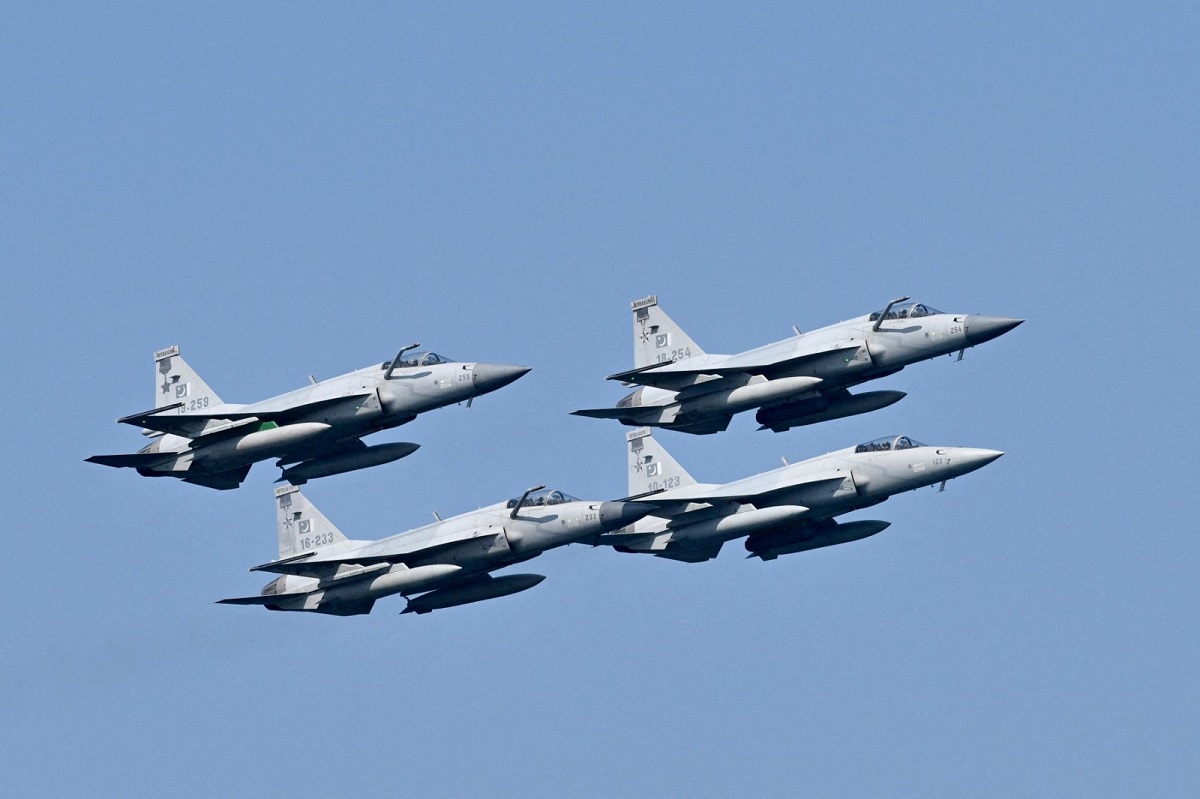
‘Fake narrative’ of China-Pakistan’s export of JF-17 fighter planes; Reality has blown to pieces

Islamabad has in recent times been aggressively promoting claims of increased global demand for the Pakistan-China jointly built JF-17 Thunder fighter aircraft. This campaign was intensified at a time when Pakistan and China said without any evidence that their JF-17 and J-10 aircraft shot down France’s Rafale during India’s Operation Sindoor. According to military analyst Major General (retd) Harsh Kakar, the purpose of these claims appears to be to promote sales of Chinese-origin platforms and not to highlight any verifiable military achievement.
If we look at the international media, Pakistani reporters are active in many global news organizations, who often push the narrative as per the propaganda of their state. Reporter Saman Latif first broke the story of this alleged global demand, which was later carried forward by other Pakistani journalists around the world. However, interestingly, no independent or other international publication published any concrete reports supporting Latif’s claims regarding interest in the JF-17. Despite this, this psychological campaign (PsyOps) appeared to be spreading rapidly in the social and media space.
French intelligence reports also mention a coordinated Pakistan-China disinformation campaign aimed at damaging Rafale’s image, especially in the markets of South-East Asia. The timing of the spread of this fake narrative also coincides with declining interest in China’s defense equipment, especially after reports of the failure of Chinese air defense systems in Venezuela and earlier experiences in Pakistan.
New ‘deals’ are being announced almost daily in Pakistan’s media ecosystem. On January 7, Bangladesh was claimed to be purchasing JF-17, on January 8, Saudi Arabia’s name was added, on January 9, Sudan and then Indonesia were mentioned as potential buyers. Earlier, there were reports of alleged ‘serious interest’ from Libya, Sudan and Iraq. Such rapid and disorganized announcements undermine the credibility of any genuine defense sales campaign.
Pakistan’s Defense Minister Khawaja Asif even said in an interview that JF-17 orders could eliminate the need for an IMF bailout in six months. The reality is that about 58 percent of the JF-17 is produced in Pakistan and 42 percent in China, yet it is presented as a completely indigenous achievement.
Chinese social media handles also took this narrative forward and promoted the JF-17 and J-10 as better alternatives to the Rafale. This effort intensified when questions began to be raised about the reliability of Chinese defense equipment.
Nigeria’s experience exposes these claims. After purchasing three JF-17s, the Indian Air Force reported poor agility, limited avionics, outdated radar, frequent technical failures, and serious maintenance problems. These aircraft did not perform as expected even in low-threat counter-insurgency operations, following which Nigeria phased them out and opted for Italian M-346FA aircraft.
In Myanmar too, structural cracks and technical faults soon emerged in planes found between 2019-21. Pakistani engineers failed to fix the problems, forcing Myanmar to turn to Russian Su-30 aircraft.
China’s J-10 has also not been able to get solid orders from any country so far. Indonesia decided to purchase 66 Rafales after initial interest. Following the recent visit of the Indonesian Defense Minister to Pakistan, DG ISPR claimed interest in the JF-17, but The Jakarta Times described it as only general defense cooperation talks, with no mention of any purchase.
The alleged deal of Saudi Arabia is also being linked to the outstanding debt of Pakistan. There was neither confirmation from Riyadh nor any details from Pakistan’s Foreign Ministry. Saudi Arabia, which flies the F-15 and Eurofighter, and is also eyeing the F-35, has no apparent reason to buy the JF-17.
Azerbaijan has ordered 16 JF-17s in 2024, with five due for delivery in 2025, but questions remain over the delivery and performance of the remainder. Claims regarding Bangladesh, Libya, Iraq and Sudan are also unconfirmed.
According to experts, the aviation sector is aware of the limitations of the JF-17. Low reliability, weak avionics and limited utility. The so-called “fake ‘kill’ narrative” of the downing of Rafale remained in the news for some time, but international investigation revealed Pakistani losses and failures of Chinese equipment. As a result, this publicity has only increased suspicion in most countries.
Also read:
Free trade agreement between India and European Union may be announced on Tuesday
Sensex falls 792 points, all-round selling pressure; Indigo, Bank and Paytm were in discussion
Woman driving Innova with fake foreign embassy number plate arrested before Republic Day

Comments are closed.