
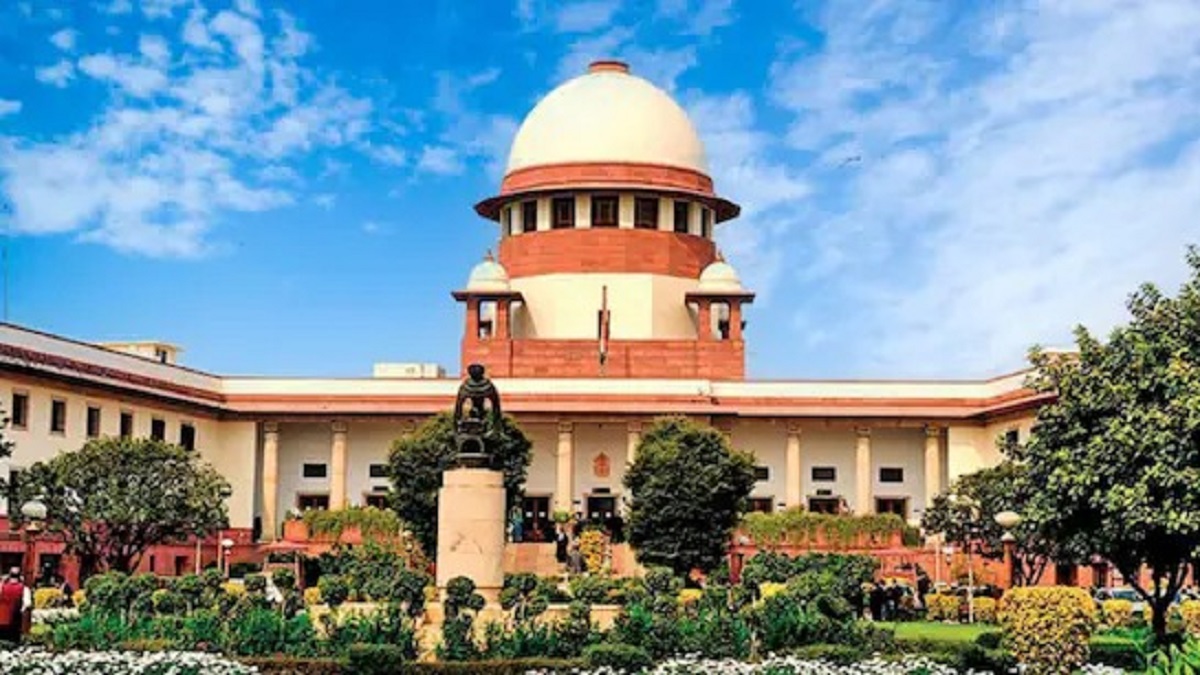

The Supreme Court has rejected a petition challenging the restrictions imposed on the entry of Christian missionaries and clergy into tribal villages of Chhattisgarh. The case pertained to resolutions passed by Gram Sabhas and hoardings put up in scheduled areas that warned against conversion activities.
The bench of Justice Vikram Nath and Justice Sandeep Mehta delivered this decision. The Supreme Court refused to interfere with the order of the Chhattisgarh High Court, which had made detailed observations on the conversions being done through inducement and deceit and their impact on social harmony and tribal cultural identity.
Senior advocate Colin Gonsalves appeared for petitioner Digbal Tandi. He argued that the High Court made broad and adverse observations on Christian missionary activities without any concrete material on record. He said that the issue before the High Court was limited, but the comments made on conversion were beyond the scope of the petition.
Gonsalves claimed that a case related to the attacks on more than 700 priests during prayer meetings is pending in the Supreme Court. He also said that tribals who have adopted Christianity are not being given the right to bury themselves in the villages. Citing another case, he alleged that buried bodies of converts were being taken out of the graves. Argued that there has not been a single conviction under the state’s conversion law in the last ten years.
“You cannot stop me from holding Sunday prayer meetings. And the High Court says it is not illegal. The High Court’s observations will have wide-ranging consequences,” he said. Solicitor General Tushar Mehta appeared on behalf of the state. He said that many of the allegations being raised before the Supreme Court were not part of the original petition in the High Court. He clarified that the matter before the High Court was limited to the removal of hoardings only and the petitioners were directed to approach the concerned Gram Sabhas.
The Supreme Court agreed with the state’s side and said that the scope of the writ petition before the High Court was limited. “Mr. Gonsalves, please see the writ petition filed in the High Court and the relief sought. You have been asked to approach the Gram Sabha,” the bench remarked. With this the petition was dismissed and the arguments and observations of the High Court were effectively upheld.
The dispute pertains to resolutions passed by the gram sabhas of eight tribal villages, Kudal, Parvi, Junwani, Ghota, Ghotia, Habechur, Musuraputta and Sulagi in Kanker district. Hoardings were put up in villages under the Panchayati Raj (Extension to Scheduled Areas) Act, which mentioned the ban on entry of clergy and priests.
Digbal Tandi had filed a writ petition in the Chhattisgarh High Court claiming that through these resolutions and hoardings, an effective ban has been imposed on the entry of Christian priests and converts. He called it a violation of Articles 14, 19(1)(d) and 25 of the Constitution. Also alleged that Christians are being deprived of burial rights, social boycott and forced displacement are taking place and communal tension is being increased.
A bench of Chief Justice Ramesh Sinha and Justice Bibhu Dutta Guru refused to stay the hoardings. The High Court said that putting up banners warning against illegal or forced conversion cannot in itself be called unconstitutional.
In its decision, the High Court said that conversion has long been a sensitive topic in the socio-political scenario of India. The Constitution guarantees religious freedom, but this freedom is subject to public order, morality and health. The Court said that when conversion becomes the result of inducement or exploitation of weaker sections rather than individual faith, it amounts to cultural coercion.
The High Court had also clarified that Article 25 is not an absolute right and it is subject to public order, morality and health. The court rejected the petitioner’s discrimination allegations, saying that no concrete evidence was presented to prove that the hoardings authorized discrimination against Christians.
Also read:
Supreme Court rejects hearing of petition for police action against disciples of Avimukteshwarananda!
Rubio reminded the Hungarian PM, Trump had given your country exemption from the ban for one year.
Sukant Majumdar warns of job loss due to association with Trinamool!

Comments are closed.