
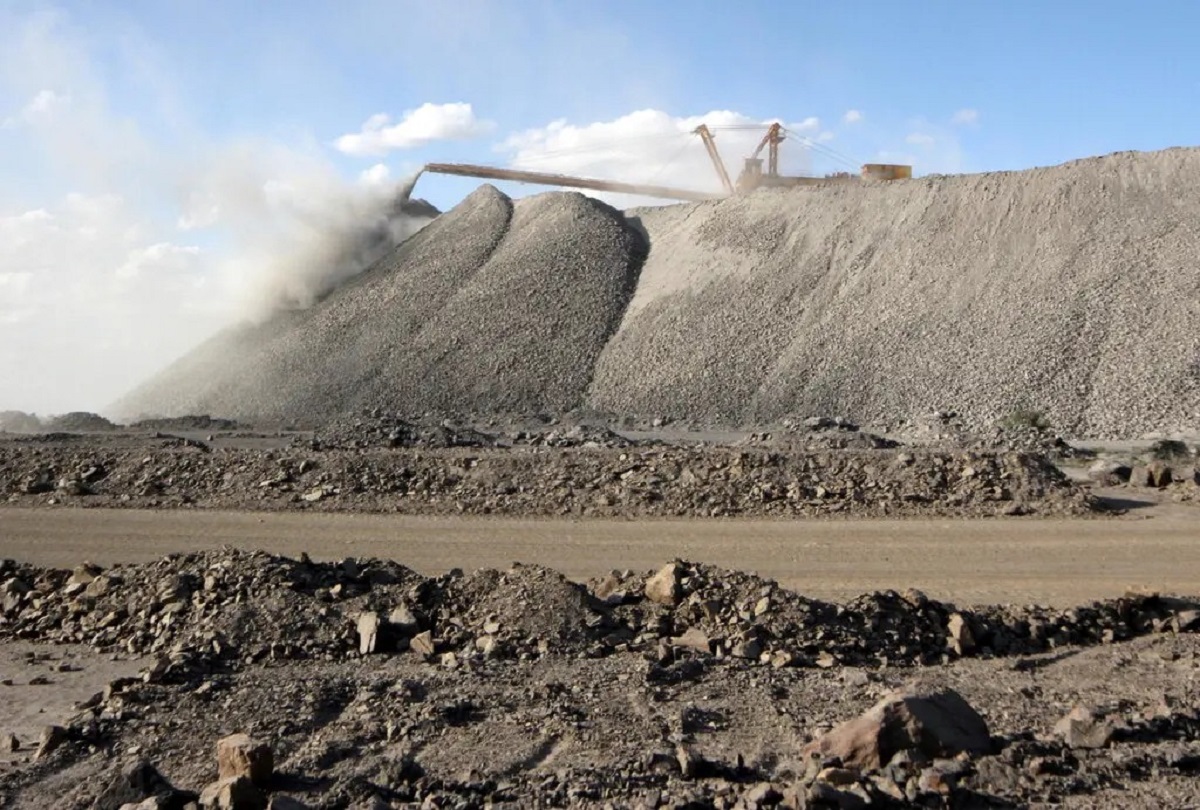
India-Japan talks on rare minerals: Preparation for joint exploration of rare earth reserves in Rajasthan

As a strategy to reduce dependence on China, Japan and India are in talks for joint exploration of rare earth reserves in Rajasthan. Two sources close to the matter said that Tokyo wants to increase cooperation with India with the aim of securing the supply of these important minerals needed for magnet manufacturing.
Last month, India’s Mines Minister G. Krishna Reddy had informed that three rare earth reserves of hard rock category have been identified in Rajasthan and Gujarat, in which about 12.9 lakh metric tons of rare earth oxides are present.
Following the initial agreement on critical minerals between India and Japan last year, Japan has shown interest in these reserves located in Rajasthan. According to sources, Japan is planning to send a team of experts to inspect the site. However, the time frame for the arrival of the experts has not been made clear.
It has been reported that Japan is considering providing mining technology and financial support in Rajasthan, in return for which rare earths can be sent to Japan under the offtake arrangement. According to sources, exploitation of hard rock reserves requires advanced technology, which India currently has limited access to.
Naoki Kobayashi, deputy director of the Ministry of Economy, Trade and Industry (METI), told Reuters that Japan is studying mining projects around the world to diversify its supply of critical minerals, including rare earths. However, he denied discussing any specific corporate partnership or technology transfer in Rajasthan.
Like Japan, India also wants to reduce import dependence on China and is working towards developing industrial scale facilities for rare earth processing at high purity levels.
Rare earth elements are used in the manufacture of permanent magnets, which are essential for devices such as electric vehicle motors, wind turbines, fighter planes and drones. The strategic importance of these minerals has increased for India as a rapidly growing economy.
Recently, China banned the export of dual-use (used for both civilian and military purposes) items to 20 Japanese entities. This has affected the supply of seven rare earth elements and related materials to Japanese companies, which are included in China’s control list.
Sources also said that apart from rare earths, Japan is exploring possibilities of cooperation with Indian companies for exploration of lithium, copper and cobalt in Africa.
Experts believe that if this partnership goes ahead, it will not only strengthen India-Japan strategic relations but can also bring about significant changes in the global supply chain.
Also read:
Understand these flaws of Indian batting before the semi-final match
Shooting in Austin: Indian origin student killed, terrorism related aspects investigated
Indian Air Force exercise creates stir in Pakistan, India issues NOTAM

Comments are closed.