
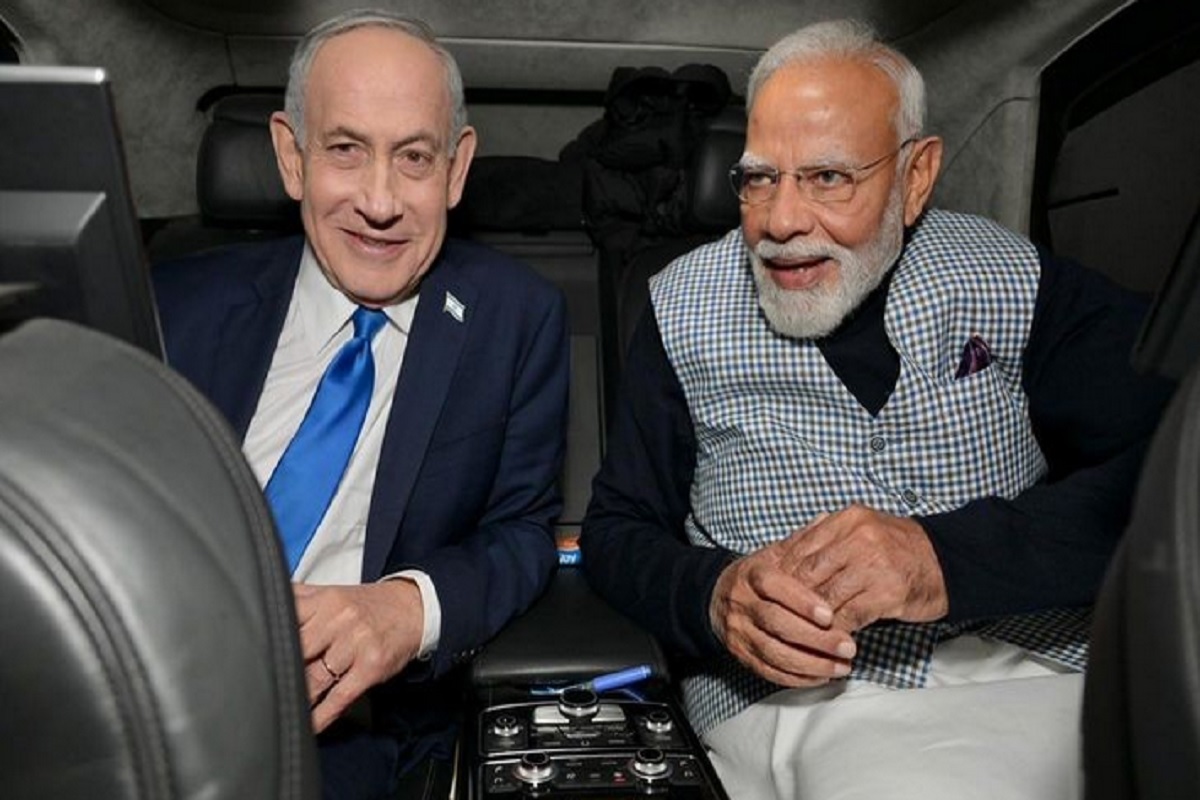

Prime Minister Narendra Modi’s two-day visit to Israel on 25–26 February 2026 was his second visit to Israel after his historic visit in 2017. Gives an important signal about India’s West Asia policy. India’s growing cooperation with Israel is not the result of any sudden change, but reflects continuity and confidence in a long-standing policy.
India’s foreign policy towards West Asia has never been based only on ideological basis. On the contrary, it has been based on strategic autonomy and pragmatic national interests. For many decades, India has maintained balanced relations with Israel, Arab countries and Iran. India has maintained dialogue with all major countries in the region keeping in mind issues such as energy security, trade, interests of the Indian diaspora, cooperation against terrorism and technological progress.
West Asia is considered a complex region of the world. Here changing political equations, religious and regional conflicts and the influence of global powers are continuously visible. In such an environment, it is necessary to adopt balanced and nuanced diplomacy instead of rigidly aligning with any one faction, and India has always followed this policy.
Formal diplomatic relations between India and Israel began in 1992, when the then Congress government established full diplomatic relations between the two countries. Since then, cooperation in areas like defence, technology and agriculture gradually became stronger.
Today Israel is an important defense ally of India. Cooperation between the two countries has increased in areas like modern military technology, drone systems, missile defense and cyber security. Apart from this, partnerships have also expanded rapidly in agricultural technology, water management, innovation and startup ecosystem.
The most important thing is that this cooperation was not limited to any one political party. These relations have been expanding gradually and continuously even during different governments.
The change visible in recent years is not in the direction of the policy but in its presentation and openness. Under the leadership of Prime Minister Modi, India has taken forward its relations with Israel with greater clarity and confidence.
In this process, India has started to look at relations with Israel from a different perspective than the Palestine issue. This means that relations with Israel are being developed not just in the context of Palestine, but taking into account its independent strategic importance.
However, this has not brought any change in India’s policy towards Palestine. India still supports the two-state solution and maintains diplomatic contacts with the Palestinian leadership. Thus India’s policy remains balanced and consistent.
This visit of Prime Minister Modi in 2026 took place at a time when the situation in West Asia was very sensitive. Increased tension after the Gaza conflict, differences between America and Iran and changing geopolitical equations have increased uncertainty in the region. In such an environment, this visit underlines the stability of relations between the two countries.
During the visit, Prime Minister Modi addressed the Israeli Parliament and met Prime Ministers Benjamin Netanyahu and President Isaac Herzog Had detailed discussion with. These meetings paid special attention to potential partnerships in areas such as defense cooperation, artificial intelligence, start-ups, digital connectivity, education and innovation.
These discussions made it clear that there are many common strategic interests between the two countries.
Symbolic moments also have special importance in international diplomacy. The standing ovation given to Prime Minister Modi in the Israeli Parliament and various scenes of cultural harmony reflect the maturity and mutual respect of this partnership.
Today India-Israel relations are not limited to defense deals only. They have also become based on innovation, research, technological cooperation and increased people-to-people contacts.
Some critics have also raised questions about the timing of the visit, especially in light of international criticism over Israel’s recent military actions. However, India’s stand is clear, balanced diplomacy and dialogue. Maintaining strong ties with Israel does not indicate that India is weakening ties with its Gulf countries.
In fact, India’s economic and strategic relations with the United Arab Emirates, Saudi Arabia and other Arab countries are continuously strengthening. Energy supplies remain stable, trade is growing and the Indian expatriate community living in the region is an important part of India’s foreign policy.
The specialty of India’s West Asia policy has been its multi-dimensional approach. This means that India maintains dialogue with all major countries, does not align completely with any one group and protects its national interests in the changing geopolitical circumstances.
It is because of this strategy that India is seen as a balanced and reliable partner in this sensitive region. Prime Minister Modi’s visit to Israel is no different from the past, but it further strengthens the pragmatism, continuity and confidence present in India’s foreign policy.
In today’s era, global alliances are changing, regional equations are unstable and competition for the interests of big powers is intensifying. In such times, stable and balanced diplomacy proves to be the greatest strength.
Partnerships and cooperation may expand, but strategic autonomy and balanced diplomacy will remain the core principles of India’s foreign policy.
Also read-
Varun Chakraborty’s ‘Mystery’ fails in semi-finals; Will Kuldeep get a chance in the final?

Comments are closed.