

The important Strait of Hormuz has become a center of global concern due to the war between America and Israel against Iran in West Asia. As important as this strait is for the world’s oil and gas transportation, it is also considered important for the global Internet network. According to experts, if there is conflict or disruption of navigation in this region, it could also affect international internet connectivity, which includes India.
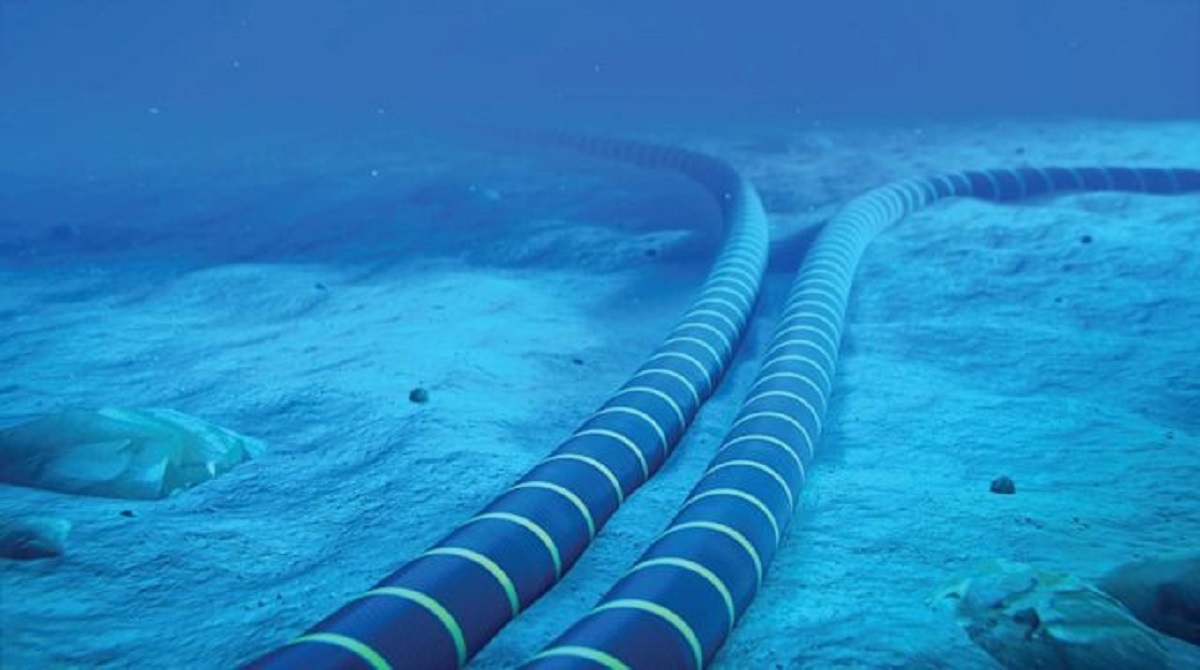
In fact, along with oil tankers, there is a dense network of fiber-optic cables laid on the seabed beneath this sea route, which carries most of the world’s digital data traffic. Most digital transactions such as e-mail, online banking, cloud computing, video conferencing, social media and international corporate communications are conducted through these cables.
Important routes of India’s internet traffic:
According to experts, a large part of the internet data going from India to Europe and West Asia passes through the Arabian Sea and the Gulf region. It is estimated that about one-third of India’s westbound data traffic travels through cable networks that pass around the Strait of Hormuz. These include major cable systems SEA-ME-WE 4, I-ME-WE and Falcon. These networks connect India to Europe, West Asia and global data centres.
Most of the world’s Internet traffic travels through fiber-optic cables laid under the sea, rather than satellite. These cables extend for thousands of kilometers on the seabed and are considered the backbone of digital communications between continents. Due to the geographical location of the Gulf region, many international cable systems pass through a relatively narrow sea area. This is the reason why this region has become an important digital corridor for data transmission between Asia, West Asia and Europe.
What threats are there to cables during conflict?
Although these cables are made strong, being under the sea they are exposed to many types of physical risks. Anchors of large ships can damage the cables as they drag on the seabed. Fishing equipment, maritime accidents or underwater explosions can also cut cable lines.
Apart from this, movements in the sea during war or naval activities can also affect the cables. In such a situation, the damaged part is repaired by sending repair ships to the sea, but this process becomes extremely difficult in the conflict zone.
Potential impact on internet services
If for some reason a problem occurs in several cables simultaneously and they are not repaired in time, the network capacity gradually starts decreasing. This can slow down internet speeds, increase delays in data traffic and in some cases even cause service disruptions.
However, experts say that the global Internet network is designed in such a way that data can be sent through alternative routes. But taking the longer route may impact internet speed and latency.
In view of the rapidly increasing demand for digital traffic, new generation submarine cable projects are also being started. Recently, during his visit to New Delhi, Sundar Pichai had announced a new connectivity initiative, under which additional submarine cable routes will be developed to connect India to the global digital network.
Experts believe that if tensions in West Asia increase further, the energy supply as well as the global digital infrastructure may be at risk, due to which there will be a possibility of impact on internet services and international data traffic.
Also read:
India has won 5 World Cup titles so far, ‘Kerala Connection’ has been special every time!
New Zealand gave ‘World Cup’ as a gift, Mohammad Aamir is not able to digest India’s victory!
Rijiju’s taunt on Congress’ uproar in Lok Sabha, is there only one Maharaja of the country?
“India has ruined cricket” Shoaib Akhtar’s jealousy comes to the fore

Comments are closed.