
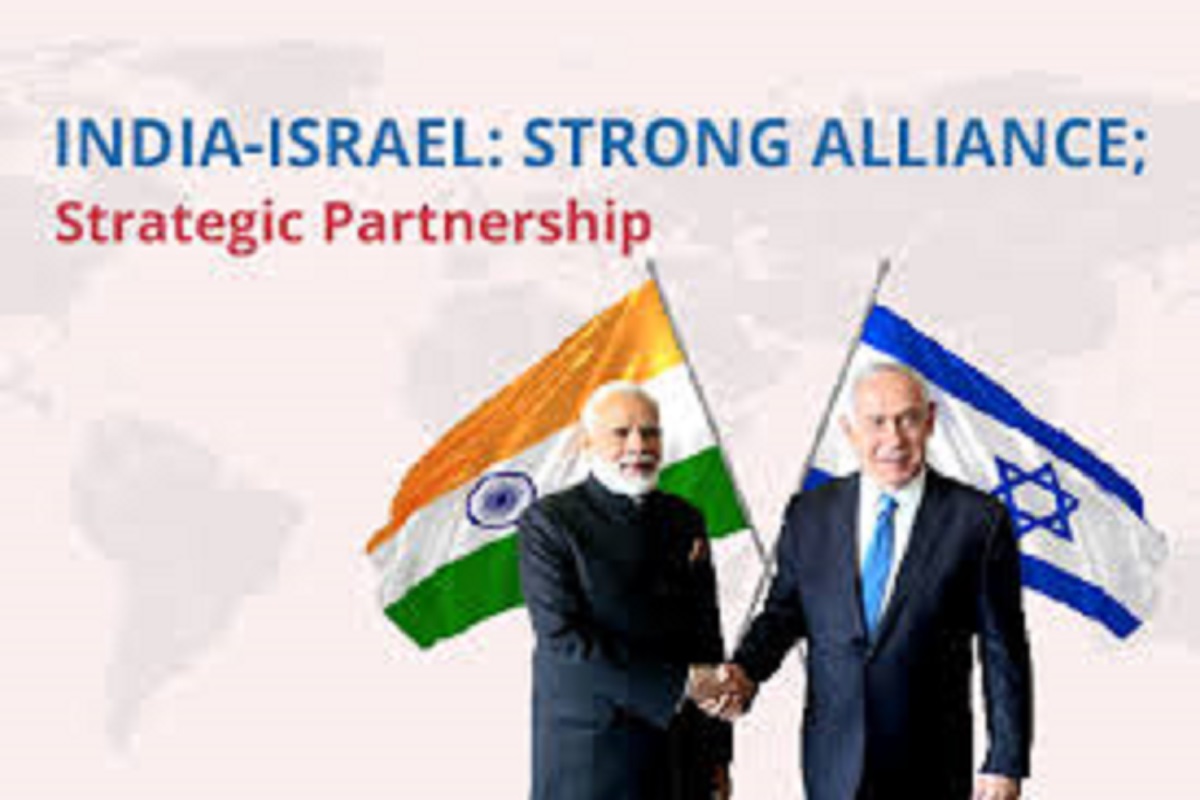

Today’s world seems to be increasingly divided into different geopolitical factions. Many countries are openly standing with one power group or the other. But India has chosen a different path in this changing global system. The path to strategic autonomy.
India’s relations with Israel are often viewed from the perspective of global polarization. But such an interpretation fails to understand the basic principles of Indian foreign policy that have always guided India. Ability to take independent decisions based on national interests.
India had recognized Israel in 1950 itself. However, full diplomatic relations between the two countries were established in 1992. The gap of almost 42 years between these two events was not a sign of any hesitation, but was an example of India’s balanced and carefully decided foreign policy.
India has always tried to balance its West Asia policy with sensitivity, realism and in line with changing global circumstances. This fact is mentioned in several diplomatic documents, Foreign Ministry records and various media analyses.
Today cooperation between India and Israel has extended to many important areas. Among these, sectors like defence, agriculture, water management technology and innovation are prominent. According to data from Stockholm International Peace Research Institute (SIPRI), Israel has been one of the major defense suppliers to India in recent years.
Many modern defense equipment such as the Barak-8 air defense missile system and Heron unmanned aircraft (UAV) are playing an important role in strengthening India’s security capabilities, but this cooperation with Israel runs parallel to India’s strong ties with other countries in West Asia.
For example, trade between India and the United Arab Emirates (UAE) is set to reach more than $85 billion in 2022–23 following the Comprehensive Economic Partnership Agreement (CEPA). Saudi Arabia is one of the major energy suppliers to India. About 60 percent of India’s total crude oil imports come from West Asia.
Additionally, more than 80 lakh Indians live and work in the Gulf countries. These Indians send billions of dollars of remittances to India every year, which is very important for the country’s economy. These figures tell a simple truth. India cannot afford to be a part of any one group’s politics.
This is why strategic autonomy gives India the freedom to cooperate in multiple directions simultaneously. On one hand, India cooperates with Israel in the field of defense and technological innovation, on the other hand, it also strengthens energy, trade and diaspora relations with the Gulf countries.
India also continues humanitarian assistance towards Palestine and has also reiterated its support for the Two-State Solution in the United Nations. This stance has been consistently reflected in the international media and various diplomatic reports. India’s foreign policy has not been fundamentally ideological but interest-based and issue-based.
India’s Foreign Minister Dr. S. Jaishankar has clarified this principle in many international forums and interviews. He says that India does not look for alliance but partnership. This difference is very important.
Alliance means standing permanently in one direction, while strategic autonomy means the ability to take independent decisions based on circumstances and national interests.
India works with Israel on technologies like drip irrigation and water recycling because it benefits Indian farmers. India increases energy cooperation with Gulf countries because it strengthens the country’s energy security and secures the livelihood of millions of Indians.
Similarly, India also joins multilateral groups like I2U2 as they create new opportunities for economic cooperation and investment. The existence of all these relationships is possible not in opposition to each other but in parallel.
In fact, India’s ability to maintain a balance between competing geopolitical zones further strengthens its credibility. India has often appealed for de-escalation, protection of civilians and humanitarian assistance during regional crises. This stance is repeatedly reflected in India’s official statements and international media reports.
Strategic autonomy does not mean remaining neutral or avoiding decisions. Rather, it means making decisions with a clear strategic understanding. This theory holds that sovereignty in a multipolar world means that any country should take decisions based on its national interests and priorities, and not on the basis of external pressure or ideological polarization.
Seen in this context, India’s cooperation with Israel is not separate from its balanced West Asia policy, but is an extension of it, cooperating where interests coincide and consistently supporting humanitarian principles. And maintaining the ability to take independent decisions in every situation. This is the real form of strategic autonomy.
Also read-
Allahabad High Court seeks records from Center on alleged British citizenship of Rahul Gandhi

Comments are closed.