
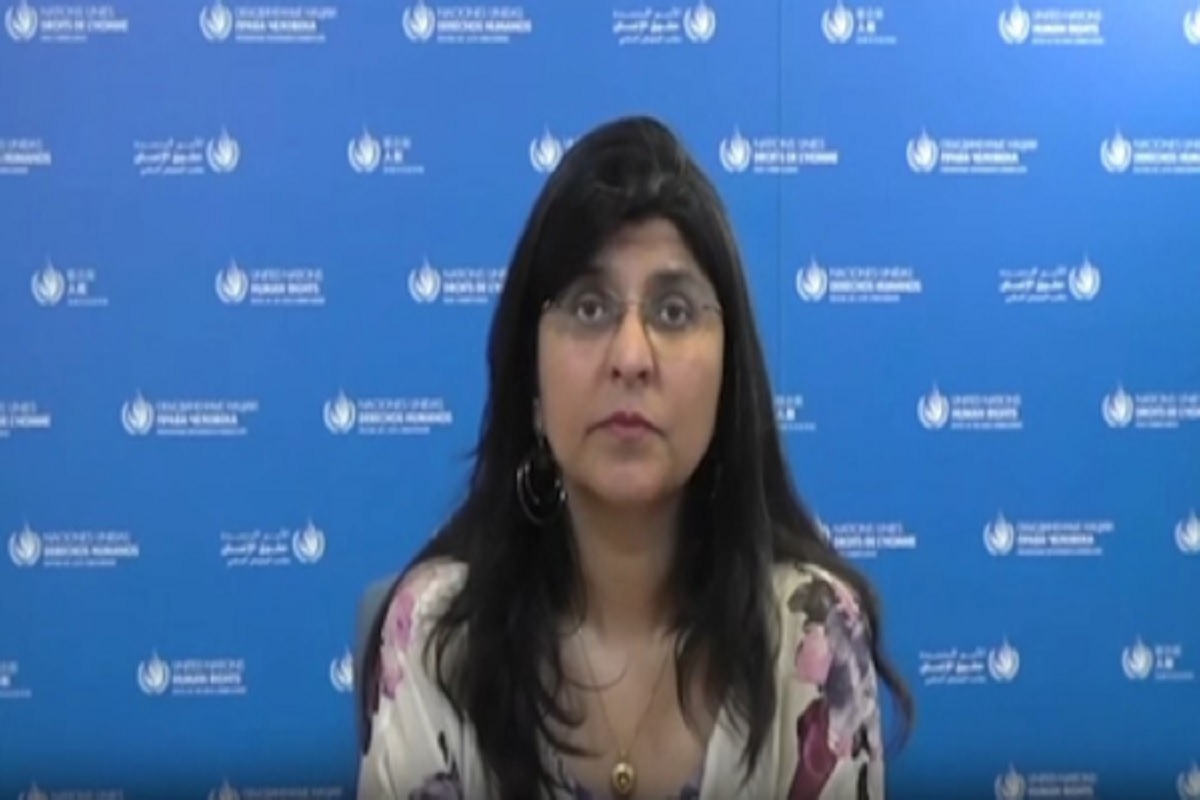

He said the United Nations had been monitoring the situation for several months and had anticipated an escalation of the conflict even before the war began. Raveena Shamdasani said that the United Nations Human Rights Office had warned several months ago that tension in the region was increasing rapidly and any kind of military action would have an impact on the entire region and the world.
He said, “Even a week before the war started, our monitoring was indicating that the risk of conflict had increased significantly. We had warned that if the war started, it would have an impact on the entire region and beyond. Unfortunately, that is what is happening now.” According to him, the situation worsened after the attacks on Iran by America and Israel.
Raveena Shamdasani said that the situation can be difficult for migrant workers working in Gulf countries as they may face difficulty in sending money to their countries due to the conflict. Apart from this, humanitarian aid and food aid programs may also be affected due to increasing global fuel prices.
He said that the United Nations is monitoring the immediate effects of this war as well as its long-term consequences. On the question regarding the protection of civilians and infrastructure during the conflict, Shamdasani said that international humanitarian law is very clear.
He said, “Some people think that these are just idealistic principles, but it is not so. These are actually the laws of war. There are rules of war and all parties involved in the conflict are required to follow them.” According to these laws, all parties should make every possible effort to ensure the safety of citizens and civil infrastructure.
However, Raveena Shamdasani said the war has already seen attacks on many vital civilian infrastructure, including desalination plants, schools and medical facilities. He warned that deliberate attacks on civilian structures could be considered a war crime.
When asked about the attack on a girls school in Minab city of Iran, Shamdasani described it as a very horrific incident. He said that the United Nations does not have a direct presence in Iran, but information about this incident is being collected through reliable sources.
According to him, more than 160 girl students died in this attack while they were studying in their school.
“This could be a serious violation of international law. We are demanding a prompt and impartial investigation into this incident,” he said. Raveena Shamdasani also said that the results of the investigation should be made public and the culprits should be held accountable. According to the United Nations, schools, hospitals and other essential civilian structures are considered protected places during war.
He said that deliberate attacks on such places fall under the category of war crimes under international law. He said that usually the parties involved in the conflict have the exact locations and coordinates of these places so that they are not targeted.
He said schools and hospitals have been attacked in several conflicts in recent years, but the perpetrators often go unpunished. He said such incidents have also happened in conflicts like Gaza and Ukraine and in many cases those responsible were not punished.
According to him, even in the case of Minab school attack, the international community, journalists, United Nations and member countries should together ensure that the culprits are punished. The United Nations Human Rights Office has appealed for an immediate ceasefire to end this conflict.
Raveena Shamdasani said that right now the situation is stuck in a dangerous cycle of ‘retaliatory attacks’ and war-provoking statements are being made continuously. When asked whether this conflict could take the form of a major Gulf war, he said that the situation is extremely worrying.
He warned that the conflict could spread throughout the Middle East and beyond.
He said, “It is as if there is a heap of gunpowder lying around and fire is spreading around it. We have to ensure that this heap of gunpowder does not explode.” If Iran targets oil depots or desalination plants in Gulf countries, will it be justified? On this question, he clearly said that doing so would be a violation of international law.
According to him, structures like desalination plants are essential for the lives of common citizens, hence targeting them is not acceptable. On India’s possible role in ending the conflict, he said that a big and influential country like India can raise its voice for respect of the UN Charter and international law.
He said that the impact of this war is reaching India also, hence all the countries of the world including India should together make efforts to end it. Regarding the recent phone conversation between the Prime Minister of India and the President of Iran, she said that she cannot comment on bilateral talks.
However, he definitely said that all the leaders of the world should work towards ending the war by using their influence.
Gas cylinders were delivered to every home in Patna, people said – no problem of gas!

Comments are closed.