
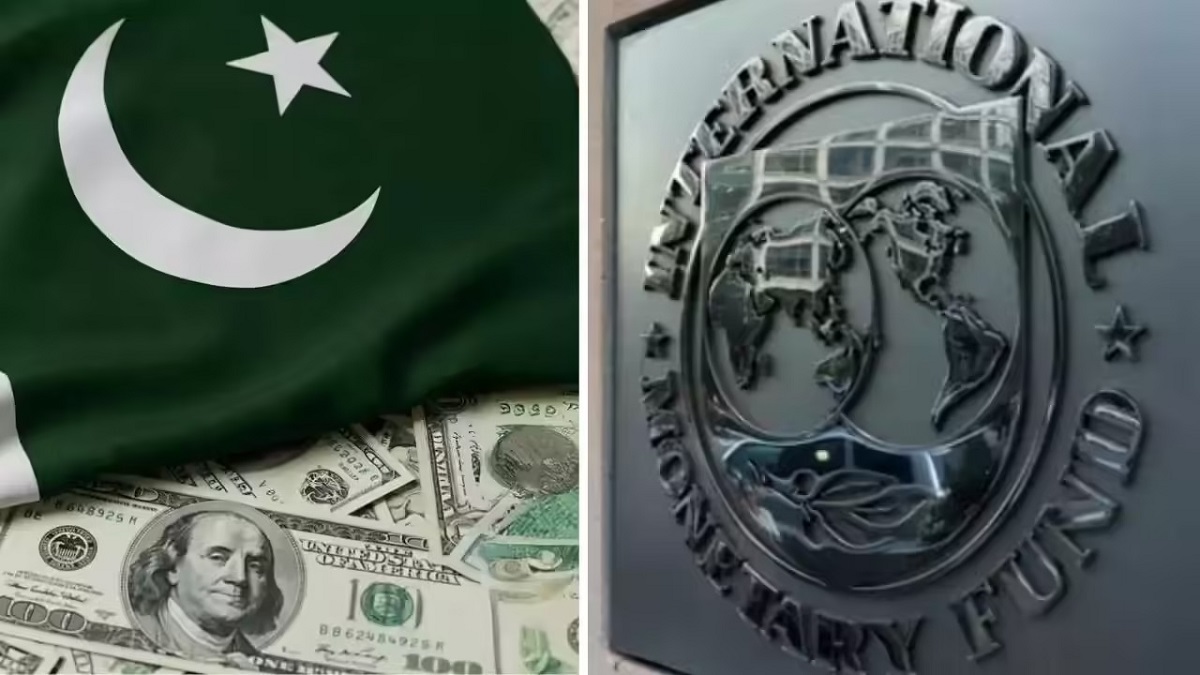

Pakistan’s economy is in complete collapse. On the one hand, the country has to fulfill the conditions of the international loan program, on the other hand, the economic situation has become more complicated due to the rising trade deficit and the rise in oil prices due to the ongoing conflict in the Middle East. According to the report of Karachi’s Business Recorder, Pakistan is facing increasing difficulties in meeting the conditions of the loan program from the International Monetary Fund (IMF).
The report said that implementation of development projects in Pakistan is often delayed, leading to ever-increasing costs. Regional inefficiencies as well as limited financial capacity of the government have also been attributed to this situation. Due to limited fiscal resources, the government is not able to provide the required funds for many projects on time, due to which the projects get stuck and their overall cost increases further.
For this reason, in the loan programs given to Pakistan since 2019, the IMF has placed a condition that the government should give priority only to those public sector development projects which are near completion.
According to economic data, Pakistan’s trade deficit has increased rapidly between July and January 2026. During this period, exports registered a decline of 5.5 percent, while imports increased by 9.8 percent. Due to this imbalance, the current account deficit has also increased to about 1.074 billion dollars, whereas there was a surplus of 564 million dollars in the same period last year.
Although there has been an increase in the amount of money sent by Pakistanis working abroad, even that cannot compensate for this loss. The conflict related to Iran in the Middle East is also impacting Pakistan’s economy. Oil prices have increased rapidly in the international market due to fears of disruption in global energy supply.
According to the report, within two days of the start of the war, the prices of crude oil had increased by about 10 percent. Since the share of petroleum products in Pakistan’s total imports is quite large, the country’s trade deficit may increase further due to oil becoming expensive.
The situation became more complicated when Iran’s military unit the Islamic Revolutionary Guard Corps declared the Strait of Hormuz closed and warned ships. After this, many large merchant ships stopped supplying oil through this route, although limited traffic still continues. The report also said that it currently appears difficult for Pakistan to reduce its dependence on foreign debt. A provision for external financing of about $20 billion has been made in the budget for the current financial year.
Apart from this, Pakistan will be the only country whose foreign exchange reserves are also largely debt based, which includes annual rollovers of about $12 billion from the three friendly countries. Experts believe that if Pakistan has to reduce its dependence on foreign debt, it will have to take tough steps like cutting government expenditure and comprehensive reforms in economic policies.
Also read:
Shock to Trump’s naval alliance plan: Britain, Japan and Australia refuse to send troops
Those who spied for Pakistan sent India’s sensitive information to Britain and Malaysia.
How is Saudi Arabia selling oil despite the closure of the Strait of Hormuz?

Comments are closed.