
India Gears Up For Non Contact Warfare Work Begins On 6 Major Defense Projects Worth %E2%82%B92 19 Lakh Crore

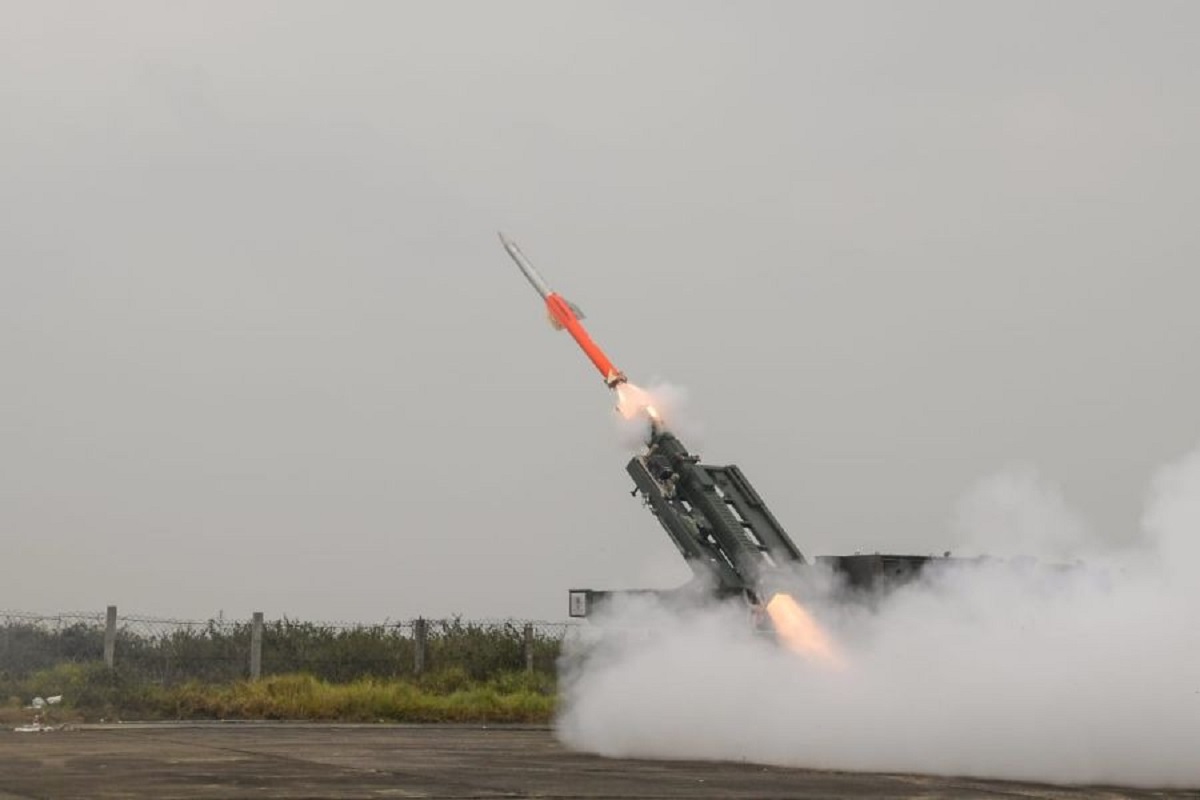
India is making major changes in its military strategy in view of the rapidly changing global war scenario. Keeping in mind the needs of non-contact warfare (without direct face-to-face combat), the country has started work on six major defense projects worth ₹2.19 lakh crore. The state-of-the-art Anant Shastra system is playing a major role in these projects.
According to the Defense Committee report tabled in Parliament, this initiative is being taken to counter future challenges, such as drone attacks, hypersonic weapons and cyber warfare.
Air security will be strengthened by ‘Anant Shastra’:
Anant Shastra is a Quick Reaction Surface-to-Air Missile (QRSAM) system, which is being developed to rapidly neutralize enemy drones and low-flying threats. Its rapid response capability will strengthen India’s air defense in modern asymmetric warfare.
Along with this, work is also going on on indigenous long range surface to air attack missile (LRSAM), which is inspired by capabilities like S-400. This system will be capable of intercepting enemy aircraft, missiles and ballistic threats from long ranges.
Focus on fighter jets and future technology
Meanwhile, India’s fifth generation stealth fighter jet Advanced Medium Combat Aircraft (AMCA) has now moved beyond the design stage to the development stage. Work is also going on on its construction and development of indigenous engine.
Apart from this, the concept of sixth generation fighter aircraft is also being considered, which will serve as “flying command centres” equipped with hypersonic speed, Artificial Intelligence and C4ISR systems. These platforms will be able to launch precise attacks on the enemy without crossing the border.
Emphasis on naval, cyber and electronic warfare
Advanced Torpedo Defense System and anti-drone technologies are being worked on for the Navy. Also, priority is being given to Electronic Warfare (EW) systems, so that the enemy’s communication and sensor systems can be disrupted.
A large portion of the Defense Research and Development Organization (DRDO) budget has been allocated for the development of cyber security and AI-based weapons, so that future cyber attacks and automated threats can be responded to in a timely manner.
Upgrade in missile system and big increase in budget
India is also working on Mark-II versions of missiles like Astra, Nag and Dhruvastra, which will increase their range, accuracy and lethality.
The defense investment budget for FY 2026-27 has been kept at ₹2,19,306.47 crore, which is 21.84% more than the previous year. The total defense budget has reached ₹7.84 lakh crore, which was announced by Finance Minister Nirmala Sitharaman on February 1.
This defense expansion further intensified after Operation Sindoor, which was launched after the Pahalgam terror attack on 22 April 2025. This operation highlighted new challenges in modern warfare, leading to accelerated defense investment.
Under the ‘Self-reliant India’ policy of the government, private sector participation and indigenous production are being promoted in these projects. Experts believe that this initiative will not only make India self-reliant in defence, but will also give it a strategic edge in future wars.
Also read:
Mathura: Memorial to be built in memory of cow protector ‘Farsa Baba’, cow shelter will get help
LPG allocation increased to 50%, government adds 20% additional supply after panic booking decline
Illegal import from China busted, banned walkie-talkie and HDD worth Rs 9.25 crore seized, 2 arrested

Comments are closed.