
Government is not in favor of controlling temples, Center made it clear in the Supreme Court

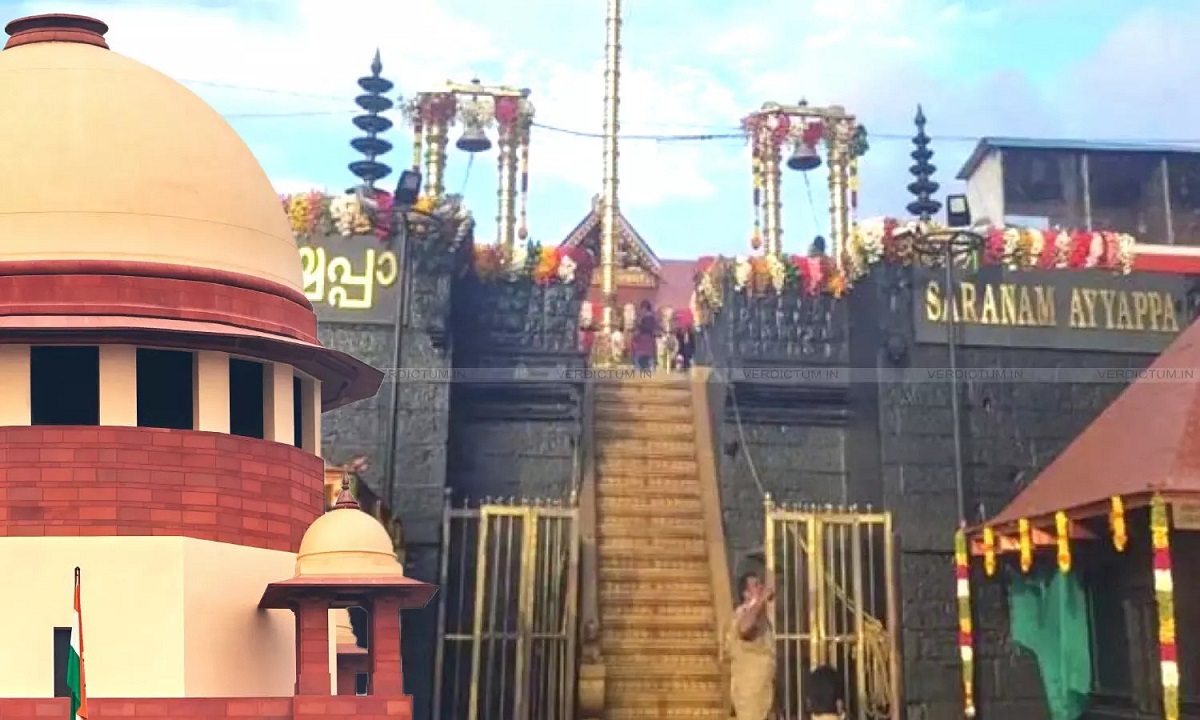
During the hearing on the important constitutional issue related to the petition of women to take darshan in Sabarimala temple, the Central Government has made it clear in the Supreme Court that it is not in favor of government control over the temples. The statement comes at a time when thousands of temples across the country are being run under various state-controlled Devaswom boards. The important remarks were made before a nine-judge Constitution bench headed by Chief Justice Surya Kant. During the hearing, important issues like the balance between faith and fundamental rights were debated.
During the hearing, senior advocate Gopal Sankaranarayanan argued that the interpretation of Solicitor General Tushar Mehta and other parties appeared to justify government control over temples under Articles 25 and 26 of the Constitution.
Responding to this, Tushar Mehta said that his earlier arguments have been misinterpreted. “The government does not want to control temples,” he clarified, adding that his aim was only to interpret the Constitution. He said Article 25 allows the state to regulate the economic, political and other non-religious activities of religious institutions.
During the hearing, Justice Amanullah asked whether this stance applied only to Hindu institutions. On this, Mehta said that the Constitution should not be seen from the perspective of any one religion and the law applies equally to all religions Hindu, Muslim, Christian.
Justice Bagchi also said that such interpretations should be seen from the perspective of citizens rather than religion. Mehta agreed to this and mentioned the religious diversity of India.
Let us tell you that the issue of temple management in the country has been a subject of debate for a long time. Institutions like the Travancore Devaswom Board run around 3,000 temples in Kerala, including the famous Sabarimala Ayyappa temple.
Similarly, in Tamil Nadu the Hindu Religious and Charitable Endowments Department manages more than 30,000 temples. The Tirupati Balaji temple is administered by the Tirumala Tirupati Devasthanams, while the Chardham Board in Uttarakhand manages major religious sites such as the Badrinath temple and the Kedarnath temple.
In such a situation, the final decision of the constitutional bench of the Supreme Court in this matter can decide an important direction regarding the management of religious institutions across the country and the role of the state.
Also read:
‘Did not go to jail because of not being able to pay ₹5 crore’ Rajpal Yadav breaks silence on loan dispute
“Standing strongly with India against terrorist attacks!”
Nepal’s Home Minister Sudan Gurung resigns
ISI linked module busted in Delhi, conspiracy of grenade attacks foiled

Comments are closed.