

The report also revealed that notorious terrorist Osama bin Laden was not caught despite being very close to Pakistan’s military system before he was killed in 2011.
Writing for The Times of Israel, Italian political consultant, author and geopolitical expert Sergio Restelli said that these incidents are not an exception, but part of a pattern in which Pakistan’s policy follows two different paths.
Restelli wrote, “On the first anniversary of the Pahalgam attack, it is not just about remembrance, it is also about accountability. The killing of 26 Hindu civilians in Kashmir was not an isolated incident. It was part of a larger terrorist network, which gets support, protection and encouragement from across the borders. One year later, the question is not just what happened that day, but also what led to such a situation and what has changed since then.”
He further said that there is also a deeper story going on, which starts from Western China and goes through Pakistan’s infrastructure to Iran’s missile program. This is not a story of open partnership, but of layered denial, logistics convenience and strategic ‘outsourcing’.
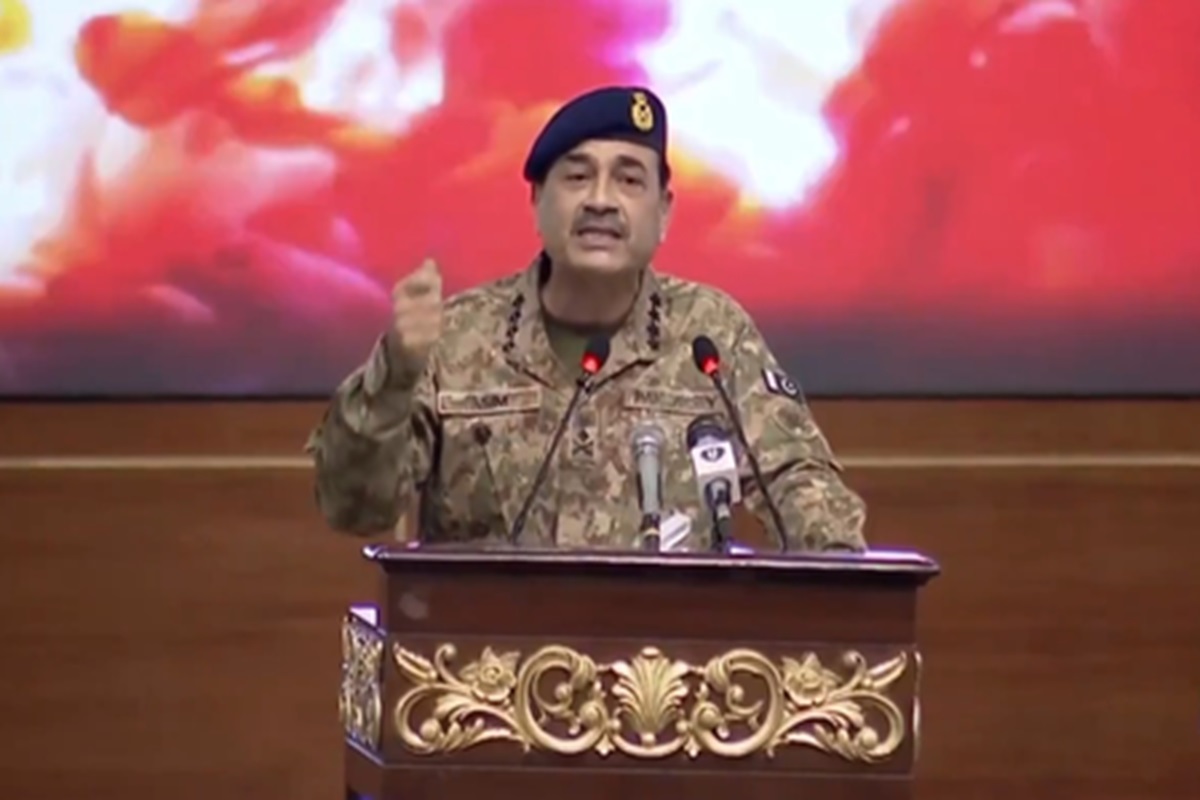
According to Restelli, Pakistan Army Chief Asim Munir’s recent peace talk is not a sign of any change, but a new and smarter version of the same dual policy.
He said that talk of reducing tension at the international level often goes hand in hand with increasing strength at the internal level. Diplomatic talks provide space, space provides time, and in today’s situation, time is the most precious thing.
He further said that if Iran’s strength has weakened, then it needs time to stand up again. If external supply chains are to be monitored, they will need indirect routes and middlemen. If pressure from Washington continues, then instead of confronting it directly, a strategy is adopted to withstand it.
Restelli says that Pakistan presents itself less as a peacekeeping country and more as a player buying time, which by talking about stability gives other networks a chance to change, adapt and survive.
He said that the first anniversary of Pahalgam is not just a time to remember the loss. It is also time to understand how these systems of denial work in different places (from Kashmir to the Middle East).
International delegation reached Tamil Nadu, West Bengal to understand the election process!

Comments are closed.