
India Deciphers The Secret Of The Pl 15e Missile Raising Tensions Between China And Pakistan

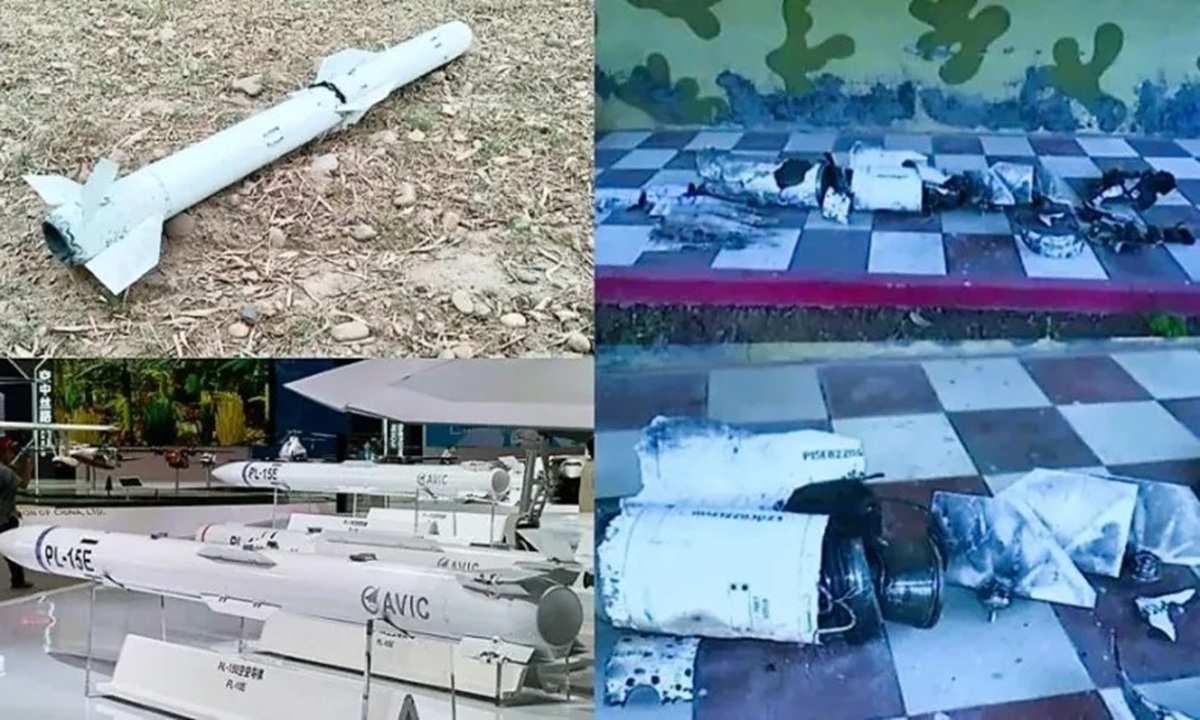
India has achieved great success in understanding many important technical secrets of China’s advanced air-to-air missile PL-15E. According to media reports, Indian engineers and defense experts conducted a thorough study of the debris of this missile recovered during Operation Sindoor against Pakistan, which has revealed important information related to its tracking, radar and targeting technology.
It is being told that this missile had fallen in Hoshiarpur area of Punjab during the Indian military action on the intervening night of 6-7 May. At that time it was considered one of China’s most advanced BVR (Beyond Visual Range) missiles and defense experts had said that if any part of it was recovered safely, it could prove to be a major intelligence success for India.
🇮🇳✔️|| India Cracks Chinese PL-15E Missile Secrets; DRDO, IAF Upgrade Tejas, Su-30MKI and Rafale EW Suits: French Media
• According to French outlet Meta-Defense, India’s Defense Research and Development Organization and Indian Air Force have reportedly decoded key radar,… pic.twitter.com/6GNx9MWiGg
— Miran🇮🇳 (@Miran7g) May 21, 2026
Now media reports have claimed that Indian scientists have understood many important technical aspects of the missile. Quoting French media reports, it has been said that India has analyzed the radar and guidance system of PL-15E and integrated it with its indigenous electronic warfare system. The same system is now being installed in the indigenous fighter aircraft HAL Tejas MK1A and will also be used in the upgraded Sukhoi Su-30MKI aircraft.
The report also claims that this could help the Indian Air Force to counter and jam or disable PL-15E missiles used by Pakistan in the future. French-made Rafale aircraft already have advanced electronic warfare systems.
According to sources, the Defense Research and Development Organization (DRDO) is now working on incorporating some of the advanced technological features associated with the PL-15E into its indigenous Astra Mark-2 missile program as well. Astra Mark-2 is being developed as a next-generation air-to-air missile with a range of over 200 km.
Reports said India had recovered several damaged PL-15 missiles, while a PL-15E was recovered in near-intact condition from a field in Hoshiarpur on 9 May. Experts believe that this would have provided important information about the missile’s AESA radar, advanced propulsion system, anti-jamming capability and technology to maintain speed greater than Mach-5.
The recovery of an almost intact Chinese PL-15 air to air missile is an intelligence coup for India. This missile, fired by a Pak fighter (J-10 or JF-17) flew more than 100 kms to land in the Hoshiarpur area. This missile will be opened up and inspected – the findings could end…
— Vishnu Som (@VishnuNDTV) May 9, 2025
China’s PL-15E missile is considered a rival to France’s Meteor missile. Its range is said to be between 100 to 150 kilometers. This missile can change its course mid-way and has the capability to challenge even modern AESA radar systems. It has the capacity to carry 20 to 25 kg of explosives and its total weight is said to be around 210 kg.
Interestingly, this missile does not have a self-destruct system. That means even if it does not hit its target, it is not completely destroyed. Defense experts believe that this is why India got access to its sensitive technical parts.
According to the Eurasian Times report, France, Japan and America are also interested in understanding the technology of this missile. It is believed that these countries want to study its radar signature, guidance technology and motor system capabilities.
At the same time, Pakistan had also admitted in the press conference at that time that PL-15 missiles were used along with Chinese-made J-10 and JF-17 fighter planes in the air skirmishes with India. According to reports, Pakistan depends on China for about 80 percent of its defense purchases.
Also read:
Flower Tea: Health along with taste, effective in relieving stress by giving coolness in summers!
Contempt petition against journalist Saurav Das and Kejriwal who targeted the court
“AAP government is distorting the order of the Supreme Court, the court did not give permission for mass murder”
Troubled by neck pain and stiffness? These yoga asanas will provide relief from cervical spondylosis!

Comments are closed.