
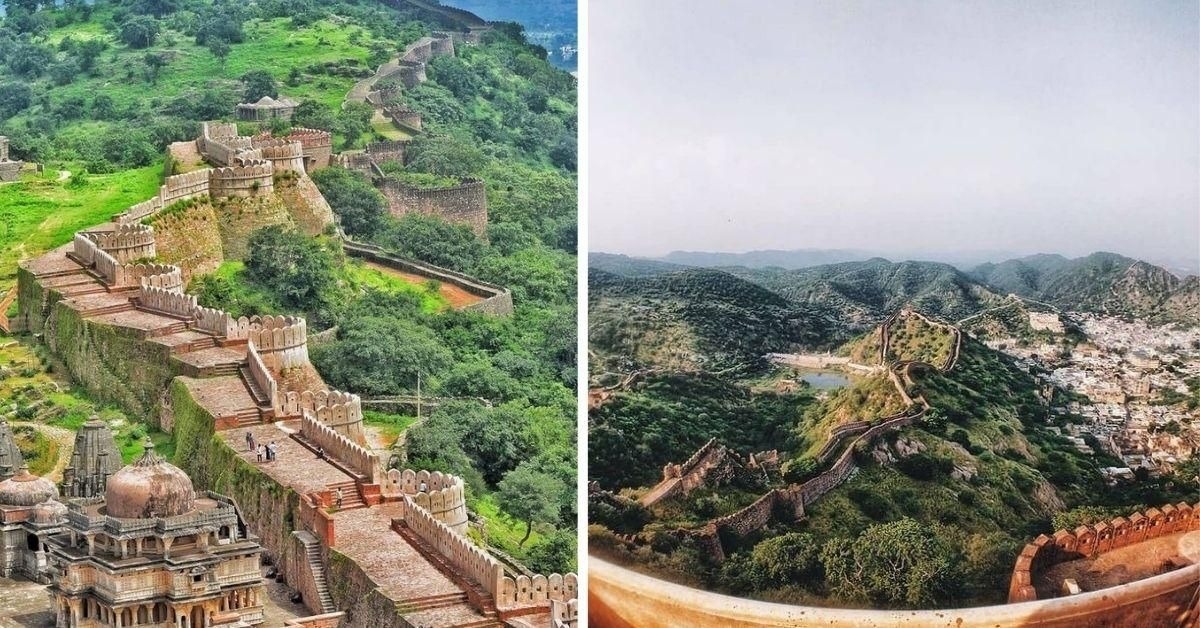
Kumbhalgarh Fort becomes the second longest walled fort in the world, recognized in UNESCO survey

The historical Kumbhalgarh Fort located in Rajsamand district of Rajasthan has got a new identity at the global level. The 36 km long continuous and secure wall of Kumbhalgarh Fort has been recognized as the second longest continuous wall in the world in a UNESCO survey. The famous Great Wall of China gets the first place in this list.
Located in the depths of the Aravali ranges, this fort is considered a wonderful example of Rajput military architecture, strategic construction art and cultural heritage. Kumbhalgarh Fort, located about 84 kilometers from Udaipur, was considered almost invincible in history due to its strong security system and difficult geographical location.
This fort was built by the powerful ruler of Mewar, Rana Kumbha, between 1443 and 1458 AD. The chief architect of the fort was Mandan, who is counted among the leading architectural experts of medieval India.
The biggest feature of Kumbhalgarh Fort is its massive defensive wall, often called the ‘Great Wall of India’. This wall is approximately 36 kilometers long and 15 to 25 feet wide. According to local beliefs, its width is so much that eight horses can run on it simultaneously.
Strong towers, observation posts and special holes for firing arrows have been made in the wall for security. Seven huge gates have been built to enter the fort, which further strengthens its security system. This wall passes through mountains, forests and valleys, which is counted among the most amazing engineering achievements of India.
Kumbhalgarh Fort is already included in the UNESCO World Heritage List. In 2013, it was declared a World Heritage Site as part of the “Hill Forts” group of Rajasthan. This group includes Chittorgarh Fort, Ranthambore Fort, Gagron Fort, Amer Fort, Jaisalmer Fort and Kumbhalgarh Fort.
This fort was not only important from the military point of view, but it also functioned as a self-sufficient secure city. More than 360 ancient temples exist in the fort complex, including about 300 Jain temples and several Hindu temples. The Neelkanth Mahadev Temple located here is especially famous.
Badal Mahal, built at the highest point of the fort, is a major center of attraction for tourists. Amazing views of the Aravalli ranges are visible from here. In clear weather, parts of the Thar Desert can also be seen from here.
Kumbhalgarh Fort is also considered very important historically because it is the birthplace of the great Rajput warrior Maharana Pratap. Maharana Pratap holds a special place in Indian history for his struggle and bravery against the Mughal rule.
Historians and tourism experts believe that this new recognition received in the UNESCO survey will give a stronger recognition to the historical and cultural heritage of not only Rajasthan but the entire India on the global stage.
Also read:
Petrol becomes costlier by Rs 2.61 and diesel by Rs 2.71, fourth increase in last two weeks
West Bengal Police paraded the gangster in shorts and vest
Passports of 116 drug smugglers will be canceled in Jammu and Kashmir
6 policemen who were negligent in PM Modi’s security suspended

Comments are closed.