
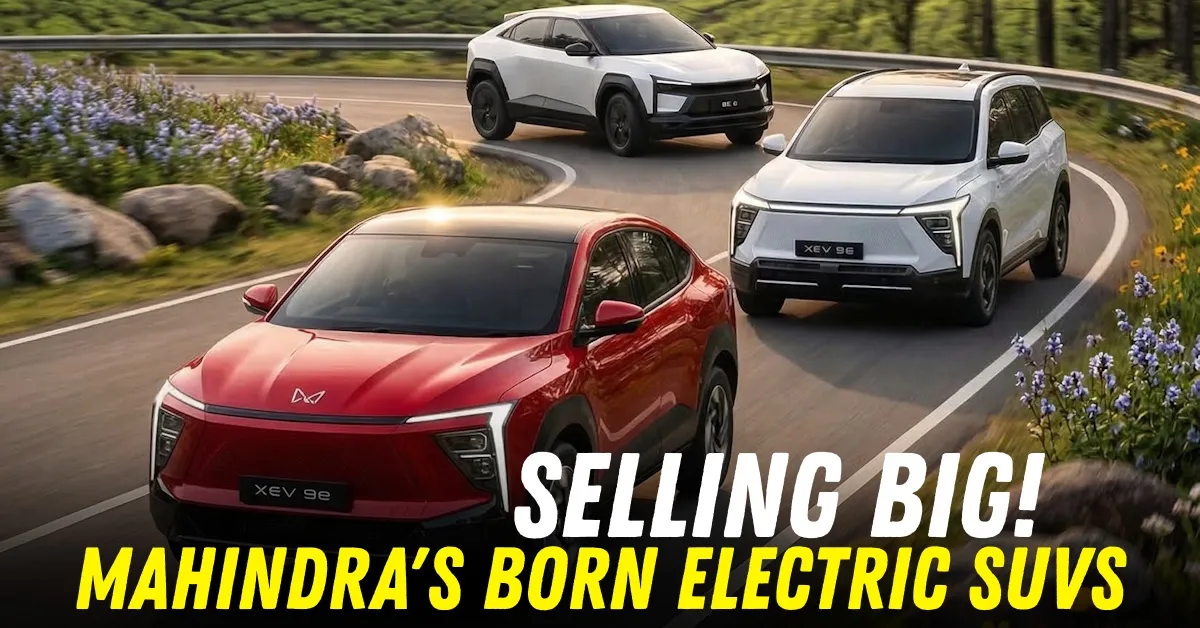

Mahindra crossed an important milestone in June 2026: electric vehicles accounted for 14.4 percent of its passenger vehicle retail sales. In simpler terms, roughly one in every seven Mahindra passenger vehicles retailed during the month was electric.
That is a significant shift for a company still strongly identified with diesel SUVs. It also shows how quickly Mahindra’s new electric SUV portfolio has moved from launch excitement to measurable market share.
The number should be read carefully. Mahindra’s official domestic SUV wholesale number for June 2026 was 60,393 units, up 28 percent year-on-year. Its total vehicle sales, including exports and other categories, stood at 1,06,207 units, up 37 percent. But the 14.4 percent EV mix comes from retail registration data, not directly from the wholesale SUV dispatch number. So it is not correct to simply multiply 60,393 by 14.4 percent and call that Mahindra’s EV sales.
For absolute EV retail volume, June registration data shows Mahindra sold 7,645 electric passenger vehicles, up 118 percent year-on-year from 3,513 units in June 2025. That was Mahindra’s highest monthly EV performance yet and gave it around 24 percent of India’s electric car market for the month.
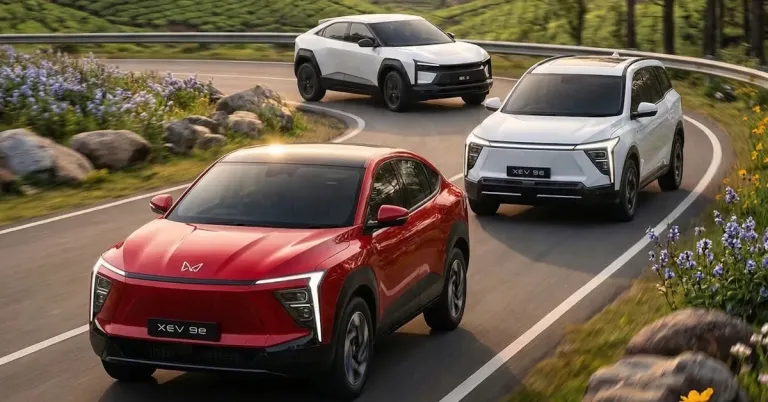
Mahindra’s EV push is now led by three models: the BE 6, XEV 9e and XEV 9S. These sit on the company’s Electric Origin SUV platform strategy and target buyers who want premium electric SUVs rather than entry-level city EVs.
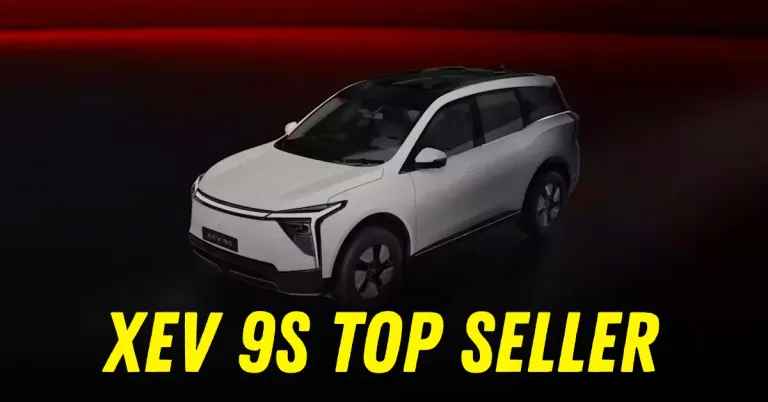
Cumulative wholesale data up to the end of April 2026 showed these three models crossing 65,000 factory dispatches. The XEV 9e was the largest contributor, with 34,369 units and roughly 52 percent of the combined volume. The BE 6 followed with 20,108 units, while the XEV 9S contributed 11,138 units despite being launched later.
The XEV 9S has become especially important because it gives Mahindra a three-row electric SUV in a market where most EV choices are still five-seaters. It also starts at around Rs 19.95 lakh ex-showroom, while the BE 6 starts at around Rs 18.90 lakh and the XEV 9e at around Rs 21.90 lakh. This pricing puts Mahindra’s electric SUVs above mass-market hatchback EVs, but still within reach of buyers already considering premium diesel or petrol SUVs.
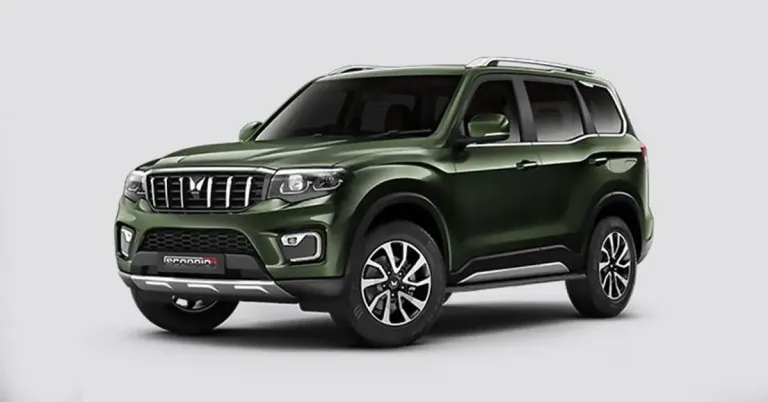
The EV number is impressive, but it should not be misread as a full powertrain shift. Diesel still accounted for nearly 70 percent of Mahindra’s June passenger vehicle retail mix, while petrol contributed around 15.7 percent.
That is not surprising. Mahindra’s core models such as the Scorpio-N, Thar, XUV700, Bolero range and other utility vehicles still draw buyers who value diesel torque, range, rural fuel availability and heavy-use capability. For many customers, especially outside metros, diesel remains the default Mahindra powertrain.
This makes the EV achievement more interesting, not less. Mahindra is not replacing its diesel base overnight. It is adding a strong electric pillar to an already successful SUV business. That is different from companies whose EV growth comes mainly because their internal-combustion portfolio is weak or ageing.
Mahindra’s 7,645 EV retail units in June placed it second in India’s electric passenger vehicle market behind Tata Motors, which sold 12,023 EVs. Tata remains the overall EV leader, but Mahindra’s growth rate is now strong enough to change the shape of the market.
For years, Tata dominated India’s electric car space with the Nexon EV, Tiago EV and Punch EV. MG held a strong position with the ZS EV, Comet and later Windsor. Mahindra’s new portfolio has changed that contest by focusing on larger, more aspirational electric SUVs.
Usage data also supports the case that these are not only second cars for short city runs. Mahindra has said over a thousand of its Electric Origin SUVs crossed 20,000 km within months of delivery, with some going beyond 50,000 km in seven months. It has also said 70 percent of these vehicles are driven more than 1,000 km a month, and 10 percent cross 3,000 km a month.
That matters because it shows buyers are using these EVs as main family vehicles, not as occasional-use experiments.
Mahindra’s June numbers show that premium electric SUVs are no longer a niche within a niche. A 14.4 percent EV retail mix is far above the broader electric passenger vehicle share in India, which remains in the low single digits to mid-single digits depending on the month and dataset used.
The headline is not that Mahindra has turned into an EV company. It has not. Diesel still carries the business. The headline is that electric SUVs are now large enough to visibly alter Mahindra’s powertrain mix.
Comments are closed.