


Hyundai Creta is the first name that comes to mind when we say ‘mid-size SUV’. In 2025 alone, it enjoyed a market share of 34 percent in the mid-size SUV segment. That roughly means one in every three mid-size SUVs sold in India is a Creta! Two new models, set to launch in India this month, will potentially challenge its dominance here. Here is a closer look at these.
Skoda Kushaq Facelift
Skoda revealed the facelifted Kushaq in January this year. Pre-bookings are already open. The SUV is expected to officially go on sale later this month. Deliveries will start commencing soon after. The production of the new Kushaq has already begun at Skoda’s Chakan plant. While we expect the ex-showroom prices to be slightly higher than those of the outgoing model, here’s a closer look at the changes.
The design sees a notable evolution on the facelift. It now follows Skoda’s ‘Modern Solid’ design philosophy and looks more upmarket. The front fascia gets restyled LED headlamps with eyebrow-style DRLs and sequential turn indicators, a segmented light bar that runs along the width of the grille, and a redesigned front bumper with a Silver skid plate. Higher variants ride on new 17-inch wheels and the rear gets a connected LED tail lamp cluster and a new bumper.

A Monte Carlo trim will also be offered on the new model, with unique styling details and Monte Carlo badges. The new Kushaq’s colour palette has also been revised. It sees the addition of three new shades- Cherry Red, Shimla Green and Steel Grey.
Inside, the facelift gets a modern, upmarket cabin and even more features. The Prestige trim gets a black-and-beige colour theme, while the Monte Carlo version gets a Crimson-themed interior. The range-topping variant now comes with features like a panoramic sunroof, built-in Google Gemini integration and massage function for the rear seats.

Other features offered on the new Kushaq are a 10.1-inch touchscreen infotainment system, 10.25-inch digital driver display, wireless Apple CarPlay and Android Auto, a six-speaker audio system, ambient lighting and more. Another major improvement is in the boot space. The new model comes with a boot capacity of 491 litres- roughly 106 litres more than the pre-facelift model.
The new Kushaq continues with the same engines as before- 1.0-litre turbo-petrol engine producing 115 hp and 178 Nm and a 1.5-litre turbo-petrol engine making 150 hp and 250 Nm.

The smaller engine will be available with either a manual gearbox or a new 8-speed torque-converter automatic, replacing the older six-speed automatic unit.
The more powerful 1.5-litre TSI engine will continue with a 7-speed DSG dual-clutch automatic transmission alone.
New Renault Duster (Third-Generation)
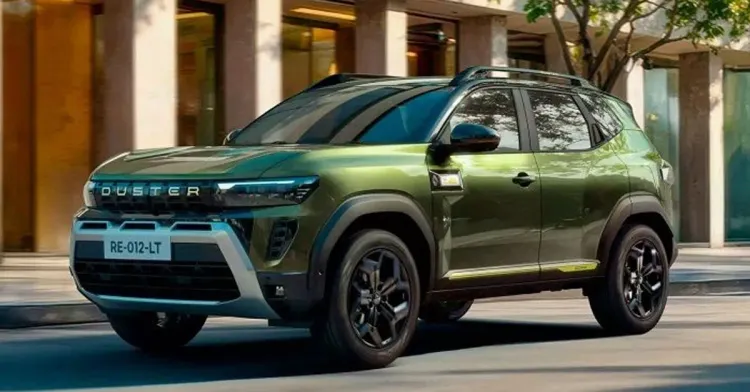
The second challenger comes from Renault India. The company will launch the new, third-generation Duster on March 17, 2026. It will feature a completely new design, a fresh cabin and a new set of powertrains.
The new Duster gets a rugged-yet-modern design. It gets eyebrow-like LED DRLs, a gloss-Black grille with ‘Duster’ spelled out on it, pixel-shaped LED fog lamps, bold body cladding, 18-inch wheels, bold roof rails, C-pillar mounted rear door handles, integrated rear spoiler and connected LED tail lamps.
The SUV has a ground clearance of 212 mm and good approach, departure and rampover angles. It even offers a massive boot capacity of 700 litres, measured to the roof.

The cabin looks modern and is well-packaged. There is a generous use of premium and soft-touch materials. Features like a 10.1-inch touchscreen infotainment system with wireless Android Auto and Apple CarPlay, a six-speaker Arkamys sound system, electronic parking brake, built-in Google integration, 360-degree camera, powered tailgate, 10.25-inch digital instrument cluster, ventilated and powered front seats, dual-zone climate control, ambient lighting, ADAS and a panoramic sunroof are on offer.
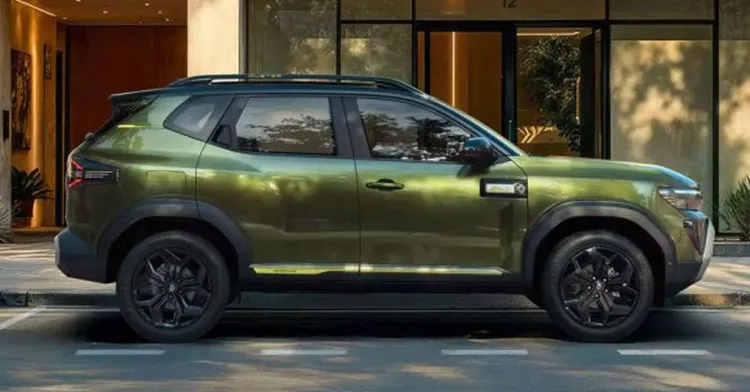
The third-generation Duster is based on Renault’s heavily localised RGMP platform, which has been developed specifically for emerging markets. This modular platform is very versatile and can support various powertrains and fuel options.
Two engine will be offered at launch- 1.0L turbocharged petrol on lower trims and a 1.3L turbo-petrol on higher ones. The former makes 98hp and 180Nm while the latter has an output of 160hp and 280 Nm. The smaller engine will be made available with a manual transmission. It remains to be seen if a CVT automatic will be offered with this engine. The 1.3L turbo-petrol will offer the choice of a manual and a six-speed DCT automatic gearbox
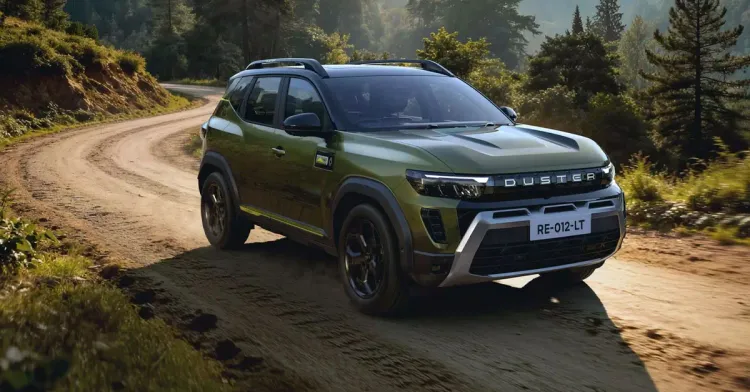
Later this year, likely around Diwali, the carmaker plans to introduce a strong hybrid version, as well. Its powertrain will mate a 1.8-litre naturally aspirated petrol engine with two electric motors and a 1.4 kWh battery pack. One of these motors will function as the generator while the other will drive the wheels.
Interestingly, both these SUVs are petrol-only models. The Creta, on the other hand, is offered with both petrol and diesel engines. Data shows that there is still enough demand for diesel powertrains in the mid-size SUV segment. It remains to be seen how the petrol-only gameplan will pan out.

Comments are closed.