
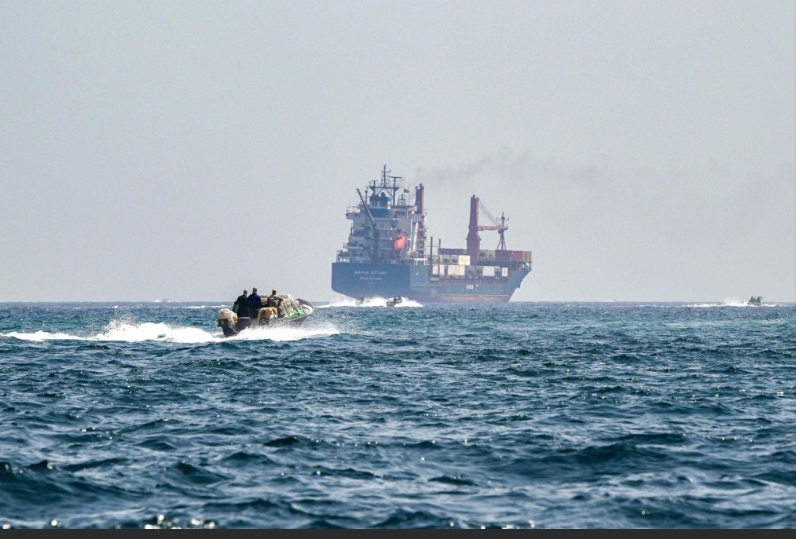

Two more Indian-flagged LPG carriers, **Jag Vasant** and **Pine Gas**, are transiting the Strait of Hormuz. This has brought some relief amid the cooking gas shortage and regional tensions in India.
Ship tracking data (MarineTraffic) shows that these ships are passing through this strategic waterway after getting approval from Iran for safe passage. They are following a route near the islands of Qeshm and Larak, close to the coast of Iran. The same pattern was seen in other recently approved voyages, where Tehran controls the movement of ships.
The ships, loaded with liquefied petroleum gas (LPG)—crucial for Indian households—had set sail from the UAE coast in late February (Jag Vasant from Kuwait and Pine Gas from Ruwais), but were stranded there due to the escalating conflict. As a precaution, he only indicated ‘Indian ownership’ rather than any specific destination.
It usually takes about 14 hours to cover the entire journey; If there is no obstruction, they can reach the Gulf of Oman by evening. Earlier this month, two other LPG carriers from India had also successfully passed through this route. All this became possible because of the diplomatic talks between New Delhi and Tehran.
The strait—through which about 20% of the world’s oil and gas flows—has been facing tight restrictions since the US and Israel attacked Iran in late February 2026. Iran has largely blocked shipping; It is attacking or threatening ships, and no crude oil tankers have passed through this route in recent times. However, through negotiations and negotiated safe routes, some relaxations have been made for select countries like India.
India fulfills about 90% of its LPG needs by importing it from the Middle East. Therefore, it has made it its first priority to ensure safe passage for its more than 22 stranded ships, using high-level diplomacy. The passage of these ships makes it clear that, despite all the risks—including some incidents that have occurred on the Oman side in the past—there is now a gradual relaxation of energy supplies.
These developments, amid the ongoing conflict in West Asia, highlight the fragility of energy routes around the world.

Comments are closed.