
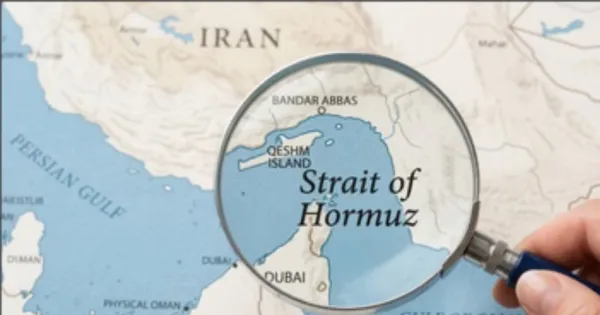
20,000 sailors stranded in the Strait of Hormuz, world’s most important waterway disrupted due to blockade of ships

Dubai. About 20,000 sailors on hundreds of ships are stranded in the Gulf, unable to cross the Strait of Hormuz. These ships include many cargo ships, including gas and oil tankers. About one-fifth of the world’s oil and liquefied natural gas (LNG) passes through this waterway.
According to the maritime data providing company ‘Lloyd’s List Intelligence’, about 80 ships passed through this strait between 13 to 19 April. Before the war, about 130 or more ships passed through this route every day.
At least 10 sailors have died in attacks on dozens of ships since the war began, according to the United Nations. Last week, US President Donald Trump extended the ceasefire indefinitely. Despite this, America continued the blockade on Iranian ports. In response, Iran fired on ships in the strait and captured two ships.
At the same time, according to a report by the Stockholm International Peace Research Institute, military spending in the Middle East stagnated in 2025 while it increased in other parts of the world. Accordingly, military spending across the region increased by 0.1 percent but spending by both Israel and Iran actually declined. Israel’s military expenditure will decline by 4.9 percent to $48.3 billion in the year 2025. This decline reflects a reduction in the intensity of war as compared to the year 2024.
According to the report, this reduction in expenditure is mainly due to the ceasefire agreements signed in Lebanon in November 2024 and Gaza in October 2025. However, despite the cessation of large-scale military operations, Israel has continued its ground presence and ‘precision strikes’ in both areas. At the same time, Iran’s expenditure decreased by 5.6 percent to $7.4 billion. The reason for this is said to be inflation and macroeconomic pressure.

Comments are closed.