
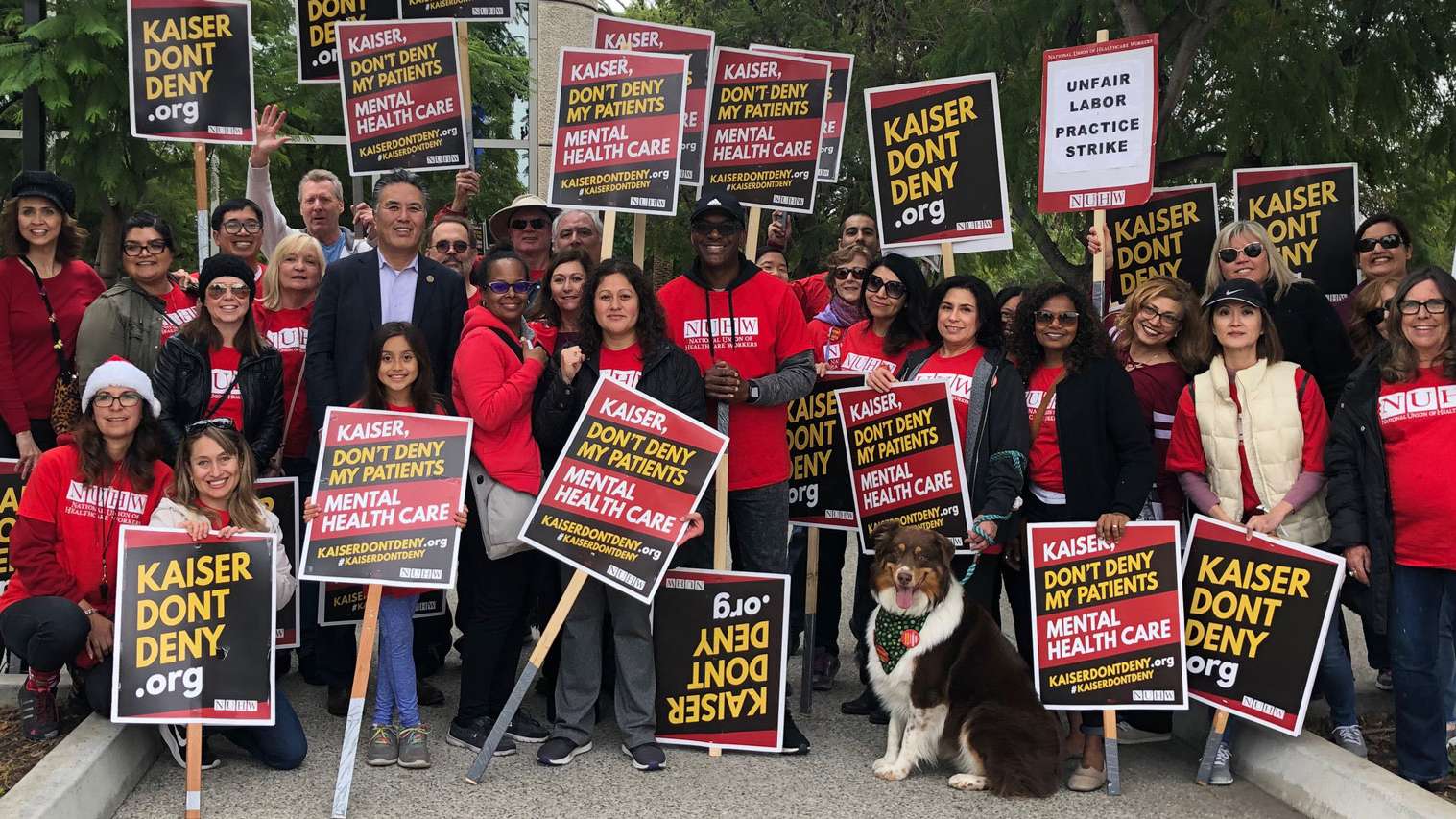

Around 2,400 mental health professionals at Kaiser Permanente went on a one-day strike in Northern California on Wednesday. The mental health workers expressed their concerns that the health system might use more artificial intelligence in the future, which might replace human therapists.
However, Kaiser Permanente denied the claims. The company said it does not use artificial intelligence in providing therapy and has no plans to use it in the future. The company also said it has not been affected by the strike, as all its facilities were open on the day of the protest.
The protest is a result of ongoing contract talks between Kaiser Permanente and the National Union of Healthcare Workers. The talks have been going on since last summer. The union represents psychologists, therapists, and social workers who provide therapy to 4.6 million patients in the San Francisco Bay Area, Central Valley, and Sacramento.
The protest also gained support from more than 23,000 nurses who work under the California Nurses Association. The nurses went on a protest in support of the mental health workers and expressed their concerns about the staffing levels.
Efficiency or Empathy? The Battle Over Artificial Intelligence and Patient Loads at Kaiser
According to the union leaders, their concerns do not stop at AI. The union leaders believe the company is also pushing for more patients and fewer sessions. Dr. Emma Olsen, a psychiatrist in Vallejo, is also a union steward.
The main concern of the company is to increase the number of patients seen in a day, but in fewer sessions. She believes that the quality of service may be compromised as a result.
“They want us to see people back to back, with less time and fewer resources,” she said. Dr. Olsen also believes that the time spent on patient notes and messages is also being compromised.
According to her, patient notes and messages are crucial in providing quality service. Katy Roemer, a nurse in adult and family medicine, also has a similar opinion. According to her, the main issue is how the new technology, including AI, will affect the patients and the workers. She asked herself if the technology, including AI, will be used to help the patients or only help the company’s bottom line.
“Will AI help patients, or will it help the company’s bottom line?” she said.
AI, Labor Unions, and the Future of Mental Health at Kaiser
Kaiser, for its part, said it sees AI as a support tool. In a message to employees, senior leaders said technology can help clinicians manage their workload and improve access to care. They said AI tools can assist with routine tasks, which may allow providers to focus more on patients.
The company also said it has hired more mental health staff in recent years. It pointed to ongoing efforts to expand access and reduce wait times for appointments.
Kaiser does not employ AI in such therapy sessions. However, the union is concerned that the rapid advancement in technology may lead to such practices in the future. This concern is also in line with the overall discussion in the healthcare sector. Many healthcare organizations are considering employing AI in their practices. This would help in saving time in documentation, scheduling appointments, and even in communication with patients.
However, the question that arises in such cases is about the human side of healthcare. Mental healthcare is one such sector that requires a high level of trust and human interaction. The union believes that AI cannot replace human interaction.
The case also arises in the backdrop of the tension that existed between Kaiser and the regulators in the past. The organization agreed to a settlement of $200 million in 2023 with the California regulators. This was in response to the violation of the state’s mental health laws. The regulators had found that patients were not receiving timely healthcare.
That background gives credence to the union’s claims. The workers argue that the system is still under pressure and that changes should be made with patients’ needs in mind first.
The union and Kaiser both agree that patients should have better access to mental health care. The issue is how to achieve this. The union suggests more staff, a manageable workload, and limits to AI usage. Kaiser suggests that technology and hiring more staff can meet increasing needs.
The strike is part of a larger change in healthcare. As AI technology gets better, workers and employers are deciding what to do with it. The decisions they make will not only impact workers but also patients.

Comments are closed.