


For many of us, the garage is not just a place to store a car; it can also double as a home office or a workshop where we bring our ambitious project ideas to life. They’re ideal places for trying your hand at building a garden bench or other small woodworking projects that are great for beginners. They’re also a solid choice if you’re interested in trying something more complex, like working on restoring your latest vintage car.
However, while you might want your garage to be a safe haven, it can still present significant safety hazards. Some of these hazards can be costly or even fatal; from wet floors and sharp tools to exposed cords and stored flammables, several things in your garage can cause life-threatening mishaps, including falls, accidental fires, and nasty cuts. In fact, according to the U.S. Fire Administrationover 6,500 residential building garage fires are reported annually, and these fires usually result in property damage totaling almost $450 million.
While some safety hazards like faulty wiring, garage clutter, and tripping hazards might be pretty obvious, there are some that might not be apparent and all too easy to ignore. With that in mind, we’ll take a look at some of the safety hazards that could be lurking around your garage that you need to pay attention to.
Rolling out rugs and carpets

Equipping your garage with rugs or carpets can add a touch of style and charm to your space. They can also add a splash of color and even offer insulation against cold concrete garage flooring. But despite these appealing perks, it’s worth noting that there are hidden downsides to rolling out a carpet on your garage floor. For instance, they can be challenging to keep clean and maintain. Of course, a bare garage floor will get dirty, too, but it can often be easier to deep clean your workshop floor than to clean the rugs in your garage.
Dirty rugs can pose serious health issues, too. These carpeted areas can easily collect dust and debris; after all, they’re subject to heavy foot traffic, occasional motor oil and grease spills, and they can even accrue metal shavings and sawdust over time. If left unchecked, all of these can lead to bacterial buildup, which can lead to respiratory issues and even trigger allergies. Also, rugs can create a great environment for mold growth, especially when you consider that garage units often have moisture issues and tend to collect extreme amounts of dust. Besides that, rugs and carpets in your garage can also lead to severe fall injuries if they’re not fitted well.
Using your garage as the place for pet food

Storing canned food in your garage or a similar space devoid of any temperature control is a big mistake — after all, food can spoil even without the telltale signs of smell or sight, and consuming them can easily result in severe stomach and intestinal issues. But do you know what’s worse than that? Storing a bag of pet food or a sack of bird seed in your garage. If you’ve pledged to reduce clutter in your kitchen, it might seem convenient and practical to store your dog or cat’s kibble in your garage. But before you do that, you should remember that that the space isn’t designed with food storage in mind.
Hungry rodents mostly need shelter and food. Unfortunately, the garage is often the easiest entry point for these unwanted guests, as they can sneak through small cracks and gaps in failing sealant and damaged weather stripping. This means that if you store dry pet food in your garage, you’ll just be setting up a banquet for unwanted guests like mice and rats.
And given that rats breed rapidly (a female rat can have up to 12 pups per litter), if you don’t solve this issue early on, you could be looking at a pest infestation. This could pose a major safety risk; rats can chew through wires and damage gas lines, creating fire hazards. Even worse, according to the Centers for Disease Control and Preventionboth rats and mice can carry ticks and fleas into your space and spread bacterial and viral diseases like leptospirosis and mpox.
Storing a propane tank and aerosol cans
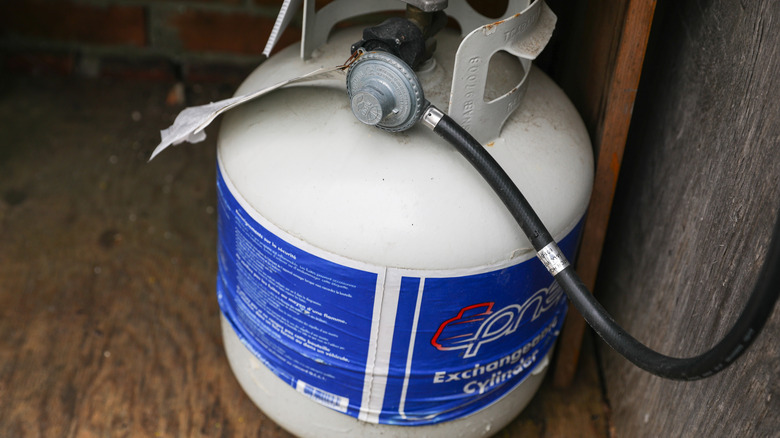
If you have a propane tank, then you know that you should store it in a cool, well-ventilated place. If you have a climate-controlled, well-ventilated garage that’s ideal for storing tools, you might assume that it would also be the perfect place for storing your propane tank. But before you go ahead, it’s important to note that a propane tank is one of the things you should never store in your garage or shed.
Propane, also known as LPG, is highly flammable. And while propane tanks are built to last for a long time, seals can dry up and valves can wear out, releasing gas into the air. These leaks could ignite a fire when exposed to ignition sources. Since the gas is naturally odorless and colorless, it can quickly build up in your garage. In the worst-case scenario, you might suffer from fatal asphyxiation if you breathe in too much of it. For this reason, you’ll want to store your propane tank outdoors in a well-ventilated area that’s away from heat sources and sunlight.
Like propane tanks, aerosol cans are also a bad option for garage storage. Why? Temperatures above 120 degrees Fahrenheit can cause the pressure inside the can to rise and build up to the point of bursting, possibly injuring you and others. In states like California, Arizona, and Kansas, where temperatures can reach 120 degrees or more in the summer, storing aerosol cans and propane tanks improperly can be a significant safety risk.

Comments are closed.