
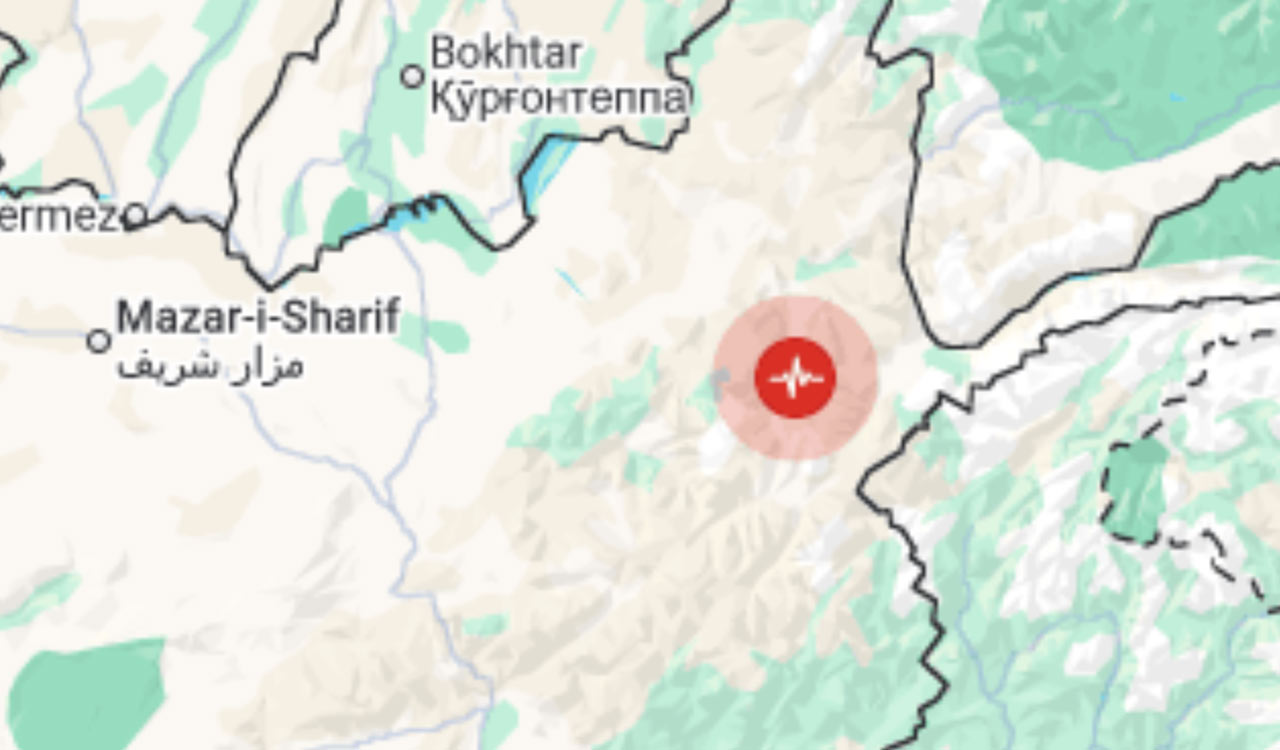

A 5.8 magnitude earthquake struck northern and eastern Afghanistan and western Pakistan late Friday, killing at least eight people. The epicentre was located in the Hindu Kush mountain range at a depth of over 180 kilometres, causing tremors across Kabul, Islamabad, Peshawar, and other regions.
Published Date – 4 April 2026, 12:11 AM
KABUL, Afghanistan: An earthquake with a preliminary magnitude of 5.8 rattled parts of northern and eastern Afghanistan and western Pakistan late Friday.
The spokesperson for Kabul’s governor said at least eight people are dead. The region is highly seismically active, and quakes have caused thousands of deaths in recent years.
Friday’s earthquake had an epicenter in the Hindu Kush mountain range, about 150 kilometers (93 miles) east of the Afghan city of Kunduz, according to the Euro-Mediterranean Seismological Center and the United States Geological Survey.
With the epicenter at a depth of over 180 kilometers, the quake was felt across a wide swathe of Afghanistan and Pakistan. It was felt in the areas of Islamabad, Peshawar, Chitral, Swat and Shangla, according to the Pakistan Meteorological Department. Afghanistan’s Health Ministry spokesman Sharafat Zaman said Kabul and provincial health authorities had been put on alert.
Last August, a 6.0 earthquake that struck a remote, mountainous part of eastern Afghanistan killed more than 2,200 people, leveling villages and trapping people under rubble. Most casualties were in Kunar province, where people typically live in wood and mud-brick houses along steep valleys.
In November, a 6.3 earthquake struck Samangan province in northern Afghanistan, killing at last 27 people and injuring more than 950. It also damaged historical sites, including Afghanistan’s famed Blue Mosque in the city of Mazar-e-Sharif, and the Bagh-e-Jahan Nama Palace in Khulm.
On Oct. 7, 2023, a 6.3 quake followed by strong aftershocks in western Afghanistan killed thousands of people.Impoverished Afghanistan often faces difficulty in responding to natural disasters, especially in remote regions. Many homes in rural and outlying areas are made from mud bricks and wood, with many poorly built.

Comments are closed.