
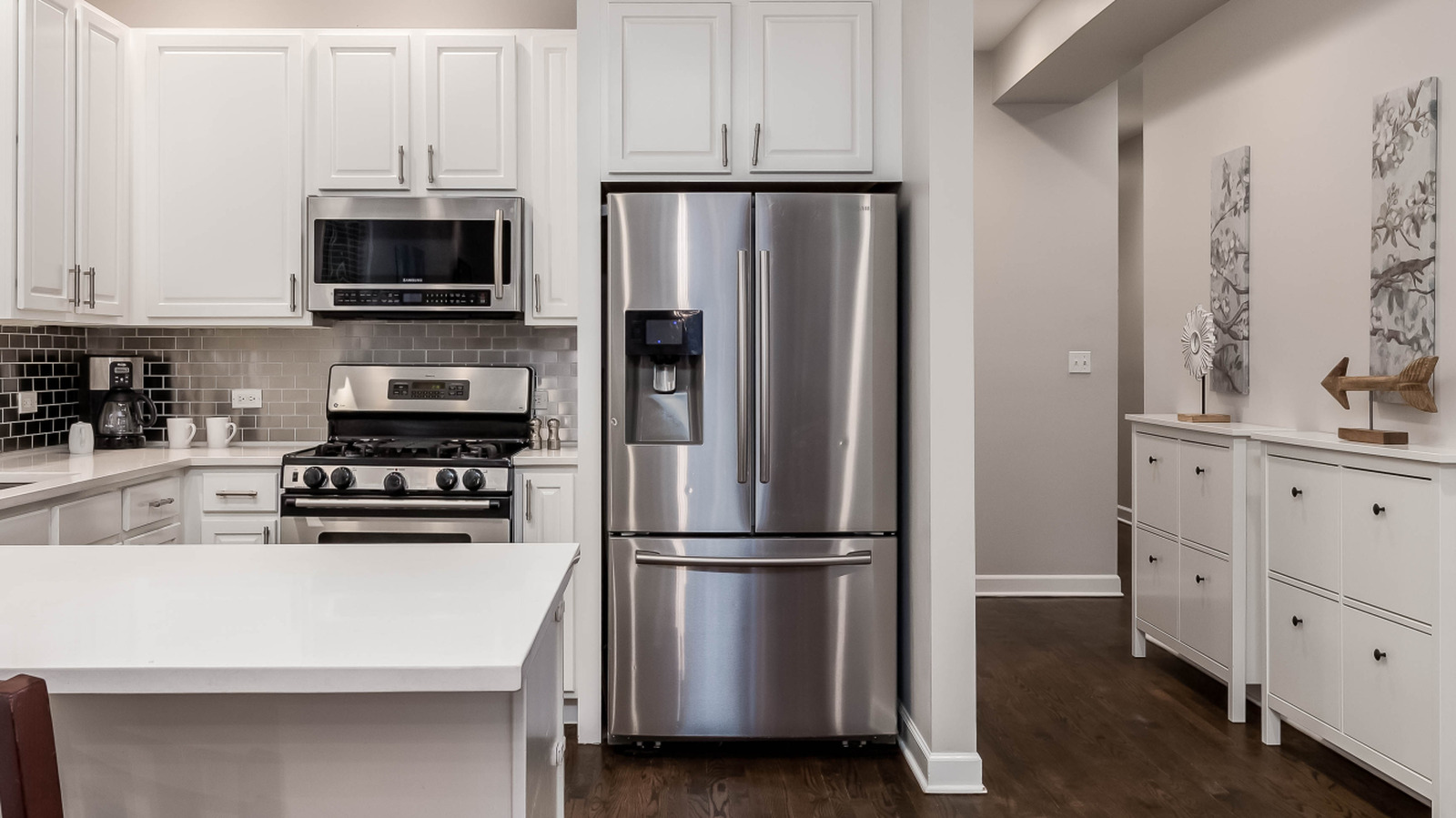

Samsung is a tech titan in both personal gadgets and home appliances, manufacturing everything from smartphones and earbuds to ACs, TVs, and washing machines. The company’s appliances routinely feature modern aesthetics and smart connectivity, and its refrigerators are no exception. Samsung’s fridge offerings cater to a wide customer base and include side-by-side models, three-door French Door designs, and four-door Flex refrigerators.
Although Samsung entered the refrigerator market decades after legacy brands, it introduced modern features like AI Vision Inside and Auto Open Door to compete with them. One automatically identifies and tracks the food items stored inside your appliance, while the other lets you open doors with voice commands or a touch. These smart additions are loaded in the brand’s premium lineup, so you’ll find even more cool features on a Samsung Bespoke refrigerator.
But despite the added convenience, persistent issues have bogged down many fridge models across Samsung’s diverse lineup, provoking multiple class-action lawsuits against the company. When many users have the same or similar complaints, it points to severe engineering flaws in the product rather than one-off issues. In this article, we’ll go over some common problems with Samsung refrigerators, how to troubleshoot them, and which problems warrant a closer look.
Frozen ice makers
Samsung fridges have a notorious problem with their ice makers. In dozens of models, the fridge-integrated ice maker freezes to block the vents and lock the ice bucket in place. Clearing the frost manually can take up to an hour.
What’s worse is that this isn’t a recent issue. In an investigative report by ABC 10 Newsa Samsung fridge owner shared that her French-door model developed chronic ice buildup just six months after she purchased it in December 2014. And she wasn’t the only one — identical complaints eventually sparked a class action lawsuit against Samsung in 2017, only to be dismissed in 2024 after some customers accepted settlements from the company. Samsung still hasn’t recalled the problematic models despite the issue persisting in 2026, so it’s no wonder reviewers suggest avoiding Samsung fridges.
Before getting Samsung support, try troubleshooting using the Forced Defrost mode by pressing a model-specific two-button combination. In models like RF22R7351SR/AA, the button combo is Fridge and FlexZone, while the RF263 series’ button combo is Fridge and Energy Saver. Check online for your model’s combination if your control panel layout’s different.
After holding the button combo for eight seconds, the display goes blank. Next, you press Fridge four to five times to cycle through modes until you reach Fd or Forced Defrost. The fridge then beeps and it takes 30 minutes for the ice maker to defrost. If it doesn’t happen with one cycle, repeat twice or thrice until the ice clears entirely.
Cooling issues
General cooling issues on Samsung fridges aren’t as notorious as the ice maker defect, but they’re frustrating nonetheless. These troubles commonly manifest as melting ice cream, weak refrigerator cooling, or items freezing in the fridge section. Fortunately, most of these cooling problems can be fixed with simple troubleshooting because they’re often caused by improper airflow rather than a faulty compressor. Since Samsung fridges take up to 28 hours to reach the set temperature, start by confirming whether the issue has persisted over a day.
Next, ensure the fridge has at least 2 inches of space all around it so the condenser coils can release heat without obstruction and not overwork the compressor. The condenser coils accumulate dust — vacuuming them once every six to 12 months improves cooling and increases the refrigerator’s lifespan. On the inside, avoid cramming items because the air vents require a 2-inch clearance to prevent uneven cooling.
Unclean door gaskets spoil the vacuum seals, allowing cold air to leak. Examine the gasket visually for dirt and tears or warping. Then, you can try the dollar bill test, where you close the fridge door on the dollar bill and attempt to pull it out. If it slips out with less or zero resistance, the vacuum seal isn’t working and the gasket needs cleaning with a damp cloth.
Lastly, power cycle the refrigerator by turning it off for two to three minutes and restarting it. This resets the fridge and can clear errors and recalibrate the system.
Water leakage
Finding water under your fridge or the vegetable drawer? A bunch of things can cause this issue, and similar to diagnosing common problems with LG refrigerators, the key is to rule out simple factors before further investigation. Considering water’s involved, make sure you unplug the refrigerator before trying these fixes.
First, check whether the fridge is tilted back properly (find leveling instructions here). Fridges are supposed to tilt back slightly in order for the water to trickle back toward the drain and for the doors to swing shut automatically. Ensure you’ve not placed any hot items inside the fridge because they’ll release steam as they cool, which then condenses, pools, and leaks out during the fridge’s automatic defrost cycle.
Check that the chiller tray is installed firmly so there’s no water leaking out from it. Next, you have the drain line and drain tray, which work together to move melted frost out of the cabin for evaporation. Samsung recommends pouring lukewarm water into the drain line connector to clear out debris stuck in the passage.
If the exterior drain tray (at the back of the fridge) is clogged, turn off the appliance and clean out the tray with a cloth or sponge to soak up the water. Surrounding temperatures below 77 degrees Fahrenheit can stall the auto-evaporation and result in an overflowing drain tray. If the drain tray continues to overflow despite cleaning or if it has no water, you’ll need professional help.
High internal temperature
Unlike the freezing ice maker issue, some Samsung fridges swing to the other end with high, unsafe internal temperatures. Beginning January 2019 and spanning 35 months, the Consumer Product Safety Commission (CPSC) received 613 complaints about Samsung fridges. More than 270 of those were about food spoilage and food poisoning, and the problematic fridges had a French-door or twin-door design with a freezer at the bottom. This widespread safety issue culminated in a class-action lawsuit against the company in 2022.
If you’re noticing poor cooling in your fridge, try some of these fixes before getting professional help. With the Frost Free and Direct Cool models, ensure there are no external fridge covers or shelf covers inside. Don’t place the fridge in direct sunlight or in a space where the ambient temperature’s outside the 50 to 110 degrees Fahrenheit range. Unsuitable external temperatures overwork the compressor and alter how much electricity the refrigerator uses.
For the Frost Free model, check whether the Vacation Mode is disabled. You can disable it by pressing the Vacation Mode button (varies between models) for three seconds. For the Direct Cool model, Samsung recommends setting the temperature based on the season — a higher number when it’s hot outside and a lower number when it’s cold. Unlike the Frost Free models which automatically melt ice inside, the Direct Cool models need manual defrosting, which takes around two hours. Press the Defrost button twice a week or whenever you notice ice accumulating in the fridge.
Common error codes
Seeing an error code on your fridge’s display is worrisome, but it makes troubleshooting easier by pinpointing the problem. Common errors indicating sensor trouble are 5E (defrost sensor), 6E (ambient sensor), 8E (freezer ice maker sensor), and 14E (fridge ice maker sensor). Power surges sometimes impact communication between the motherboard and the sensors, making the fridge display these codes. Unplugging your fridge for 10 minutes can reset it and clear errors.
But given the brand’s struggle with ice accumulation, errors 5E, 8E, and 14E typically happen because of frost buildup on the sensor. 6E can occur due to a pinched sensor wire or the ambient sensor being damaged by heat from warm appliances near the fridge. All these sensor issues require technical help.
21E and 22E/22C are common, too, pointing to a frost-based issue with the freezer and fridge fans, which circulate air evenly throughout the cabin. If the freezer or fridge door’s left ajar or there’s a gasket leak, then the humid air entering the cabin freezes on the fan’s blades to jam it. You can try resolving it by defrosting and making sure the door seals properly.
83E, 85E, 86E, and 88 88 are voltage errors due to power surge, outage, or brownout. A missing surge protector makes your fridge more vulnerable to these errors, and it’s vital you don’t make such electrical mistakes at home. Before requesting help, try unplugging the fridge for a minute and restarting it to see if the error disappears.

Comments are closed.