

As well as choosing them for their comfort, features, and refinement, plenty of buyers pick their luxury car partly on the prestige of its badge. Seeing a Mercedes-Benz or BMW badge on the front of their car might bring a sense of pride to those owners, but there are others who prefer that their vehicles remain a little more under-the-radar.
There is no one main reason why buyers might want to avoid those typical luxury car badges, although there are a few common themes. Sometimes, buyers simply don’t want to draw any attention to whatever they’re driving for security reasons, and in other cases, they’d prefer to avoid being lumbered with the stereotypes that can come with owning a luxury German or American car.
Luckily, there are plenty of options out there for buyers who like their luxury cars to be a bit more low-key. Pick a car from the right brand, and there’s no need to compromise on either interior luxury or features either, nor on powertrain options. While some buyers might head towards traditional low-key luxury choices like Lexus or Lincoln, we think these five less conventional brands shouldn’t be overlooked.
Volvo
While it is a long-established, well-regarded brand in the U.S., Volvo hasn’t really ever developed the same reputation for luxury as most of its European rivals. Perhaps that’s down to its traditional focus on advertising its safety and its consistently impressive reliability record, or perhaps it comes down to the brand’s understated Scandi aesthetic. Either way, it can be easy to overlook Volvo as a maker of luxury vehicles, but dig into its current range and you’ll find that its top-spec models can easily match the Germans for comfort and refinement.
Buyers looking for a large SUV will naturally look towards the XC90, which was updated for the 2025 model year. After putting it through its paces, we found little to dislike, and noted that its latest tech upgrades went a long way to making it more competitive with other luxury SUVs. Volvo’s long-standing commitment to efficiency also sees the SUV offered with a PHEV drivetrain, which should help insulate owners from potential changes in fuel prices.
Alongside its core range of SUVs, Volvo also offers the V60 Cross Country wagon, although it’s being discontinued after the 2026 model year. It has very few direct rivals, and in top-spec form, it’s just as luxurious as its SUV siblings.
Genesis
It might still be a relatively new brand by luxury segment standards, but Genesis has already proved that it’s more than capable of rivalling the more well-established players. Its lesser-known status means that Genesis’ cars don’t come with the same stereotypes that affect Mercedes and BMW buyers either. The Korean luxury brand has launched several new models in recent years as well as continually updating its existing lineup.
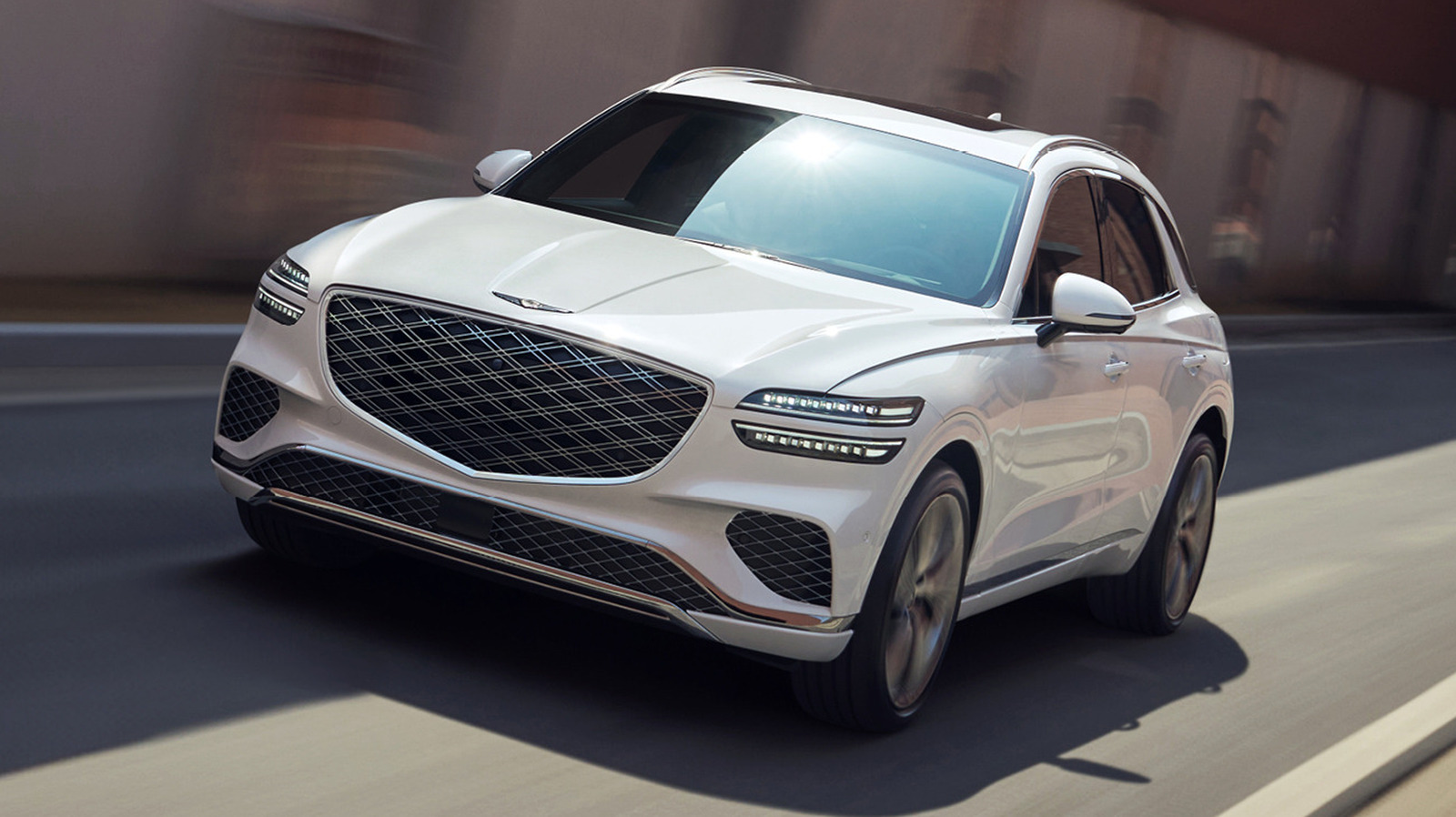
One of its most recently updated models is the 2026 Genesis GV70, a compact SUV that competes against the likes of the BMW X3 and Mercedes GLC. We were won over by the latest changes, which focused mostly on adding even more tech and convenience features as well as bringing tweaks to the cabin design. Sedan buyers aren’t left out either, since the brand currently offers the G70, G80, and range-topping G90 models alongside its SUV range.
Like most of the other brands here, Genesis’ current lineup includes a mix of both electrified and traditional ICE vehicles, including the all-electric GV60 crossover and Electrified GV70. Although neither model has the longest range in its class, the 306 miles on offer with the GV60 should be plenty for many drivers’ daily needs.
Acura
The latest models in Acura’s lineup can struggle to stand out from the crowd, but for buyers looking for an under-the-radar luxury car, that might very well be a good thing. When we drove the Acura RDX in 2025, we came away with a mostly positive impression of the SUV, although its touchpad-controlled infotainment was a significant bugbear. Driving the entry-level ADX crossover, we found its comfort and practicality to be highlights, although its driving dynamics were a little too similar to a standard Honda crossover to compete against its flashier rivals.
It should be pointed out here that Acura, for the most part, isn’t marketing its cars to the backroad-carving crowd, aside from occasional gems like the Integra Type S and MDX Type S. Instead, the brand primarily focuses on catering to buyers who want Japanese practicality, but with more comfort and refinement than a run-of-the-mill Honda could deliver. In that context, most of Acura’s current lineup should tick all the right boxes, and higher-mileage used models are a safe bet too thanks to the brand’s enviable reliability record.
Polestar
The only all-electric luxury brand here is Polestar, a Swedish-Chinese brand that makes its 3 SUV in Ridgeville, South Carolina. It also sells the unusual 4 crossover, which controversially has no rear window. Previously, buyers could also opt for the 2, although heavy tariffs implemented in 2025 on Chinese-built vehicles saw Polestar remove it from the lineup. It remains unavailable to configure on Polestar’s website at the time of writing.
Despite its modest two-model lineup, Polestar is still an intriguing alternative to mainstream luxury brands. That is, if you can get past some weird design choices and the incessant software glitches. Two members of Read’s review team spent time with two different examples of the Polestar 3 in 2025, and both had multiple problems with its electrical systems. Its physical and touch controls were also confusing, but its interior quality, power, and handling were all on par with class-leading luxury EVs.
The unusually-styled Polestar 4 also isn’t without its flaws, but we thought it was a much more well-rounded offering than its larger stablemate. Both models are affected by Polestar’s limited brand recognition, although depending on what you’re looking for in a luxury car, that could be a good or bad thing. If you want a car that piques the interest of passersby but you don’t want the stereotypes that can come with driving a BMW, Mercedes, or Tesla, it’s well worth considering. On the other hand, if you’re simply looking for the most hassle-free luxury driving experience, it might be worth looking elsewhere.
Mazda
Although Mazda isn’t usually associated with luxury, some top-spec variants of certain Mazda models offer surprisingly luxurious interiors and features. Take, for example, the three-row Mazda CX-90 SUV, which we reviewed at launch. The Nappa leather upholstery, Bose audio system, and plentiful standard tech all help the car feel like a close rival to the leading premium and entry-level luxury brands, all while undercutting most luxury three-row SUVs in price.
A well-specced CX-90 will cost around $60,000-$63,000 depending on which options you tick, which is around the same price as base-spec luxury three-row rivals from the likes of Audi and Land Rover. Neither Mercedes or BMW offer equivalent mid-size three-row luxury SUVs, although the (much smaller) Mercedes GLB features a small third row.
The smaller CX-70 SUV is also more luxurious than buyers might initially assume, with our test vehicle featuring vibrant red leather seating and interior trim. At the cheaper end of Mazda’s lineup, its interiors are not quite as luxurious, but that’s to be expected. Still, cars like the top-spec Mazda3 hatchback boast some of the nicest cabins in their segment, even if they can’t match the bar set by the Japanese brand’s large SUVs.

Comments are closed.