

We often have a way of taking our home appliances for granted. They’re just a plug into the wall or strip and play. Though the paperwork is there for an important reason, we will often consign it to a drawer without a thought. The thing is, though, it’s vital not to take these appliances lightly. One thing we sometimes forget is that electricity is also an incredibly dangerous force. This is why appliances come with so many safety warnings, emergency shut-off features when they overheat, and so on. Electrical fires, after all, can be particularly difficult and hazardous to put out, one reason why they also need to be taken so seriously.
The thing to be aware of is that some appliances are inherently more dangerous than others. Take hairdryers, for instance. Of course, they work very hard and get very hot, which in itself makes them distinctly hazardous. Larger systems like tumble dryers, too, can be an enormous risk because of the heat they accrue. Worst of all, they’re very susceptible to accumulating a lot of lint with heavy use, which is a major fire hazard. In some cases, rather simple user maintenance between loads can help to prevent this, but it isn’t always that easy.
Let’s take a look at some of the most dangerous home appliances of all, and some reasons why they can be considered such. Primarily, they are appliances that generate a lot of heat, and so there’s a risk of overheating and fire caused by blockages, faults, or ill placement on the consumer’s part. Sometimes, though, the most surprising systems produce dangers that users just wouldn’t have anticipated. There are some important dangers to avoid when buying and installing home appliances, and also some critical ones when it comes to operating them.
Tumble dryers
It can sometimes be very difficult to get your clothes dry without a little technological help. Tumble dryers or combined washer-dryers can get them nice and dry on the coldest of mornings. It’s not just about freshness and warmth, though. Whirlpool notes that a dryer can reach temperatures of 176 degrees Fahrenheit or higher, depending on the model and specific settings in use. The National Fire Protection Association reports that over a period of four years from 2010, the fire services dealt with an average of 15,970 fires annually for which washing machines or dryers were the culprit, and washing machines were central in just 8% of them. The association adds that around a quarter of the fires involving dryers were caused by “dust, fiber or lint.”
What is it, though, that makes lint so dangerous? It’s quite innocuous looking, but if you aren’t emptying the filter of lint at least around every week (more frequently depending on how often you use it), that buildup could be catastrophic. The reason for this is that the lint is extremely flammable. Combine this with the fact that it has a tendency to gradually accumulate and start to impede the flow of air.
As it does, the heat will build up, possibly leading to a fire. It’s important to also maintain the vent and the exhaust of the dryer regularly, because while the filter is usually the most prominent location where it gathers, it isn’t the only one. The washer is one of the largest and most powerful appliances in the average home, and so it’s critical to treat it with respect and be sure it’s positioned and operated safely. The manufacturer’s manual will, as ever, help you to do just that.
Electric heaters
An electric heater may not be the cheapest choice to run this winter, but they’re readily available and can be very effective. You should be able to find a size and power level that suits your intended use in your home. At the same time, though, these are also appliances to be very careful with. As with the tumbler dryer, they are a source of a lot of heat, and so potentially a fire risk. A space heater isn’t necessarily an electric heater, but many of them are in this category. Those models that are powered by electricity are quite ravenous for it, and this in itself can be a big danger if you aren’t careful about where you plug it in.
Heaters such as these can overload the system because they’re capable of outputting more than 1500 watts in the U.S. depending on make and model. The danger in such a case is that, if you plug it into a power strip that might also be connected to other devices, the collective strain would be too much for the circuit. This is a common cause of circuit breaker trips, and this is far from the only danger to be wary of with these models.
The breaker, of course, is an emergency safety system, but it can’t always prevent these energy-hungry heaters from causing fires, whether through their high consumption alone or through being placed too close to flammable items like blankets. Just as with tumble dryers, devices that generate a lot of heat need to be given as much room to operate as possible so that some of that heat can disperse. System wiring should also be inspected by professionals to help protect your systems against faults.
Coffee machines
Coffee machines, of course, require water that’s been heated to an extreme degree, which produces the risk of potential injuries should the machines be misused or develop a fault. In February 2012, for instance, CBC News reported that a total of some 1,735,000 Tassimo single-cup models had been the subject of an urgent recall across the United States and Canada, after 140 cases of issues caused by the model and its accessories. There’s a particularly important reason beside the potential for burns and the wiring of the systems to take cleaning them so seriously, too. As they’re so frequently warm and moist environments, yeast and dangerous bacteria can multiply in the machines. One in an office building, for instance, could be both heavily used and infrequently maintained, which might be a recipe for harmful microorganisms and potential sickness.
Cleaning of components such as the drip tray and reservoir is vital, but so is the step after that: drying. It’s another factor that could potentially be overlooked if you’re in a rush to complete the job, but it’s important to be aware that these components can potentially become moldy if not dried properly after being washed. The frequent changing of the filters is another job that is vital to the machine’s health and that of its users. Limescale can build gradually, just as it can on a kettle. An additional hidden danger is the type of coffee being made. An August 2025 research paper published in Nutrition, Metabolism & Cardiovascular Diseases studied the filtration of coffee in certain machines in care settings in Sweden. It found that, “based on the concentrations of cafestol and kahweol in investigated machine coffees, thoroughly filtered coffee seems like the preferable choice for cardiovascular health,” noting potential increases of LDL cholesterol.
Toasters
Both dryer lint and food baked on in ovens become an increasingly bigger deal the longer they’re left to build up. The same is true of the tiny parade of inevitable crumbs that accumulate in the average toaster. Of course, some models offer a convenient sliding tray to clear them away, but there will probably be at least some build-up of detritus that’s very difficult to reach. A toaster that’s heavily used, as so many are, can heat these stray little bits to dangerous levels. It’s another easily underestimated cause that can lead to a fire. You should pay attention to the numbers on a toaster, but also to the crumbs left behind after use.
Pop-up toasters, according to a study by the Pusan National Universitywere among the biggest emitters of ultrafine particles among the selection of “small electric home appliances using heating coils and brushed DC motors” tested. The potential cause for concern, the press release focused on the study went on, is that “the heating coils in small electric home appliances frequently contained heavy metals such as copper, iron, aluminum, silver, and titanium.” The study concluded that the other devices tested, which included hairdryers, also emitted some of these same polluting elements.
Further study is required to gather more data, but it’s clear that regulation on UFPs in such devices to safeguard public health should be sought in response to this new information. Nonetheless, it’s a stark reminder that the most seemingly harmless appliances can pose a danger, and perhaps for reasons that we didn’t anticipate. The hazards of placing a metal object into a toaster (to retrieve something that’s been toasted) are well known, and alongside potentially being shocked, there’s also the possible risk of fire and the not-yet-fully-understood risk of UFPs to consider.
Ovens, stoves, and ranges
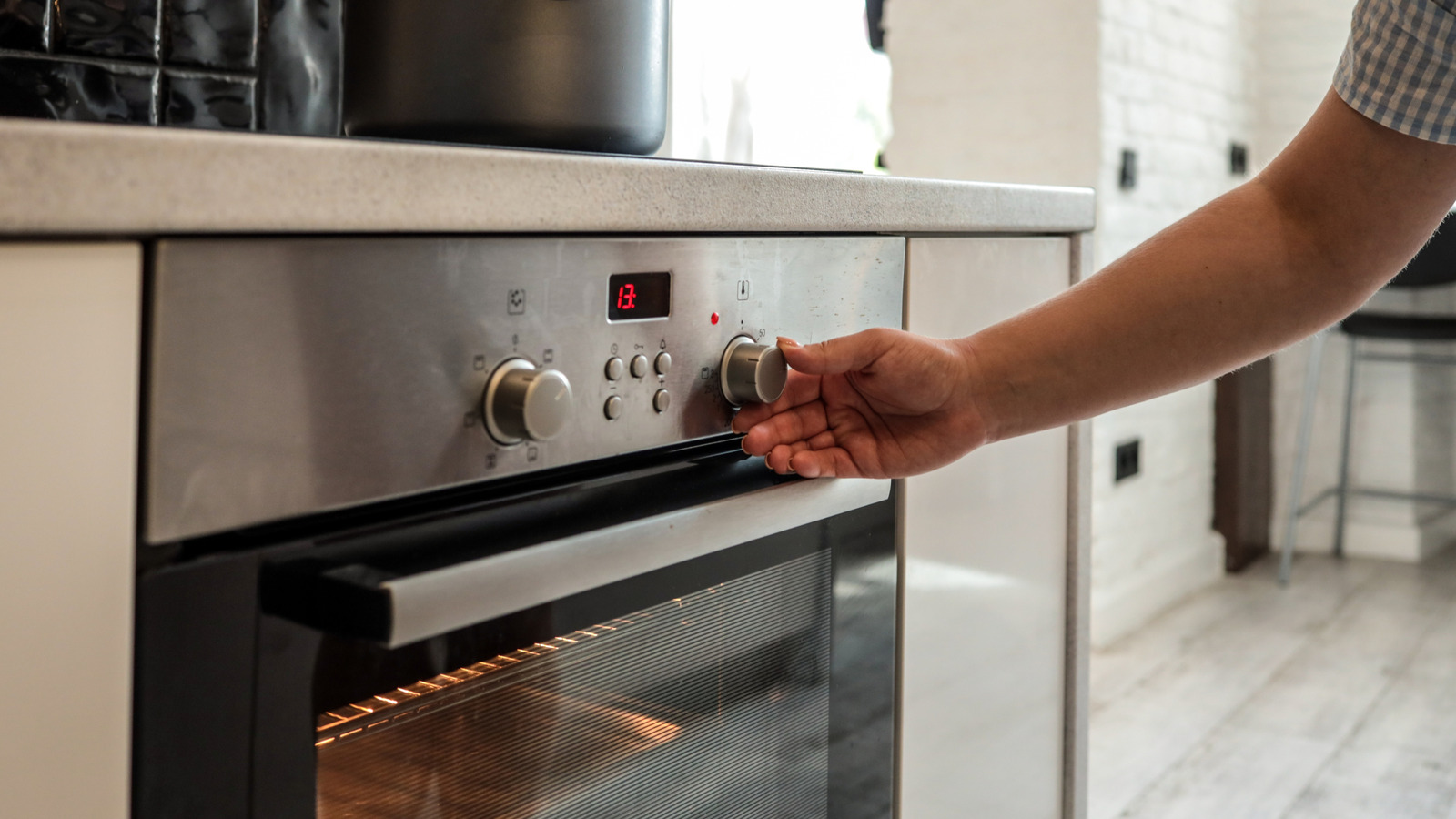
Even seasoned professionals can give themselves nasty burns from the oven, which is just one reason why this centerpiece of the kitchen will also often be one of the most dangerous appliances. They’re tricky because there’s such a wide range (pun intended) of different types, each with its own qualities and potential hazards. The biggest differentiating factor is that they will typically be powered by either gas or electricity. With gas models, there are the dual dangers of open flames and potential leaks.
This isn’t to say that electric ovens don’t pose significant dangers of their own too, though. With such models, those same risks regarding wiring and the circuit itself are paramount. In addition, while no gas is produced by an electric cooker, there is still potential for a fire to start through inattentive cooking (such as leaving the device unattended or using too high a setting for the food in question). It’s critical to keep up to date with maintenance of the device, too, because there’s potential for baked-on food to ignite and start a fire that way. The longer such detritus has been baking away, the harder and more difficult it may be to clean away.
Induction ovens are again different, dispensing with the potentially harmful gas alternative and some of the burn risk from the surfaces of conventional electric ovens. They use the power of magnetism to heat the appliances in which your food is placed rather than the surfaces themselves, a faster and more efficient process. Nonetheless, there are the additional dangers of heating up much faster that must be taken into account. In particular, rapidly heated oil is an enormous fire risk, particularly so if the surfaces aren’t properly protected against scratches with something like a safe mat.

Comments are closed.