
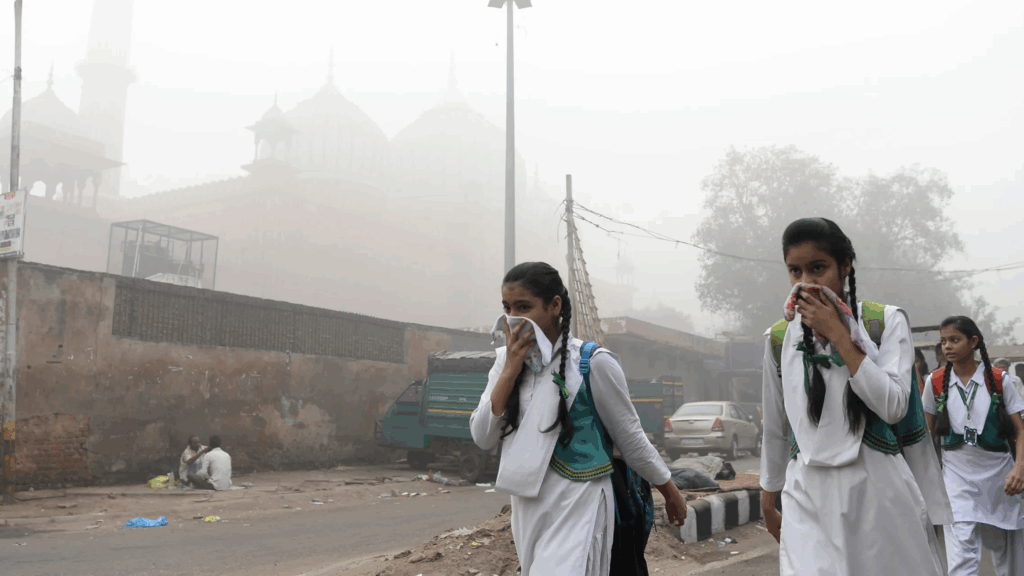

Severe air pollution has triggered emergency health and safety measures in the National Capital Region (NCR), with both Delhi and Gurugram taking decisive steps to protect residents. With air quality reaching hazardous levels, authorities have imposed work-from-home directives for government employees and urged the private sector to follow suit to limit exposure and reduce outdoor pollution.
Delhi Orders 50% Work-From-Home for Government Staff
As air quality deteriorated sharply, the Delhi government announced that 50% of government employees must work from home until air pollution levels improve. The objective is to reduce outdoor commuting and cut down vehicular emissions — a major contributor to the smog engulfing the city.
Officials emphasised that the directive is mandatory for government officeswhile the private sector has been strongly urged to adopt similar work-from-home arrangements. This advisory is aimed at safeguarding public health, especially for vulnerable groups such as children, elderly people, and those with respiratory conditions.
Gurugram Issues WFH Advisory as Pollution Spikes
Following a similar pattern, authorities in Gurugram — a major satellite city of Delhi — issued a work-from-home advisory for employees in both government and private sectors due to severe (Grap Stage IV) air quality levels. Stage IV is part of an emergency action plan indicating extremely hazardous air conditions that can pose serious health risks even to healthy individuals.
The advisory encourages employers to allow employees the flexibility to work remotely and avoid unnecessary travel. Schools, hospitals, and essential services continue to operate, but residents are urged to stay indoors as much as possible.
Health Risks and Public Response
Air pollution at hazardous levels can lead to severe health issues, including aggravated asthma, lung inflammation, heart problems, and other respiratory illnesses. Public health officials have warned that extended exposure to smog could be particularly harmful to children and older adults.
Many residents have welcomed the work-from-home directives as a necessary step to protect health, though some express concern about the economic impact if poor air quality persists. Commuters report difficulty breathing even indoors without air purifiers, and pharmacies are seeing increased demand for masks and respiratory medications.
Why Pollution Is So Severe
The extreme air pollution in the NCR has been driven by a combination of factors — increasing vehicle emissions, industrial pollutants, smoke from crop burning in nearby regions, and stagnant weather conditions that trap pollutants close to the ground. These combined influences have pushed air quality indices into dangerous territory, prompting emergency responses from authorities.
Conclusion
With air pollution levels reaching critical highs in both Delhi and Gurugram, authorities have implemented work-from-home measures and urgent advisories to protect public health. While these steps provide temporary relief and reduce outdoor exposure, long-term solutions will require coordinated action from government, industry, and citizens to address the root causes of dirty air in the region.
Image Source

Comments are closed.