
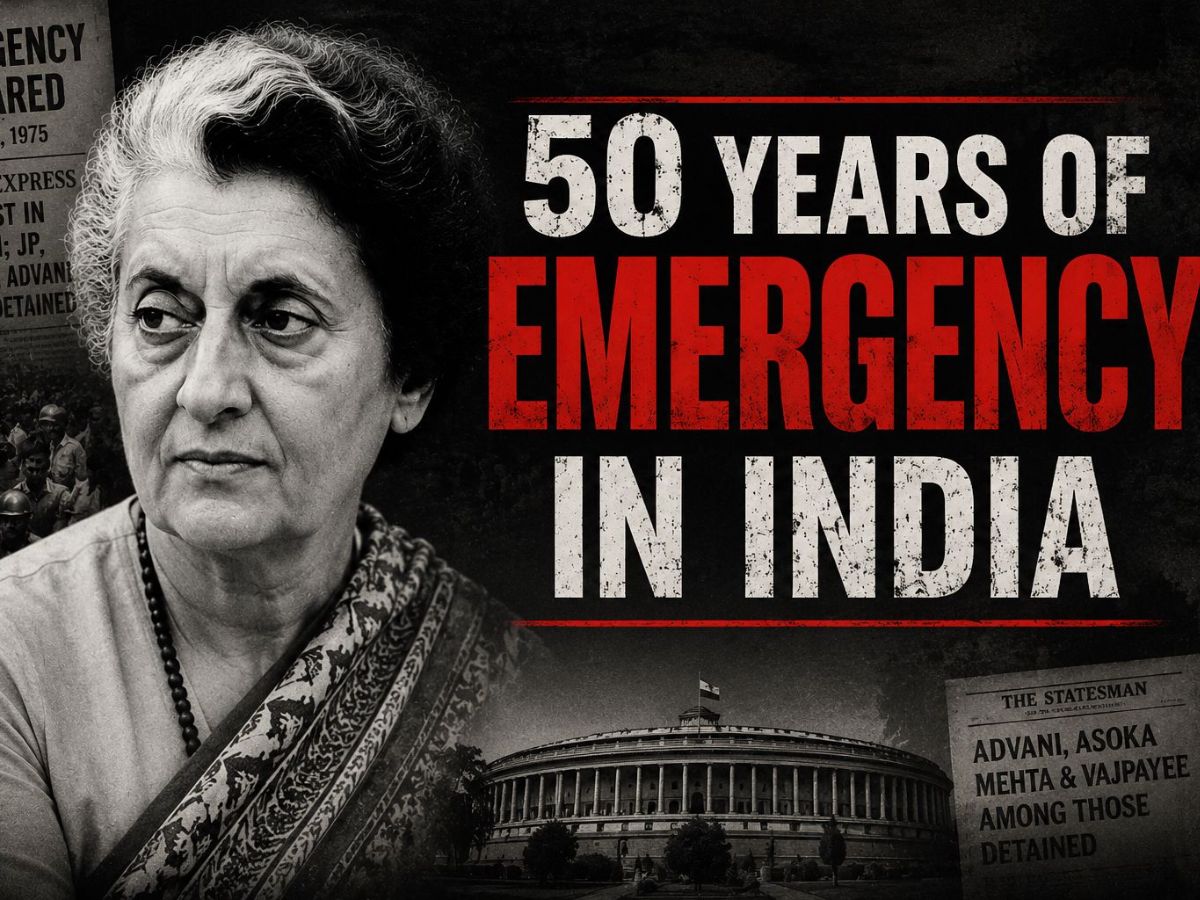

June 25, 1975, still remains as one of the most important and controversial dates in Indias political history. On this particular day, the country entered into a phase that people usually call the Emergency, during which multiple democratic rights were paused, and political dissent or opposition was put under tough limits. Now, as India marks 50 years since the Emergency, it becomes more and more necessary to understand what actually happened, why it was brought in, and in which ways it reshaped Indian democracy.
What Was the Emergency in India?
The Emergency was a 21 month period, running from June 25 1975 to March 21 1977, and during it the central government used special and rather extraordinary powers under Article 352 of the Constitution.
The Emergency was declared by the then Prime Minister Indira Gandhi, after President Fakhruddin Ali Ahmed signed the proclamation. In that proclamation, she referenced an “internal disturbance” excuse.
In that same period, the government got sweeping authority, and yet many democratic liberties were, at the same time, limited.
Why Was the Emergency Declared?
In the early 1970s, the political situation in India became highly tense.
The immediate trigger was the Allahabad High Court decision on June 12, 1975, where Indira Gandhi was found guilty of electoral malpractice in the 1971 Lok Sabha elections. The court set aside her election and barred her from holding elected office for six years.
Meanwhile, public dissastisfaction was also increasing , with inflation climbing steadily, unemployment spreading, corruption claims floating around, and various economic strains that people could feel day to day.
A countrywide protest started, led by Jayaprakash Narayan, popularly called JP was asking for big political changes and also asking for Indira Gandhi to step down.
Due to all the pressure, the government finally declared the Emergency on the night of June 25, 1975.
What Happened During the Emergency?
The Emergency brought major changes to daily life and governance in India.
Fundamental Rights Were Suspended
Several basic rights promised in the Constitution were restricted. Citizens had limited practical options to take any action against the government.
Press Censorship Was Imposed
Meanwhile, newspapers and media groups had to take approval of government before they could publish certain news, which is looks like putting a gate on information. Any talk that leaned toward criticism of the government was heavily restricted and discouraged, even when it was just ordinary commentary.
Opposition Leaders Were Arrested
Also, a lot of opposition politicians, activists, journalists ,and student leaders ended up detained under preventive detention laws.
Political Activities Were Restricted
And on top of that public protests, demonstrations, and political meetups were kept on a short leash all over the nation.
Also Read: Cracks In Maha Vikas Aghadi? 23 Alliance MLAs, Several Senior Leaders Skip Uddhav Thackeray’s Meeting
Manisha Chauhan is a passionate journalist with 3 years of experience in the media industry, covering everything from trending entertainment buzz and celebrity spotlights to thought-provoking book reviews and practical health tips. Known for blending fresh perspectives with reader-friendly writing, she creates content that informs, entertains, and inspires. When she’s not chasing the next viral story, you’ll find her diving into a good book or exploring new wellness trends.
The post 50 Years of Emergency in India: How It Reshaped Indian Democracy appeared first on NewsX.

Comments are closed.