

- Fiber supports your gut, heart and blood sugar control.
- Salad greens are a good start for a fiber-rich meal, but you’ll still need an additional boost from the toppings.
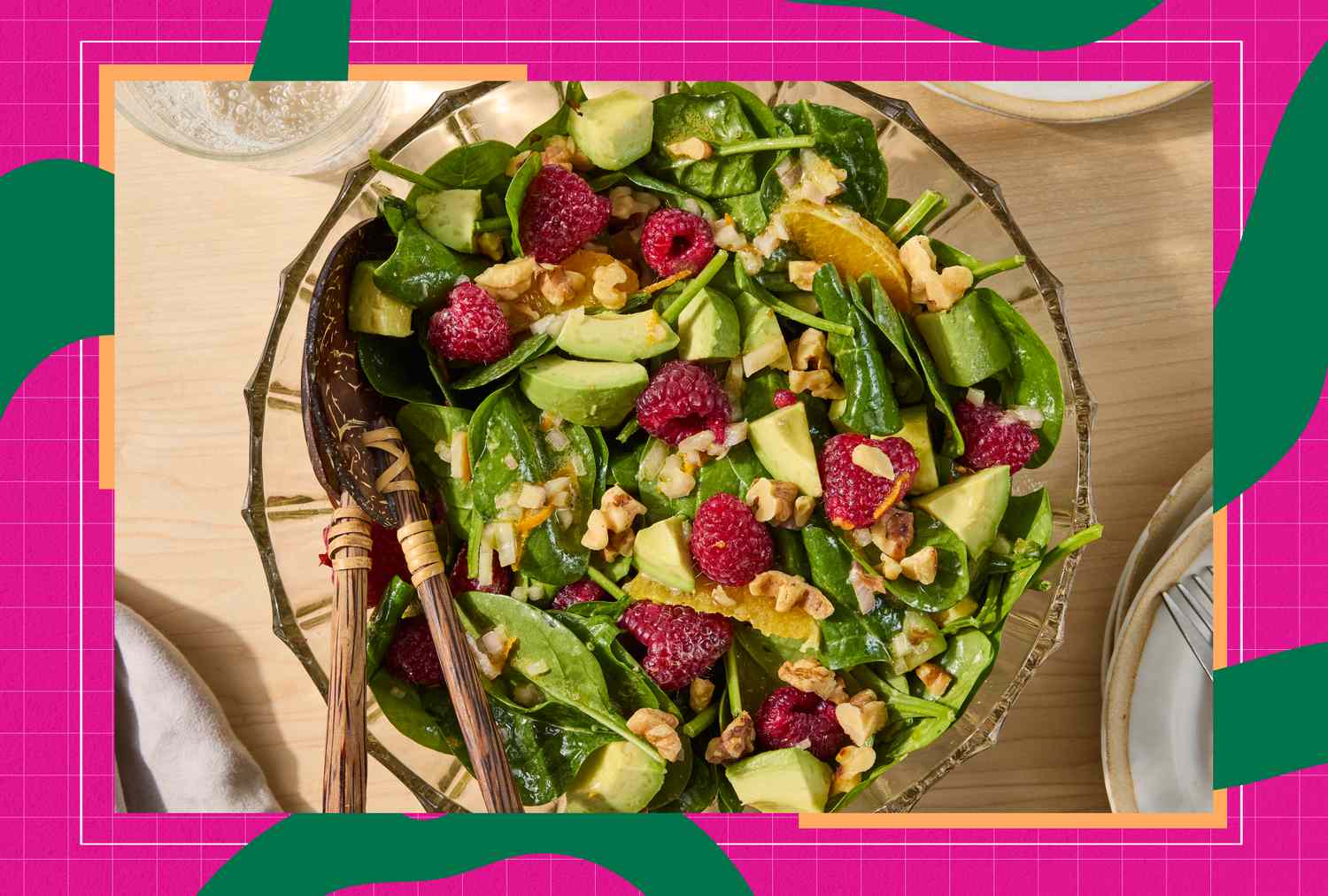
- Increase the fiber in your salad by adding nuts and seeds, legumes, fresh fruit, avocado or cooked quinoa.
We all know that fiber is good for us. From a smooth-running digestive system to reducing chronic disease risk, fiber is one nutrient that delivers. So when you’re looking to up your fiber intake and harness all those good-for-you benefits, what’s the first thing you do? Adding a salad to your routine is probably one of the first things that comes to mind. The only drawback is that salad greens aren’t always as fiber-packed as we assume them to be.
Surprised? Take spring mix for example. This popular base for leafy green salads provides just 1 gram of fiber per cup. Even if you build a big salad with a couple of cups of greens, you’re still going to need more help hitting the recommended 25 to 38 grams of fiber we need each day. The good news is that you can amp up the fiber content of your salads with the right toppings. To find the best options, we asked dietitians to share their go-to fiber-rich salad toppings—here’s what they recommend.
1. Add Nuts and Seeds
Nuts and seeds make for a great salad topper since they add a satisfying crunch as well as a long lineup of beneficial nutrients. A 1-ounce serving of most nuts will add about 2 grams of fiber onto your fiber total for a salad. But if you’re looking for an even bigger fiber boost, opt for flaxseed or chia seeds. “Seeds are true fiber powerhouses, and most people don’t realize it,” says Sapna Peruvemba, MS, RDN. What’s more, you don’t need to add much. “Sprinkling ground flaxseeds on top of a salad is a great way to bump up the fiber,” says Ali Ellis, M.Sc., RD. “Just 2 tablespoons adds an extra 4 grams of fiber, and it mixes in really easily.”
2. Add Legumes
Topping your salad with legumes is an easy win since they’re not only loaded with fiber, but your salad will get a protein boost as well. “Adding beans like black, kidney or chickpeas is a great way to increase the fiber in your salad,” says Lisa Andrews, M.Ed., RD, LD. In fact, just ½ cup of black beans provides an impressive 8 grams of fiber, knocking out as much as a one-third of your fiber needs for the day. Not only that, beans also improve the texture, taste and satiety of your salads, adds Andrews.
It’s also hard to beat the convenience of canned beans. “Canned beans or lentils are the ultimate shortcut to a heartier, more satisfying salad. Just open the can, drain them and you’re done,” says Elizabeth Davenport, M.P.H., RD, LD. “Plus, you’re getting the added benefits of fiber feeding your gut microbiome and supporting heart health by lowering cholesterol.”
3. Try Fresh Fruit
Not everyone feels like fruit and salad go together, but it can be a great way to score additional fiber. “Chopped apples, pears, citrus fruit or berries are a delicious way to increase fiber in your salad,” says Andrews. She adds that if you’re looking to get the most fiber per serving, reach for raspberries. A ½ cup of raspberries provides about 4 grams of fiber. However, in fall and winter, when berries are no longer at their prime, apples are also an excellent pick. Try using them in harvest salads, paired with soft cheese, pecans and roasted vegetables like Brussels sprouts, says Jenna Volpe, RDN, LD, IFNCP, CLT. Just one medium apple on your salad provides almost 5 grams of fiber.
4. Add Avocado
Avocados are well-known for being rich in healthy fats, but they’re actually packed with fiber too. “Half an avocado provides 4 to 5 grams of fiber,” says Avery Zenker RD, M.A.N.and their rich, creamy texture is a welcome addition to just about any salad. In addition to chopped avocado, you could also add avocado (and fiber) to your salad by blending it up into a creamy dressing or mashing it into guacamole. Just a quarter-cup of guacamole contains about 4 grams of fiber, per Zenker. Sounds like it’s time to make yourself a taco salad!
5. Add Cooked Quinoa
Quinoa has grown in popularity over the last few years, earning itself a reputation as a “super grain.” Our experts love adding it to salads. “Quinoa is a naturally high-fiber whole grain, containing about 5 grams of fiber per cup cooked,” says Volpe. “In addition to being a good source of fiber, quinoa also provides complex carbohydrates and high-quality protein for sustained energy,” she says. Per Volpe, an added bonus is that quinoa can be very versatile and works well with many different salad flavors and combinations.
6. Load Up on Fiber-Rich Veggies
Even though most salad greens are relatively low in fiber, there are plenty of other fiber-rich veggies you can add to rack up the fiber tally. Zenker suggests adding fiber-rich veggies like broccoli, cauliflower, kale, peas, cabbage, sweet potato and artichoke. You don’t have to nosh on them raw either. Roasting veggies like cauliflower and cabbage in the oven boosts their flavor for an even more delicious salad topper. For example, just ½ cup of cooked broccoli can tack on another 2.5 grams of fiber to your salad.
Health Benefits of Fiber
Now that you know how to optimize the fiber content of your next bowl of salad, here are some of the health benefits associated with upping your fiber intake.
- Fiber is good for your gut. Fiber is incredibly important for gut health since it plays an important role in maintaining regular bowel movements. In addition, eating a variety of fiber-rich foods helps feed the beneficial bacteria in the gut, which supports a healthy and diverse microbiome, says Ellis.
- It gives your heart health a boost. Fiber is one nutrient that can help you keep your heart in tip-top shape for the long-term. That’s because it can help lower inflammation (which increases heart disease risk), reduce cholesterol levels and manage weight.
- Fiber helps manage blood sugar levels. Fiber helps keep your blood sugars in a normal range by slowing down the digestion and absorption of carbohydrates. Not only does this keep you feeling full for longer, but preventing large fluctuations in your blood sugars can reduce your odds of developing type 2 diabetes.
Meal Plan to Try
7-Day High-Fiber Meal Plan for Constipation, Created by a Dietitian
Our Expert Take
When you’re looking to increase your fiber intake, salads are a top choice for many. The only drawback is that leafy salad greens aren’t as fiber-packed as most people assume. Luckily, that’s easy to remedy when you build your salad with some of these fiber-rich salad add-ons recommended by dietitians. No matter which one you pick—beans, quinoa, avocado, fresh fruit or seeds—you’ll be a lot closer to meeting your fiber needs for the day.

Comments are closed.