
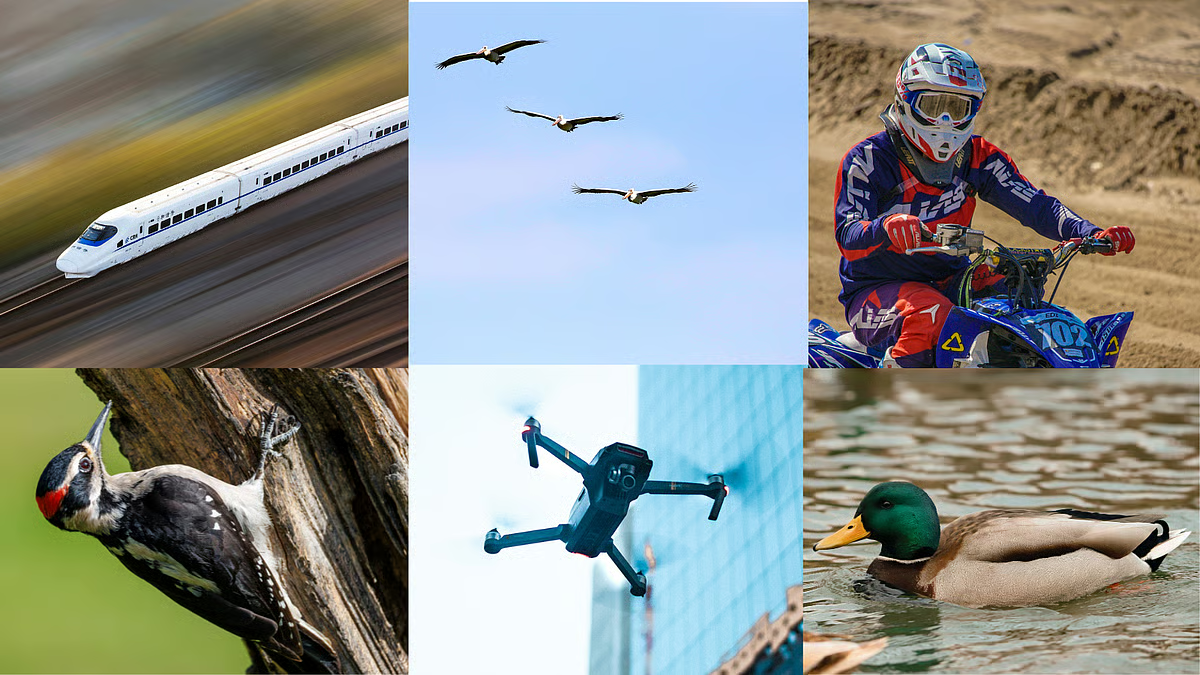

6 Modern Innovations That Started With Wings and a Beak
Nature has long served as humanity’s greatest engineer. Some of today’s most impressive technologies were inspired by birds—their wings, feathers, beaks and remarkable ability to fly. This scientific approach, known as biomimicry, has led to innovations that affect everything from transportation to renewable energy.
Here are six fascinating modern inventions that owe their existence to birds.
1. High-Speed Trains Inspired by Kingfisher Beaks


One of the most famous examples of biomimicry comes from Japan’s bullet trains. Engineers faced a problem: trains created loud sonic booms when exiting tunnels at high speeds.
The solution came from the long, streamlined beak of the Kingfisher, which dives into water with barely a splash. Designers reshaped the train’s nose to mimic the bird’s beak, reducing noise while improving speed and energy efficiency.
2. Aircraft Wing Design


Modern aircraft owe much of their aerodynamic design to birds. Engineers have studied eagles, albatrosses and hawks to understand how wing shapes generate lift and reduce drag.
Many aircraft wing features, including curved wing tips and flexible surfaces, are inspired by how birds glide efficiently through the air.
3. Wind Turbines Inspired by Owl Feathers


Owls are known for their nearly silent flight. Scientists discovered that specialized feather structures reduce air turbulence and noise.
Engineers have applied similar designs to wind turbine blades, helping reduce operational noise while improving efficiency and performance.
4. Drone Technology Based on Bird Flight


Many modern drones use principles learned from bird flight. Some experimental drones even flap their wings like birds, a technology known as an ornithopter.
Researchers continue studying birds to develop drones that are more maneuverable, energy-efficient and capable of navigating complex environments.
5. Collision-Resistant Building Glass
Birds have inspired innovations beyond aviation. Millions of birds die every year after colliding with glass buildings.
Scientists studied how birds perceive light and developed special glass coatings and patterns that are visible to birds but nearly invisible to humans. These designs help reduce bird collisions while maintaining clear views.
6. Robotic Grippers Inspired by Bird Talons


Birds of prey such as eagles and hawks have incredibly effective gripping mechanisms. Engineers have mimicked these talons to create robotic grippers capable of securely holding objects of different shapes and sizes.
These technologies are now used in manufacturing, logistics and even space exploration.
Nature: The Original Innovator
Birds have spent millions of years evolving efficient solutions to complex problems. By studying their wings, feathers and beaks, scientists and engineers continue to create technologies that are faster, quieter, safer and more sustainable.
From high-speed trains and airplanes to drones and renewable energy systems, many of the innovations shaping our future began with a simple source of inspiration: a bird in flight.
Comments are closed.