
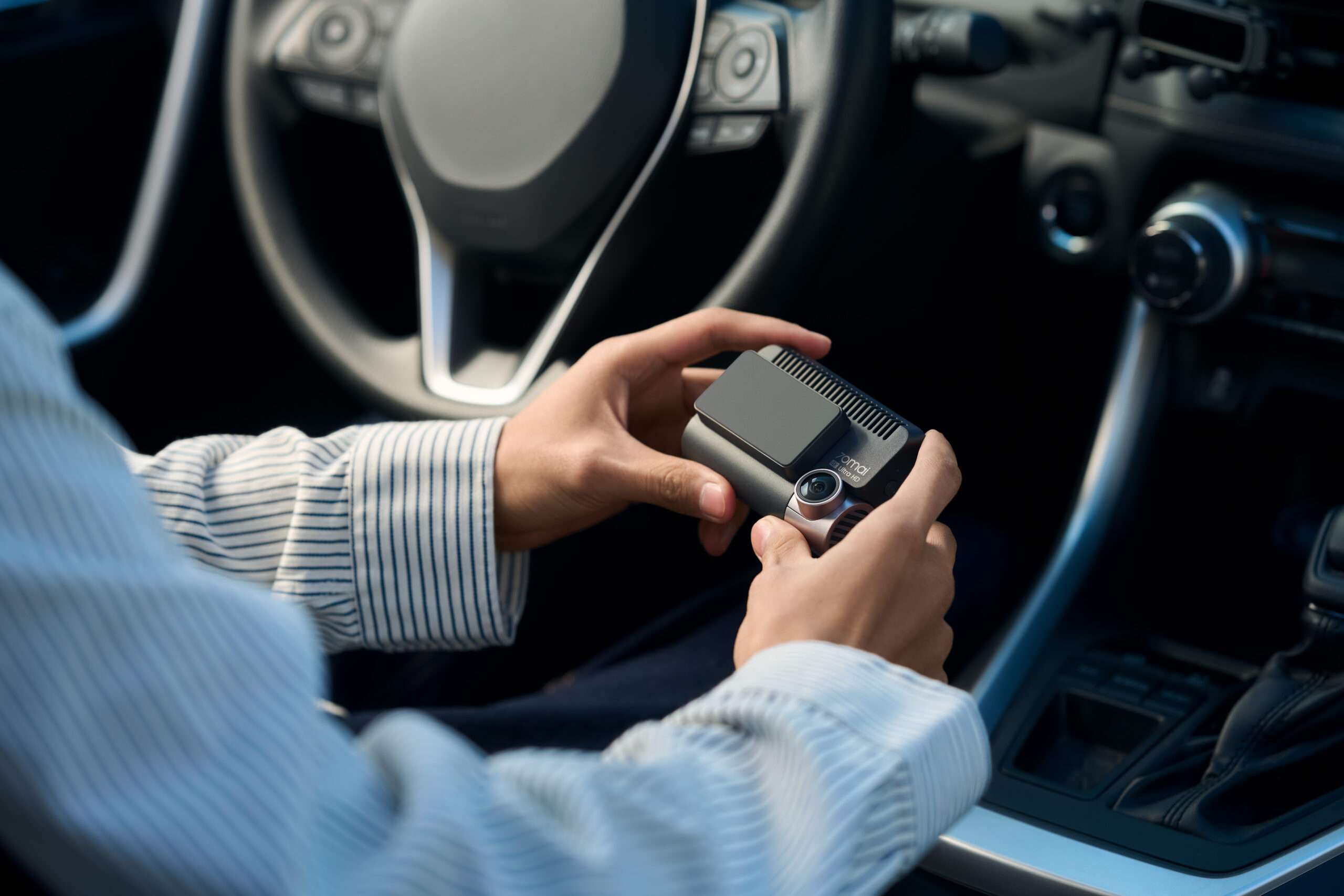

The 70mai Dash Cam 4K A810S arrives as an upgrade to the earlier A810. On paper, it promises better image quality, stronger night recording, dual-channel options, 4G monitoring, and longer pre-collision footage. The question is simple: does it justify its price of $199.99 for the bundle with rear camera and 128GB card? And more importantly, does it solve the real problems drivers face on Indian and global roads, unclear number plates, poor night videos, and parking hits without proof?
This review looks at the A810S in detail, from video quality and hardware to daily use, storage, and remote access. It also addresses doubts that a careful buyer may have before spending on a dash cam in this range.
Image Quality, Dual Cameras, and Night Recording
A dash cam stands or falls on one factor: can it record clear evidence? The A810S uses a Sony STARVIS 2 IMX678 sensor for the front camera and records in 4K at 30 frames per second. The rear camera, whether the RC24 (in-car) or RC23 (exterior-mounted), records in 1080P at 30 frames per second using Sony IMX662.
The front lens has a 146-degree field of view and an F1.7 aperture. On highways and city roads, this wide angle captures multiple lanes without bending lines too much. During daytime, footage is sharp. Road signs are readable. Number plates are visible at reasonable distances. Colours look natural and not washed out.
What about harsh lighting? Backlit driving at sunset often turns cars into dark shapes. Tunnel exits can blind the sensor for a few seconds. The A810S uses what the company calls MaiColor Vivid+ and a License Plate ROI (Region of Interest) algorithm.
In simple terms, it gives more importance to number plates and adjusts brightness in difficult scenes. In real use, this means number plates remain clearer than many basic 4K models. Is it perfect? No dash cam can guarantee plate clarity at high speeds and long distances. But in common city traffic, it performs well.
Night recording is where many dash cams fail. The A810S includes Night Owl Vision and Lumi Vision. When driving at night, glare from headlights is controlled better than average. Street lights do not cause heavy flare. Noise levels are low. Details such as road markings and pedestrians are visible.
Parking in near-total darkness raises another concern. Can it see anything when there is no light? Lumi Vision increases exposure time to capture more detail. It does not turn night into daylight, but it records shapes and movement clearly enough to identify a person or vehicle near the car.
Dual-channel recording is available with two rear camera options. The RC24 is mounted inside the rear windshield. It is easier to install and protected from rain and dust. The RC23 is mounted outside the car. It avoids glare from tinted glass and reflections. For cars with dark rear films, the RC23 gives cleaner results.
Picture-in-Picture mode allows both front and rear footage to appear on the screen at the same time. This is useful when checking alignment after installation.
| Feature | Front Camera | Rear Camera (RC24) | Rear Camera (RC23) |
| Resolution | 3840×2160 (4K) | 1920×1080 | 1920×1080 |
| Sensor | Sony STARVIS 2 IMX678 | Sony IMX662 | Sony IMX662 |
| Frame Rate | 30FPS | 30FPS | 30FPS |
| Field of View | 146° | 130° | 140° |
| Aperture | F1.7 | – | – |
| HDR | Yes | Yes | Yes |
A doubt may arise: is 4K needed in a dash cam? For basic recording, 1080P works. But 4K gives extra detail for cropping and zooming during review. When checking a number plate from a recorded clip, that extra resolution helps.
Safety Features, Parking Surveillance, and Daily Use
Image quality is only one part of the story. The A810S also focuses on safety recording and remote access.
Buffered Emergency Recording is one of the most useful additions. Many dash cams start saving footage only after impact. That means the seconds before a crash are lost. Here, the camera can store up to three minutes before a collision, the moment of impact, and 30 seconds after. The loop duration can be set to one, two, or three minutes. This full timeline matters in insurance disputes.
The G-sensor has five sensitivity levels. On rough Indian roads, high sensitivity can trigger false emergency clips due to potholes. Lower settings reduce such triggers. For parking in risky areas, the highest level can be selected.
AI Motion Detection works when the car is parked, but it requires a hardwire kit. When movement is detected near the car, both front and rear cameras record 30 seconds. This helps in hit-and-run or vandalism cases. Buyers should note that the hardwire kit is sold separately.
4G connectivity is another option through a 4G hardwire kit. With it, the owner can view live footage on a phone, receive alerts if the car is hit while parked, and check battery voltage. Remote route tracking is available with limits. Live view while parked is limited to 30 minutes per day. Real-time location updates are limited to 15 activations per month during driving.
Is 4G necessary? Not for everyone. If the car is usually parked in a safe private garage, standard recording may be enough. For street parking or shared apartments, remote alerts add peace of mind.
Battery voltage monitoring is a new feature. If the car battery drops below a safe level, the system alerts the owner. This prevents the dash cam from draining the battery during long parking periods.
The A810S uses a supercapacitor instead of a regular battery. This improves heat tolerance. It can operate between -10°C and 60°C, and the supercapacitor itself can handle even wider temperature ranges. In hot climates, this matters.
Voice control works in English and Mandarin. Commands can start recording, take a photo, or turn audio on or off. It is useful when hands must stay on the steering wheel.
Wi-Fi 6 support allows faster file transfer to a smartphone. A 200MB video can be downloaded in seconds under good conditions. Built-in GPS logs speed, time, and location, which can be watermarked on videos.
Storage support goes up to 512GB. According to company data, this can store around 12 days of recording if driving two hours daily. Real-world storage depends on parking mode use and emergency clips.
| Category | Details |
| Display | 3-inch IPS, 640×360 resolution |
| Storage | TF card, 32GB–512GB |
| Parking Mode | 24H surveillance (hardwire kit required) |
| Emergency Recording | Buffered up to 3 minutes pre-collision |
| G-Sensor | 5-level adjustable |
| 4G Support | Yes (4G hardwire kit required, limited live time) |
| Wi-Fi | Wi-Fi 6 (802.11 b/g/n/ax) |
| GPS | Built-in, watermarked logs |
| Power | Type-C, cigarette lighter |
| Battery Type | Supercapacitor |
| Warranty | 1 year |
There are small concerns to consider. The mount is adhesive-based, not suction. Once fixed, repositioning is not easy. The screen resolution is modest at 640×360, though it is mainly for framing and settings, not video review. Full clarity is seen on a phone or computer.
The price places it above entry-level models. Budget buyers may ask if they need 4K and dual-channel recording. Drivers who cover long distances, park outside, or want full documentation may find value in the extra features.
The 70mai Dash Cam 4K A810S offers clear 4K recording, solid night performance, proper pre-collision buffering, and options for remote monitoring. It avoids common dash cam weaknesses such as poor glare control and missing pre-impact footage. While optional kits increase total cost, the core package already delivers strong front and rear coverage.
For drivers who want reliable evidence in both day and night conditions, and who value extended recording before impact, the A810S stands as a well-rounded option in its price segment. It does not promise magic. It records what happens. And in many road situations, that is all that matters.

Comments are closed.