
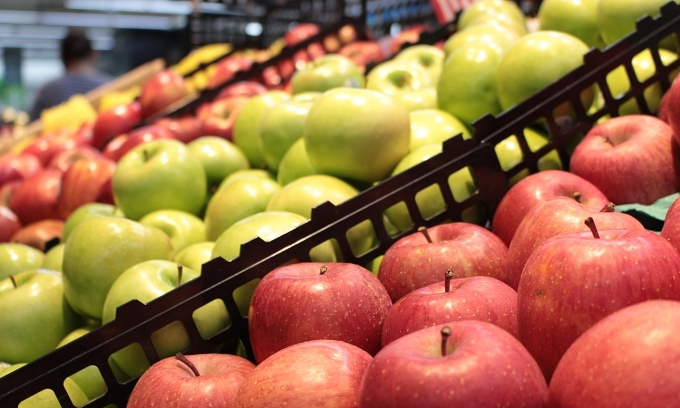

The report, published on Jan. 29 by Pesticide Action Network (PAN) Europe, tested 59 locally grown conventional apples purchased from supermarkets and markets in 13 European countries between Sept. 1 and 20, 2025.
The results were stark: 85% of samples contained multiple pesticide residues simultaneously, and 93% would exceed the European Union’s strict safety limits for processed food intended for children under three, in some cases by more than 600 times, according to Euronews.
Some apples carried as many as seven different chemicals at once, with an average of three per fruit. In eight countries, including Germany, the Netherlands, Poland, Croatia, Czech Republic, Hungary, Luxembourg and Switzerland, every single sample tested positive for multiple residues. Spain, France and Italy each recorded 80%. Only Denmark, at 20%, and Belgium, at 50%, showed lower rates.
The chemicals found were not minor trace contaminants. Two-thirds of the apples contained at least one PFAS pesticide, the so-called “forever chemicals” that persist in the environment and accumulate in the human body.
The fungicide captan, classified as a suspected carcinogen, turned up in 61% of samples. Fludioxonil, a PFAS pesticide classified as an endocrine disruptor in the EU in 2024, appeared in nearly 40%. Around one in five apples contained acetamiprid, a neurotoxic neonicotinoid insecticide that the European Food Safety Authority (EFSA) has flagged as potentially harmful to brain development since 2013. Research shows the chemical can cross the placental barrier, putting unborn children at risk.
What makes these findings particularly alarming is not any single substance but the combination. Scientists call it the “cocktail effect,” where exposure to several pesticides simultaneously may produce health impacts far greater than the sum of their individual effects. Yet for more than 20 years, EFSA has been legally required to develop a methodology for assessing these combined risks and has not done so.
“The European Food Safety Authority has been tasked 20 years ago to develop a methodology to regulate cocktail effects of pesticides but they still do not fulfill this legal obligation,” said Gergely Simon, campaigner at PAN Europeadding that mounting scientific evidence links dietary pesticide exposure to infertility and possibly cancers.
By evaluating each chemical in isolation, regulators have left a critical blind spot. Currently, 71% of contaminated apples contained substances classified under the EU’s “Candidates for Substitution” list, the most hazardous category of approved pesticides the bloc has pledged to phase out. In practice, conventional apple orchards are sprayed with pesticides an average of around 30 times per year, according to the PAN Europe report.
The timing of the findings adds a layer of political urgency. In December 2025, the European Commission introduced its Omnibus proposal on food and feed, which environmental groups warn would weaken existing pesticide protections rather than strengthen them.
“If EU and national regulatory authorities properly implement the law, a series of pesticides detected on apples would have been banned long ago,” said PAN Europe executive director Martin Dermine. “Instead, the EU is proposing to weaken health protection. Our report highlights that a more thorough regulation is needed, not less.”
The Spanish NGO Hogar sin Toxicos, which contributed to the study, recommended that consumers prioritize locally produced organic apples grown without synthetic pesticides.
The report noted that organic alternatives are already viable at scale, with around 15% of Germany’s apple production now organic. PAN Europe also urged parents and caregivers to be aware that feeding young children fresh conventional fruit may expose them to far higher pesticide levels than processed baby food, which is subject to much stricter EU limits.

Comments are closed.